Begin of page section:
Page sections:

  • Go to contents (Accesskey 1)
  • Go to position marker (Accesskey 2)
  • Go to main navigation (Accesskey 3)
  • Go to sub navigation (Accesskey 4)
  • Go to additional information (Accesskey 5)
  • Go to page settings (user/language) (Accesskey 8)
  • Go to search (Accesskey 9)

End of this page section. Go to overview of page sections

Begin of page section:
Page settings:

English en
Deutsch de
Search
Login

End of this page section. Go to overview of page sections

Begin of page section:
Search:

Search for details about Uni Graz
Close

End of this page section. Go to overview of page sections


Search

Begin of page section:
Main navigation:

Page navigation:

  • University

    University
    • About the University
    • Organisation
    • Faculties
    • Library
    • Working at University of Graz
    • Campus
    Developing solutions for the world of tomorrow - that is our mission. Our students and our researchers take on the great challenges of society and carry the knowledge out.
  • Research Profile

    Research Profile
    • Our Expertise
    • Research Questions
    • Research Portal
    • Promoting Research
    • Research Transfer
    • Ethics in Research
    • Commission for Scientific Integrity
    Scientific excellence and the courage to break new ground. Research at the University of Graz creates the foundations for making the future worth living.
  • Studies

    Studies
    • Prospective Students
    • Students
    • Welcome Weeks for First Year Students
  • Community

    Community
    • International
    • Location
    • Research and Business
    • Alumni
    The University of Graz is a hub for international research and brings together scientists and business experts. Moreover, it fosters the exchange and cooperation in study and teaching.
Topics
  • Sustainable University
  • Researchers answer
  • Work for us
Close menu

End of this page section. Go to overview of page sections

Begin of page section:
You are here:

University of Graz News Karriere & Ehrungen

End of this page section. Go to overview of page sections

Wednesday, 11 March 2015

Karriere & Ehrungen
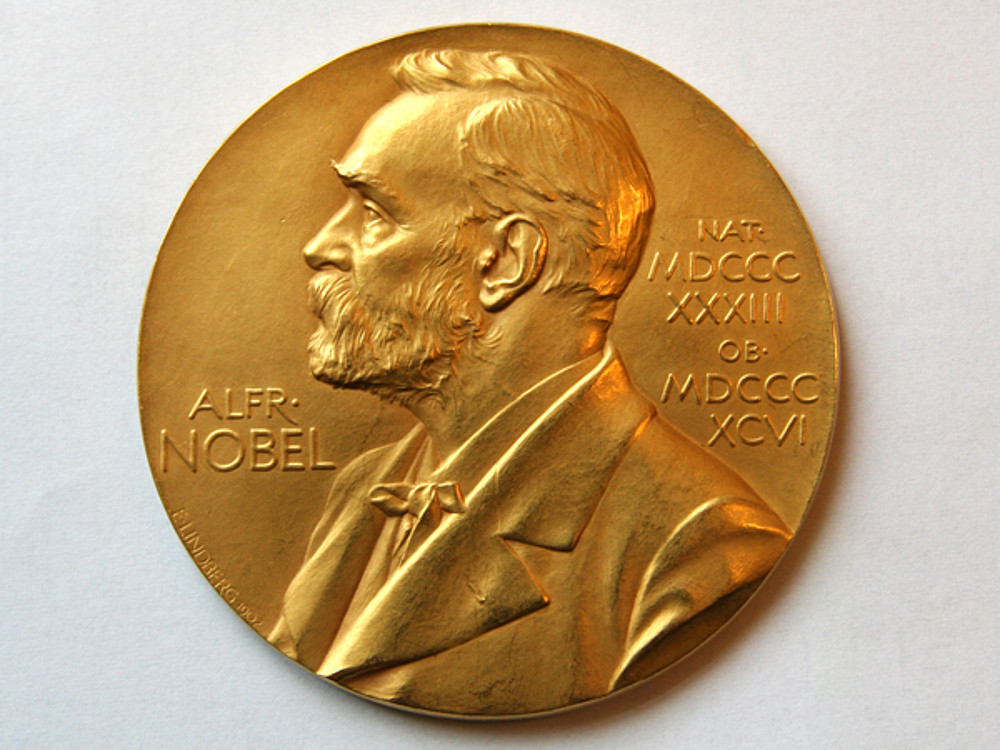
Meldungen in der Unizeit 1/2015

Dr. Philipp Anzenberger vom Institut für Österreichisches und Internationales Zivilgerichtliches Verfahren, Insolvenzrecht und Agrarrecht wurde im Rahmen von Best of REWI für seine Dissertation ausgezeichnet, ebenso wie Dr. Mona Ladler vom Institut für Österreichisches und Internationales Unternehmens- und Wirtschaftsrecht sowie Dr. Jürgen Pirker vom Institut für Österreichisches, Europäisches und Vergleichendes Öffentliches Recht, Politikwissenschaft und Verwaltungslehre.

Dr. Lisa Kienzl vom Institut für Religionswissenschaft wurde für ihre Dissertation mit dem Award of Excellence des Bundesministeriums für Wissenschaft, Forschung und Wirtschaft ausgezeichnet.

DI Daniel Lüftner vom Institut für Physik erhielt für seine Publikation im Fachjournal PNAS den mit 3.000 Euro dotierten Nano-Preis der Erwin-Schrödinger-Stiftung.

Ao.Univ.-Prof. Dr. Aberra Mogessie vom Institut für Erdwissenschaften wurde in das neu gegründete Internationale Komittee der Geological Society of America gewählt.

Univ.-Doz. Dr. Martin Moll vom Institut für Geschichte erhielt am 5. Dezember 2014 den Erzherzog-
Johann-Forschungspreis des Landes Steiermark.

Mag. Jessica Moser vom Institut für Zivilrecht, Ausländisches und Internationales Privatrecht erhielt den Förderpreis der Heinrich Graf Hardegg’schen Stiftung.

Ao.Univ.-Prof. Dr. Ulrich Pferschy vom Institut für Statistik und Operations Research ist neues Mitglied im Editorial Board des European Journal of Operational Research.

O.Univ.-Prof. Dr. Wolf Rauch vom Institut für Informationswissenschaft und Wirtschaftsinformatik wurde zum neuen Präsidenten des Wirtschafts- und Sozialwissenschaftlichen Fakultätentages gewählt.

Univ.-Prof. i.R. Dr. Kurt Salamun vom Institut für Philosophie wurde als Präsident der Österreichischen Karl-Jaspers-Gesellschaft und als Mitglied des Stiftungsrates der Karl-Jaspers-Stiftung Basel wiedergewählt.

Ao.Univ.-Prof. Dr. Christian Schlögl vom Institut für Informationswissenschaft und Wirtschaftsinformatik ist neues Mitglied im Editorial Board des Journal of Information Science Theory and Practice.

Em.Univ.-Prof. DDr. Gerald Schöpfer vom Institut für Österreichische Rechtsgeschichte und Europäische Rechtsentwicklung wurde für weitere fünf Jahre in die Europäische Kommission gegen Rassismus und Intoleranz bestellt.

Em.Univ.-Prof. Dr. Martin Sust vom Institut für Sportwissenschaft wurde zum Ehrenmitglied der Österreichischen Sportwissenschaftlichen Gesellschaft ernannt.

Univ.-Prof. Dr. Udo Thiel vom Institut für Philosophie wurde am 5. Dezember 2014 mit dem Forschungspreis des Landes Steiermark ausgezeichnet.

Univ.-Prof. Dr. Markus Tilp vom Institut für Sportwissenschaft wurde am 29. November 2014 zum Vizepräsidenten der Österreichischen Sportwissenschaftlichen Gesellschaft gewählt.

Assoz.-Prof. Dr. Astrid Veronig vom Institut für Physik wurde vom Bundesministerium für Verkehr, Innovation und Technologie zur FEMtech-Expertin des Monats November gewählt.

Dr. Michael Vorraber vom Institut für Unternehmensrechnung und Wirtschaftsprüfung wurde für seine Dissertation am 4. Dezember 2014 mit dem Award of Excellence des Bundesministeriums für Wissenschaft, Forschung und Wirtschaft ausgezeichnet.

O.Univ.-Prof. Dr. Dr.h.c. Alfred Wagenhofer vom Ins­titut für Unternehmensrechnung und Controlling wurde zum Vice President Research der Internation­al Association for Accounting Education and Research gewählt.

Univ.-Prof. i.R. Dr. Dr.h.c. Walter Zsilincsar vom Ins­titut für Geographie und Raumforschung wurde anlässlich des zwanzigjährigen Bestehens des UNESCO-Lehrstuhles für Ecological Awareness and Sustainable Development durch den Rektor der TU Zvolen (Slowakei) für die langjährige erfolgreiche Zusammenarbeit geehrt.

Mag. Matthias Zußner vom Institut für Österreichisches, Europäisches und Vergleichendes Öffentliches Recht, Politikwissenschaft und Verwaltungslehre wurde für seinen Aufsatz „Verfassungsrechtliche Grenzen universitärer Autonomie“ der mit 2.500 Euro dotierte Förderpreis der Juristischen Blätter 2014 zuerkannt.

Related news

Jurassic Sounds: Biologist reconstructs insect songs from 165 million years ago

It was apparently not just the roars of the dinosaurs that made up the soundscape of the animal world during the Jurassic period. Crickets and grasshoppers communicated through a variety of songs and high-pitched sounds, as Thorin Jonsson from the Institute of Biology at the University of Graz discovered together with colleagues from the universities of Lincoln, Bristol (UK), Beijing (China) and Tempe (USA). The findings on what are so far the oldest traces of sound on Earth have just been published in the journal PNAS.

EU funding boosts international exchange between universities

The University of Graz is further expanding its international study opportunities through the European university alliance Arqus and is taking the lead in two key projects. In future, students will benefit from even more joint degree programmes and from simplified recognition of academic achievements through the Joint European Degree Label.

Rescue and risks: Researchers have surveyed public perceptions of AI

The use of artificial intelligence has had to be made transparent since 2 August 2026. The EU’s AI Act, which has been in force since then, also sets out how risky an application is and which security measures apply as a result. However, the assessment of risks by the legislation differs in some cases significantly from the perceptions of the Austrian public. This is the finding of a representative study carried out by data scientist Stefan Thalmann from the University of Graz and his team.

The Healing Sea: Researchers discover new approaches to treating chronic inflammation in sponges

Chronic inflammation plays a key role in many diseases, ranging from metabolic disorders and cardiovascular diseases to tissue damage following injuries or infections. “Normally, the body is able to resolve inflammation on its own. If this process becomes unbalanced, immune cells remain permanently active and continue to drive negative changes in the tissue,” explains Andreas Koeberle, a pharmacist at the University of Graz.

Begin of page section:
Additional information:

University of Graz
Universitaetsplatz 3
8010 Graz
Austria
  • Contact
  • Web Editors
  • Moodle
  • UNIGRAZonline
  • Imprint
  • Data Protection Declaration
  • Accessibility Declaration
Weatherstation
Uni Graz

End of this page section. Go to overview of page sections

End of this page section. Go to overview of page sections

Begin of page section:

End of this page section. Go to overview of page sections