



Begin of page section:
Page sections:

  • Go to contents (Accesskey 1)
  • Go to position marker (Accesskey 2)
  • Go to main navigation (Accesskey 3)
  • Go to sub navigation (Accesskey 4)
  • Go to additional information (Accesskey 5)
  • Go to page settings (user/language) (Accesskey 8)
  • Go to search (Accesskey 9)

End of this page section. Go to overview of page sections

Begin of page section:
Page settings:

English en
Deutsch de
Search
Login

End of this page section. Go to overview of page sections

Begin of page section:
Search:

Search for details about Uni Graz
Close

End of this page section. Go to overview of page sections


Search

Begin of page section:
Main navigation:

Page navigation:

  • University

    University
    • About the University
    • Organisation
    • Faculties
    • Library
    • Working at University of Graz
    • Campus
    Developing solutions for the world of tomorrow - that is our mission. Our students and our researchers take on the great challenges of society and carry the knowledge out.
  • Research Profile

    Research Profile
    • Our Expertise
    • Research Questions
    • Research Portal
    • Promoting Research
    • Research Transfer
    • Ethics in Research
    • Commission for Scientific Integrity
    Scientific excellence and the courage to break new ground. Research at the University of Graz creates the foundations for making the future worth living.
  • Studies

    Studies
    • Prospective Students
    • Students
    • Registration for Study Programme (Winter semester 2026/27)
  • Community

    Community
    • International
    • Location
    • Research and Business
    • Alumni
    The University of Graz is a hub for international research and brings together scientists and business experts. Moreover, it fosters the exchange and cooperation in study and teaching.
Topics
  • Sustainable University
  • Researchers answer
  • Work for us
Close menu

End of this page section. Go to overview of page sections

Begin of page section:
You are here:

University of Graz News Intellektuelle Sommerfrische

End of this page section. Go to overview of page sections

Wednesday, 04 July 2018

Intellektuelle Sommerfrische
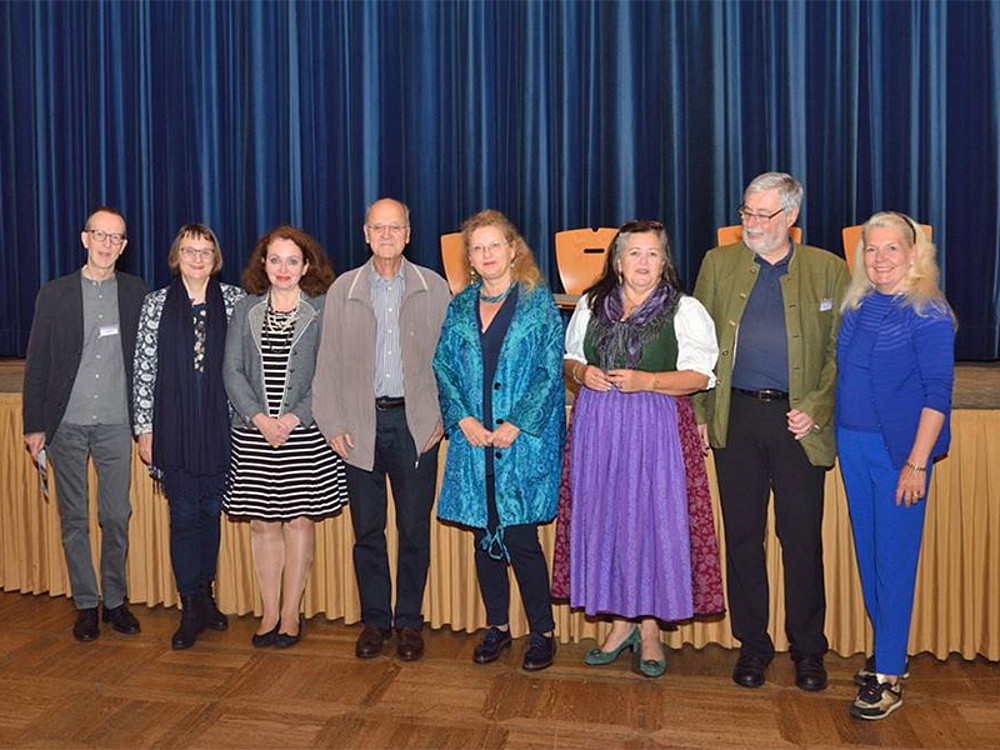
Das Board der Ausseer Gespräche (v. l.): Gerd Kühr, Roberta Maierhofer, Liliane Weissberg, Karl Acham, Irmgard Lippe, Irmtraud Fischer, Helmut Konrad und Waltraud Schinko-Neuroth. Foto: Alpenpost/F. Seiberl
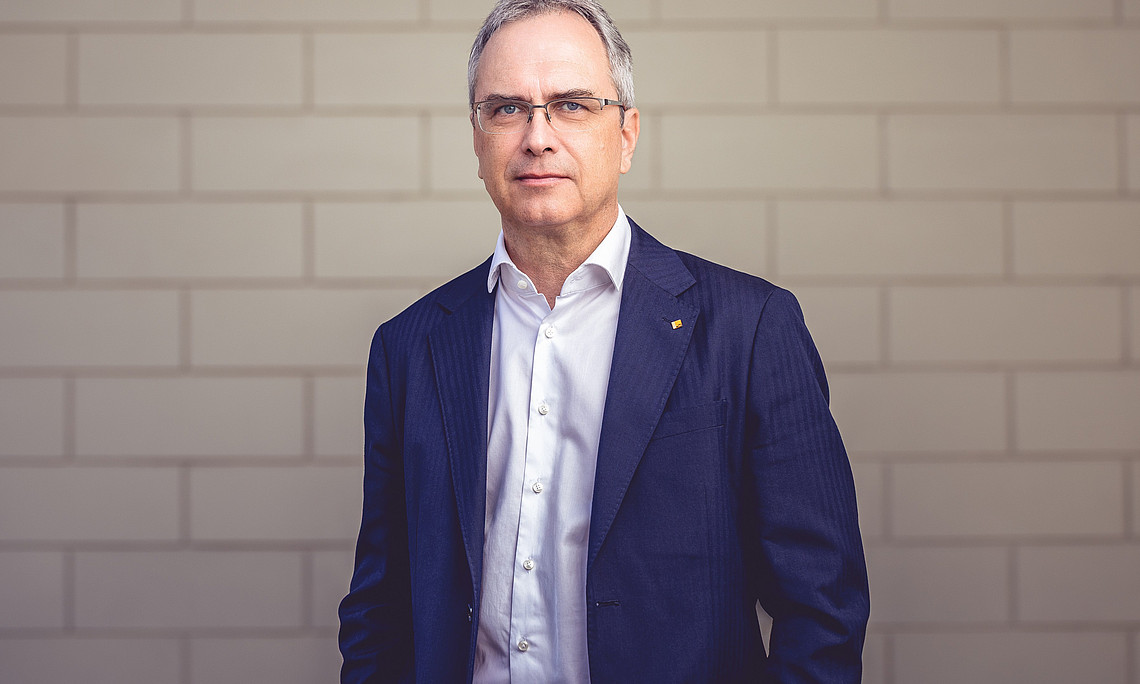
Das Board der Ausseer Gespräche (v. l.): Gerd Kühr, Roberta Maierhofer, Liliane Weissberg, Karl Acham, Irmgard Lippe, Irmtraud Fischer, Helmut Konrad und Waltraud Schinko-Neuroth. Foto: Alpenpost/F. Seiberl

Die zehnte Ausgabe der „Ausseer Gespräche“ widmete sich der Zukunft

Wie ist es um die Zukunft der Demokratie bestellt? Welche Rolle spielen dabei Identitäten? Und wie sieht die Zukunft von Mensch, Natur und Technik aus? Der Blick nach vorne stand als Generalthema bei den diesjährigen „Ausseer Gesprächen“ vom 28. Juni bis 1. Juli 2018 im Mittelpunkt. Der Ausblick war zugleich mit einem Rückblick verknüpft. ReferentInnen, die bereits an früheren Tagungen teilgenommen hatten, kamen zum Zehn-Jahr-Jubiläum, um wichtige gesellschaftliche Fragen zu beantworten.

„Die Ausseer Gespräche wollen einerseits zur im Salzkammergut fest verankerten Tradition der intellektuellen Sommerfrische beitragen und andererseits universitäre Wissenschaft und Kunst in die Region bringen“, fasst Gründerin und Organisatorin Irmtraud Fischer, Professorin für alttestamentarische Bibelwissenschaft, zusammen.

Von Anfang an, erklärt Fischer, war intendiert, die Zukunft mitdenken zu lassen, sowohl der akademischen Szene als auch der Studierenden. Jedes Jahr können sich Studierende um ein Stipendium bewerben und in zwangloser Atmosphäre mit WissenschafterInnen in Kontakt kommen.
Die Fachgebiete sollen interdisziplinär und breit gestreut sein, Menschen aus der Forschung und den Künsten sollen aus unterschiedlichsten Fachgebieten miteinander diskutieren. „So viele Fachgebiete, so viele Ideen und Konzepte und die raffinierte Verbindung mit der Kunst: Es war wirklich großartig. Die ‚intellektuelle Sommerfrische‘ in dieser lockeren und inspirierenden Atmosphäre ist einzigartig und für mich sehr bereichernd gewesen“, resümierte Stipendiat Stephan M. Schweighofer.

Fischer: „Die Studierenden können früh in ihrer akademischen Laufbahn Netzwerke über die Fachgrenzen hinaus bilden, insbesondere in den Kulturbereich.“ So auch heuer: Auftakt und Finale der Ausseer Gespräche wurden mit einer künstlerischen Installation von Hans Hoffer mit Klaus Lang am Harmonium und der Geigerin Barbara Konrad sowie der Gesangsklasse von Ulf Bästlein gestaltet. Zum Abschluss standen Uraufführungen von Werke junger Komponisten, die ebenso wie die SängerInnen und Klavierbegleiter an der Kunstuniversität Graz studieren, auf dem Programm.

Die „Ausseer Gespräche“ werden von der Firma Neuroth, dem Land Steiermark, der Kunstuniversität Graz und der Universität Graz unterstützt und werden in Kooperation mit der Gemeinde Bad Aussee veranstaltet.

created by Andreas Schweiger

Related news

When stress melts away in your mouth: nicotine pouches are widespread among Styrian students

Sociologists at the University of Graz, in collaboration with VIVID – the Centre for Addiction Prevention, have carried out a survey involving more than 600 participants. Around a quarter of them use these products. The ability to use them discreetly and flexibly is a key motivation.

Desert sand, microplastics, cancer cells: David Clases awarded ERC grant for analytical method

Nanoparticles trapped in polar ice can reveal a great deal about the climate 100,000 years ago. Chemist David Clases is developing unique methods to analyse them in detail. He will now adapt these methods for use with larger particles in order to glean even more information about Earth’s history. The method can be used for a wide range of other purposes – for example, in medical diagnostics or the investigation of environmental pollution. Clases has been awarded a Proof-of-Concept Grant by the European Research Council (ERC) for this work.

Staying fit during the holidays: summer sports on the University of Graz campus

The Kleeblattlauf is not the end of the fitness term. Following last year’s successful launch, the University of Graz is once again offering summer sports on campus this year. From 30 June to 16 July 2026, there will be a free exercise programme in the open air. On the shady Südwiese (between the main building and Universitätsplatz 2), anyone interested can get in shape in the afternoons with body workouts, fascia training and yoga.

Getting even hotter: Researchers predict global warming of 1.7 degrees by 2027

While Europe is currently sweltering in the heat, global temperatures are also rising towards concerning record levels. In 2026, Earth’s surface air temperature is expected to reach 1.62 degrees, and in 2027 even 1.71 degrees Celsius above pre-industrial levels. The long-term temperature rise – an average over a 20-year period – is predicted to exceed the 1.5-degree threshold of the Paris Agreement as of 2026 already. For the first time, researchers at the University of Graz have been able to make such a forecast so far in advance. The intensifying El Niño climate event favors forecast skill and thereby facilitates a reliable computation.

Begin of page section:
Additional information:

University of Graz
Universitaetsplatz 3
8010 Graz
Austria
  • Contact
  • Web Editors
  • Moodle
  • UNIGRAZonline
  • Imprint
  • Data Protection Declaration
  • Accessibility Declaration
Weatherstation
Uni Graz

End of this page section. Go to overview of page sections

End of this page section. Go to overview of page sections

Begin of page section:

End of this page section. Go to overview of page sections


