Begin of page section:
Page sections:

  • Go to contents (Accesskey 1)
  • Go to position marker (Accesskey 2)
  • Go to main navigation (Accesskey 3)
  • Go to sub navigation (Accesskey 4)
  • Go to additional information (Accesskey 5)
  • Go to page settings (user/language) (Accesskey 8)
  • Go to search (Accesskey 9)

End of this page section. Go to overview of page sections

Begin of page section:
Page settings:

English en
Deutsch de
Search
Login

End of this page section. Go to overview of page sections

Begin of page section:
Search:

Search for details about Uni Graz
Close

End of this page section. Go to overview of page sections


Search

Begin of page section:
Main navigation:

Page navigation:

  • University

    University
    • About the University
    • Organisation
    • Faculties
    • Library
    • Working at University of Graz
    • Campus
    Developing solutions for the world of tomorrow - that is our mission. Our students and our researchers take on the great challenges of society and carry the knowledge out.
  • Research Profile

    Research Profile
    • Our Expertise
    • Research Questions
    • Research Portal
    • Promoting Research
    • Research Transfer
    • Ethics in Research
    Scientific excellence and the courage to break new ground. Research at the University of Graz creates the foundations for making the future worth living.
  • Studies

    Studies
    • Prospective Students
    • Students
  • Community

    Community
    • International
    • Location
    • Research and Business
    • Alumni
    The University of Graz is a hub for international research and brings together scientists and business experts. Moreover, it fosters the exchange and cooperation in study and teaching.
  • Spotlight
Topics
  • Sustainable University
  • Researchers answer
  • Work for us
Close menu

End of this page section. Go to overview of page sections

Begin of page section:
You are here:

University of Graz News In der Frage liegt die Antwort

End of this page section. Go to overview of page sections

Tuesday, 24 April 2018

In der Frage liegt die Antwort

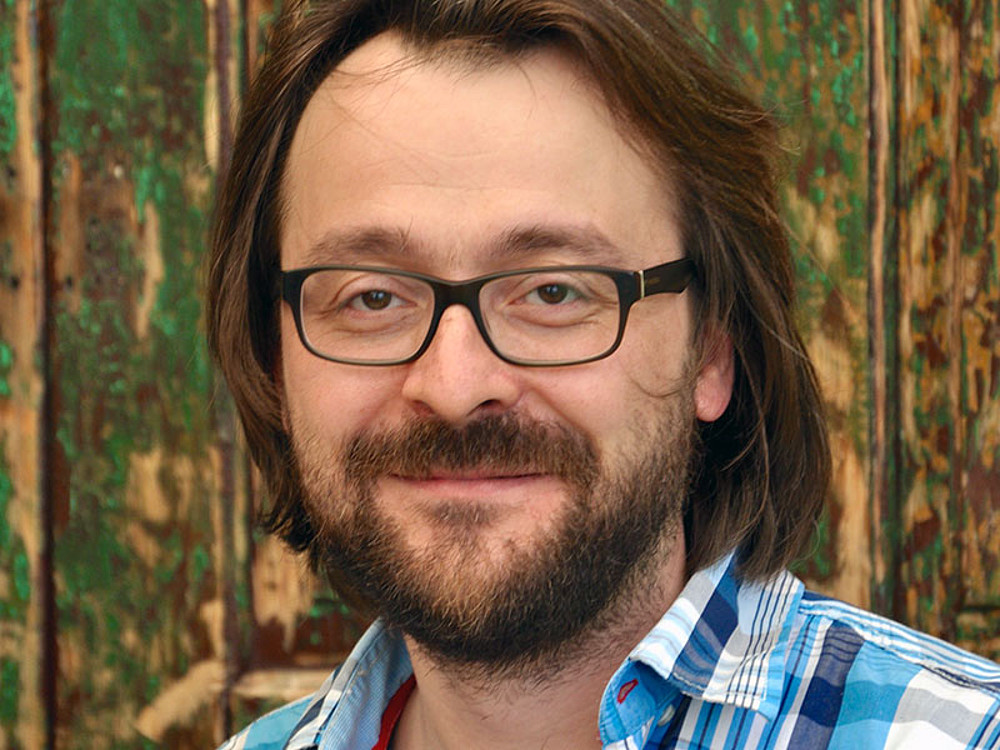
Edgar Onea untersucht mit logisch-mathematischen und computergestützten Methoden die Bedeutung und den Gebrauch von Sprache. Foto: privat

Edgar Onea untersucht mit logisch-mathematischen und computergestützten Methoden die Bedeutung und den Gebrauch von Sprache. Foto: privat

Edgar Onea erforscht, wie Texte Informationen transportieren

Wie schaffen es PolitikerInnen, in Interviews gestellte Fragen nicht zu beantworten, ihren ZuhörerInnen aber dennoch das Gefühl zu vermitteln, alle wesentlichen Informationen bekommen zu haben? Verantwortlich dafür ist ein komplexes Zusammenspiel verschiedener Faktoren, die Edgar Onea, seit 1. September 2017 Professor für Deutsche Sprache/Linguistik am Institut für Germanistik der Karl-Franzens-Universität Graz, erforscht. Mit logisch-mathematischen und computergestützten Methoden untersucht er die Bedeutung und den Gebrauch von Sprache. Dabei konzentriert er sich auf die Funktion von grammatikalischen Merkmalen in Hinblick auf die Informationsstruktur von Texten.

Fragen haben es dem Sprachwissenschafter besonders angetan. „Sie spielen eine wichtige Rolle für den logischen Zusammenhang von Texten. Jeder einzelne Satz im Text soll eine Frage im Kopf des Lesers/der Leserin beantworten“, erklärt Onea. Die Bedeutung von Fragen zu ergründen, ist also auch wesentlich, um zu verstehen, wie Kommunikation funktioniert.
In einem aktuellen Forschungsprojekt befasst sich Onea mit eingebetteten Fragen. Ein Beispiel: „Peter weiß, wer angerufen hat.“ In diese Aussage ist die Frage „Wer hat angerufen?“ eingebettet. Den Sprachwissenschafter interessiert, was die Aussage alles verrät. Folgt daraus, beispielsweise, dass Peter auch weiß, wer nicht angerufen hat? „Wir untersuchen, von welchen Faktoren es abhängt, wie eingebettete Fragen verstanden werden, um damit verschiedene Theorien zur Bedeutung von Fragen zu überprüfen und zu erweitern“, erklärt Onea.

Die Studien schließen Experimente mit ein. So hat der Forscher an der Uni Graz ein Labor aufgebaut, in dem unter anderem die Blickbewegungen von Testpersonen bei der Interpretation von Aussagen mittels Eye Tracking aufgezeichnet und anschließend ausgewertet werden. „Denn auch sie helfen, ebenso wie die Beobachtung neuronaler Vorgänge, Sprache besser verstehen zu lernen“, weiß Onea.

Dass sprachwissenschaftliche Theorien durchaus auch für praktische Anwendungen nützlich sind, zeigt ein weiteres geplantes Arbeitsfeld des Sprachwissenschafters: die Optimierung von Texten für Menschen mit Hörbeeinträchtigung. „Wir wollen Texte auf struktureller Ebene vereinfachen, um sie akustisch leichter verständlich zu machen.“

Aufgewachsen in Siebenbürgen/Rumänien, wurde Edgar Onea an der Universität Heidelberg in germanistischer Sprachwissenschaft promoviert. Nach seiner Habilitation an der Uni Göttingen forschte und lehrte er dort als Professor für Theoretische Sprachwissenschaft, bevor er seine aktuelle Professur an der Karl-Franzens-Universität Graz antrat.

created by Gudrun Pichler

Related news

AI in schools: Maria Bertel drafts legal guidelines for teachers

The legal expert and her team analysed the legal situation regarding the use of artificial intelligence in education as part of an EU project and answered open questions from practice.

Cosmetics in the environment: University of Graz proves danger to ants

Titanium dioxide, which is found in cosmetics, for example, is increasingly entering the environment in the form of nanoparticles. This could also put insects at risk. If ants ingest the substance in combination with the pesticide glyphosate, it disturbs the development of their offspring. Scientists at the University of Graz are drawing attention to the negative consequences of this toxic cocktail.

Varied and healthy: studies move

Exercise is the ideal way to balance out everyday stress, prevent illness and keep fit. Why this is the case, how to do it properly and what role human bodily functions and psychology play can be studied at the University of Graz.

Religious scholar Theresia Heimerl: Fasting as a spiritual boost

Fasting is not just a strategy for losing weight – it is a ritual dating back thousands of years with spiritual and evolutionary roots that has positive effects on the body. At the University of Graz, religious scholar Theresia Heimerl is investigating why fasting is a "spiritual boost".

Begin of page section:
Additional information:

University of Graz
Universitaetsplatz 3
8010 Graz
Austria
  • Contact
  • Web Editors
  • Moodle
  • UNIGRAZonline
  • Imprint
  • Data Protection Declaration
  • Accessibility Declaration
Weatherstation
Uni Graz

End of this page section. Go to overview of page sections

End of this page section. Go to overview of page sections

Begin of page section:

End of this page section. Go to overview of page sections