



Begin of page section:
Page sections:

  • Go to contents (Accesskey 1)
  • Go to position marker (Accesskey 2)
  • Go to main navigation (Accesskey 3)
  • Go to sub navigation (Accesskey 4)
  • Go to additional information (Accesskey 5)
  • Go to page settings (user/language) (Accesskey 8)
  • Go to search (Accesskey 9)

End of this page section. Go to overview of page sections

Begin of page section:
Page settings:

English en
Deutsch de
Search
Login

End of this page section. Go to overview of page sections

Begin of page section:
Search:

Search for details about Uni Graz
Close

End of this page section. Go to overview of page sections


Search

Begin of page section:
Main navigation:

Page navigation:

  • University

    University
    • About the University
    • Organisation
    • Faculties
    • Library
    • Working at University of Graz
    • Campus
    Developing solutions for the world of tomorrow - that is our mission. Our students and our researchers take on the great challenges of society and carry the knowledge out.
  • Research Profile

    Research Profile
    • Our Expertise
    • Research Questions
    • Research Portal
    • Promoting Research
    • Research Transfer
    • Ethics in Research
    • Commission for Scientific Integrity
    Scientific excellence and the courage to break new ground. Research at the University of Graz creates the foundations for making the future worth living.
  • Studies

    Studies
    • Prospective Students
    • Students
    • Welcome Weeks for First Year Students
  • Community

    Community
    • International
    • Location
    • Research and Business
    • Alumni
    The University of Graz is a hub for international research and brings together scientists and business experts. Moreover, it fosters the exchange and cooperation in study and teaching.
Topics
  • Sustainable University
  • Researchers answer
  • Work for us
Close menu

End of this page section. Go to overview of page sections

Begin of page section:
You are here:

University of Graz News Impulse für GründerInnen

End of this page section. Go to overview of page sections

Monday, 23 May 2016

Impulse für GründerInnen
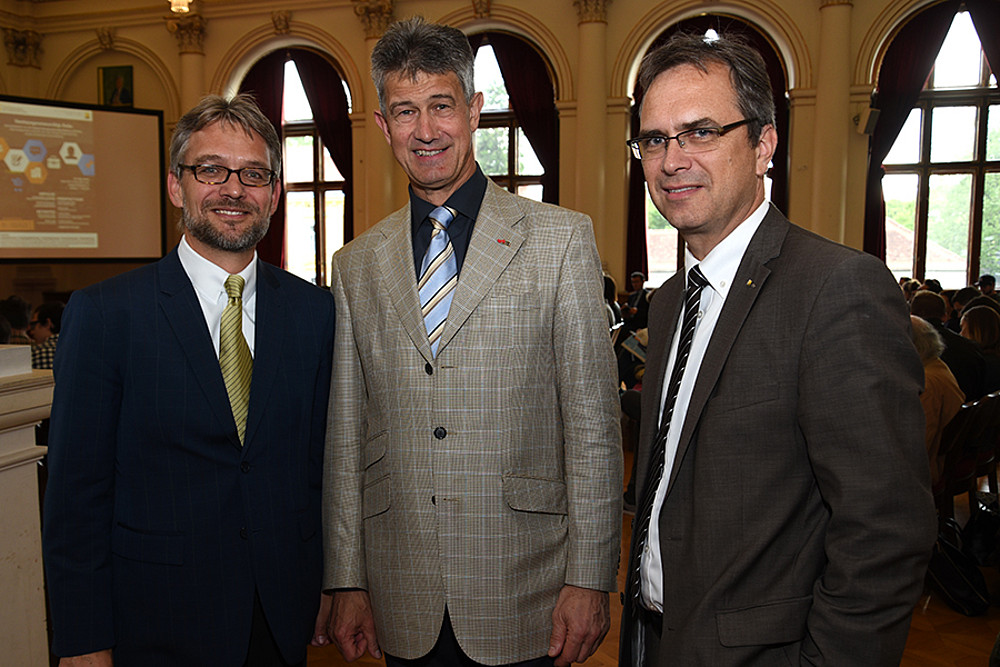
Kooperation: IV-Geschäftsführer Krautzer, TU-Rektor Kainz und Vizerektor Riedler (v.l.). Foto: Uni Graz/Schweiger

Kooperation: IV-Geschäftsführer Krautzer, TU-Rektor Kainz und Vizerektor Riedler (v.l.). Fotos: Uni Graz/Schweiger
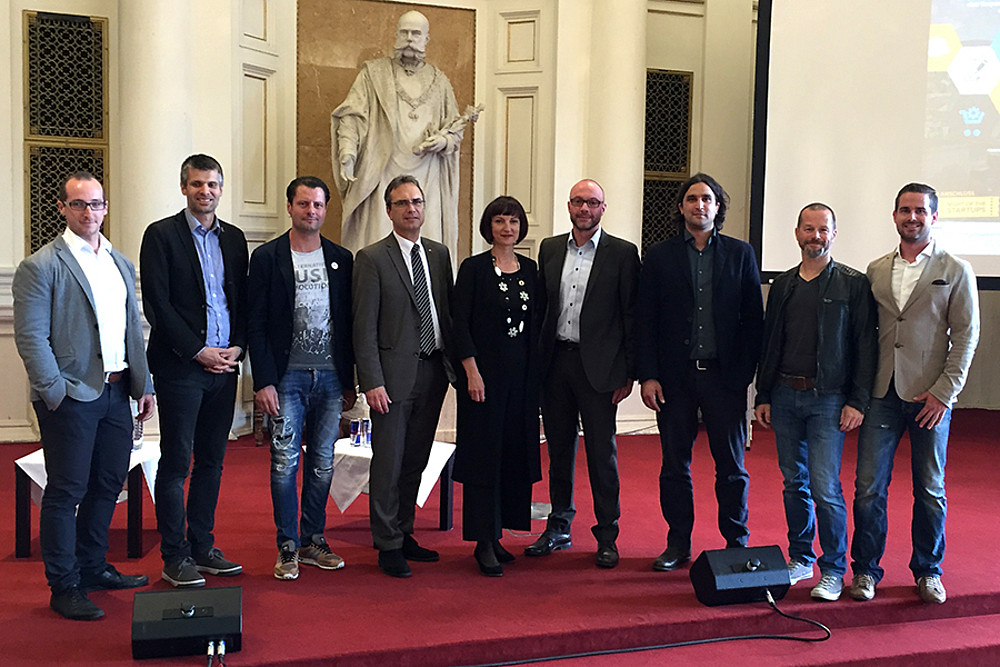
Martin Mader (Uni Graz), Michael Eisler (Startup 300), Alfred Luger (Runtastic), Vizerektor Riedler, Karin Brauneis-Ryan (Brauneis&Partner), Gerold Weiß, Gabriel Grabner (Michael Grabner Media), Bernhard Lehner (Startup 300), Matthias Ruhri (Uni/Up to 11

Martin Mader (Uni Graz), Michael Eisler (Startup 300), Alfred Luger (Runtastic), Vizerektor Peter Riedler, Karin Brauneis-Ryan (Brauneis&Partner), Gerold Weiß (FH-Oberösterreich), Gabriel Grabner (Michael Grabner Media), Bernhard Lehner (Startup 300), Matthias Ruhri (Uni Graz/Up to 11) (v.l.)
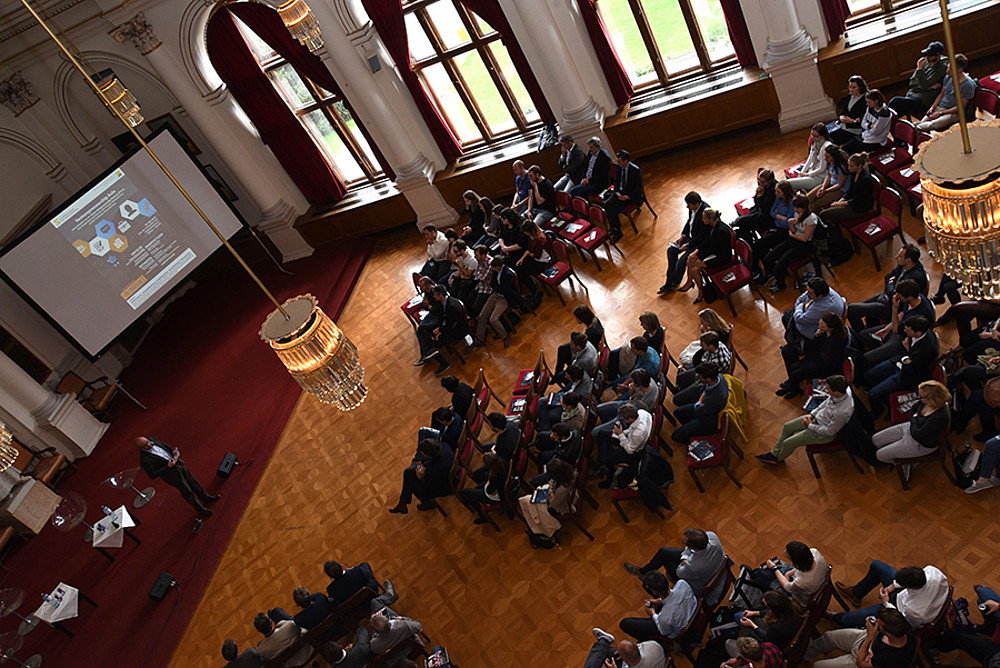
Großes Interesse, großes Potenzial: Venturepreneurship sorgte für eine volle Aula. Foto: Uni Graz/Schweiger

Großes Interesse, großes Potenzial: Venturepreneurship sorgte für eine volle Aula.

Venturepreneurship Aula: hautnahe Einblicke in die unternehmerische Praxis

Gründungspotenzial und -interesse sind an der Karl-Franzens-Universität Graz reichlich vorhanden. Einen vollen Festsaal lieferte am 20. Mai 2016 bei der Venturepreneurship Aula – eine Kooperation von Uni Graz und TU Graz – den Beweis dafür. Persönlichkeiten aus der Venture- und Entrepreneurship-Szene geben regelmäßig spannende Einblicke in ihre Welt. Die Veranstaltungsreihe wurde vom Zentrum für Entrepreneurship und angewandte Betriebswirtschaftslehre der Uni Graz unter der Leitung von Rektor a.D. Alfred Gutschelhofer ins Leben gerufen. Das Ziel: Bei den regelmäßigen Events unternehmerische Praxis und universitären Diskurs zusammenzubringen um Impulse zur Finanzierung junger, innovativer Unternehmen zu setzen.

Impulse lieferten dieses Mal unter anderem Thomas Krautzer, Geschäftsführer der Industriellenvereinigung Steiermark, Karin Brauneis-Ryan, Investorin & Financial Advisor, Alfred Luger, Co-Founder & COO von Runtastic, Stefan Kalteis, Serial Entrepreneur (123people, payolution, allaboutapps) und Investor (Runtastic, Wikifolio, Tripwolf) sowie Gabriel Grabner, Investor und Partner bei Michael Grabner Media GmbH.
Neben den erfolgreichen UnternehmerInnen und zahlreichen Studierenden waren auch Peter Riedler, Vizerektor für Finanzen, Ressourcen und Standortentwicklung, TU-Rektor Harald Kainz und Thomas Foscht, Dekan der Sozial- und Wirtschaftswissenschaftlichen Fakultät der Uni Graz, anwesend.

Vizerektor Riedler verwies auf bereits bestehende Aktivitäten wie den Science Park und das Entrepreneurship-Netzwerk: „Im Sinne des Technologietransfers will die Uni Graz Anreize verstärken, um die Anzahl jener aus der Universität kommenden Unternehmensgründungen weiter zu steigern. Ein geplantes Zentrum für Wissens- und Innovationstransfers bildet dafür ein Schlüsselprojekt.“ Und: „Wir wollen an der Universität in allen Bereichen, wie in der Theologie und in den Geisteswissenschaften das unternehmerische Potenzial hervorhaben.“

„Wir investieren immer wieder in österreichische Startups“, so Alfred Luger. Mit seinen Co-Gründern von Runtastic hält er bereits zahlreiche Beteiligungen (Tractive, Linemetrics oder ganz aktuell Storyclash). „Zu Beginn hatten wir niemanden, der an uns geglaubt hat und in uns investieren wollte“, ergänzt Luger. Ähnlich direkt war Karin Brauneis-Ryan in ihrer Keynote: „In Österreich investiert man lieber in Immobilien anstatt in innovative Unternehmen. Und rund 150 Milliarden Euro liegen alleine auf österreichischen Sparkonten.“

Am Ende der Veranstaltung präsentierten drei studentische Unternehmen (Workout Deals, Doro Turbine, Accessio) vor der großen Menge in der Aula. Zuvor wurden sie im Rahmen der Lehrveranstaltung „Venturepreneurship Forum“ von Serial-Entrepreneur Stefan Kalteis und Investor Gabriel Grabner ein Semester lang gecoacht. Durch die Veranstaltung führte Gerold Weiß, Start-up-Professor an der FH-Oberösterreich.


Martin Mader (Uni Graz), Michael Eisler (Startup 300), Alfred Luger (Runtastic), Vize Rektor Peter Riedler (Uni Graz), Karin Brauneis-Ryan (Brauneis&Partner), Gerold Weiß (FH-Oberösterreich), Gabriel Grabner (Michael Grabner Media), Bernhard Lehner (Startup 300), Matthias Ruhri (Uni Graz/Up to 11)

created by Matthias Ruhri & Andreas Schweiger

Related news

Jurassic Sounds: Biologist reconstructs insect songs from 165 million years ago

It was apparently not just the roars of the dinosaurs that made up the soundscape of the animal world during the Jurassic period. Crickets and grasshoppers communicated through a variety of songs and high-pitched sounds, as Thorin Jonsson from the Institute of Biology at the University of Graz discovered together with colleagues from the universities of Lincoln, Bristol (UK), Beijing (China) and Tempe (USA). The findings on what are so far the oldest traces of sound on Earth have just been published in the journal PNAS.

EU funding boosts international exchange between universities

The University of Graz is further expanding its international study opportunities through the European university alliance Arqus and is taking the lead in two key projects. In future, students will benefit from even more joint degree programmes and from simplified recognition of academic achievements through the Joint European Degree Label.

Rescue and risks: Researchers have surveyed public perceptions of AI

The use of artificial intelligence has had to be made transparent since 2 August 2026. The EU’s AI Act, which has been in force since then, also sets out how risky an application is and which security measures apply as a result. However, the assessment of risks by the legislation differs in some cases significantly from the perceptions of the Austrian public. This is the finding of a representative study carried out by data scientist Stefan Thalmann from the University of Graz and his team.

The Healing Sea: Researchers discover new approaches to treating chronic inflammation in sponges

Chronic inflammation plays a key role in many diseases, ranging from metabolic disorders and cardiovascular diseases to tissue damage following injuries or infections. “Normally, the body is able to resolve inflammation on its own. If this process becomes unbalanced, immune cells remain permanently active and continue to drive negative changes in the tissue,” explains Andreas Koeberle, a pharmacist at the University of Graz.

Begin of page section:
Additional information:

University of Graz
Universitaetsplatz 3
8010 Graz
Austria
  • Contact
  • Web Editors
  • Moodle
  • UNIGRAZonline
  • Imprint
  • Data Protection Declaration
  • Accessibility Declaration
Weatherstation
Uni Graz

End of this page section. Go to overview of page sections

End of this page section. Go to overview of page sections

Begin of page section:

End of this page section. Go to overview of page sections