Begin of page section:
Page sections:

  • Go to contents (Accesskey 1)
  • Go to position marker (Accesskey 2)
  • Go to main navigation (Accesskey 3)
  • Go to sub navigation (Accesskey 4)
  • Go to additional information (Accesskey 5)
  • Go to page settings (user/language) (Accesskey 8)
  • Go to search (Accesskey 9)

End of this page section. Go to overview of page sections

Begin of page section:
Page settings:

English en
Deutsch de
Search
Login

End of this page section. Go to overview of page sections

Begin of page section:
Search:

Search for details about Uni Graz
Close

End of this page section. Go to overview of page sections


Search

Begin of page section:
Main navigation:

Page navigation:

  • University

    University
    • About the University
    • Organisation
    • Faculties
    • Library
    • Working at University of Graz
    • Campus
    Developing solutions for the world of tomorrow - that is our mission. Our students and our researchers take on the great challenges of society and carry the knowledge out.
  • Research Profile

    Research Profile
    • Our Expertise
    • Research Questions
    • Research Portal
    • Promoting Research
    • Research Transfer
    • Ethics in Research
    Scientific excellence and the courage to break new ground. Research at the University of Graz creates the foundations for making the future worth living.
  • Studies

    Studies
    • Prospective Students
    • Students
  • Community

    Community
    • International
    • Location
    • Research and Business
    • Alumni
    The University of Graz is a hub for international research and brings together scientists and business experts. Moreover, it fosters the exchange and cooperation in study and teaching.
  • Spotlight
Topics
  • Our digital Advent calendar
  • Sustainable University
  • Researchers answer
  • Work for us
Close menu

End of this page section. Go to overview of page sections

Begin of page section:
You are here:

University of Graz News Hot Earth: Annual report on global climate documents new records

End of this page section. Go to overview of page sections

Wednesday, 10 September 2025

Hot Earth: Annual report on global climate documents new records

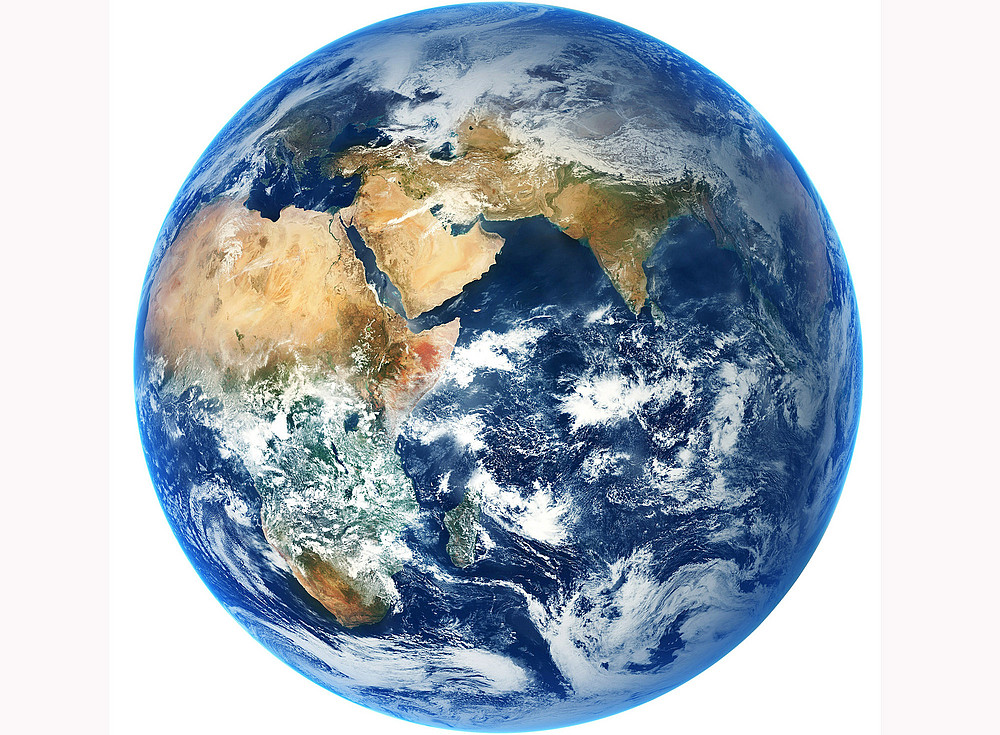
globe, view from space ©robert - stock.adobe.com

The increase in man-made greenhouse gases continues to drive global climate change. The annual report "State of the Climate" once again highlights the urgency of a massive reduction in emissions. Photo: robert - stock.adobe.com

The international annual report on the State of the Climate, published in mid-August, confirms new climate records for 2024. Despite the natural climate anomaly El Niño fading at the beginning of last year and giving way to cooler La Niña conditions, a record high in global surface temperature over land and ocean was set. This makes 2015 to 2024 the warmest ten years on record. “Global greenhouse gas concentrations also broke previous records. The resulting increase in energy input into the climate system impacts the land surface, the oceans, the ice and the atmosphere,” explains Andrea Steiner from the Wegener Center at the University of Graz.


The annual report “State of the Climate” is published by the National Centers for Environmental Information of the US National Oceanic and Atmospheric Administration, based on contributions from scientists from around 60 countries worldwide. Among them are Andrea Steiner and Andreas Kellerer-Pirklbauer from the University of Graz.

Climate change in the atmosphere

Steiner studies climate changes in the atmosphere. “The troposphere, the weather layer, is getting warmer in the long term. In 2024, exceptionally high temperatures and record values were observed over more than half of the globe,” reports the climate physicist from the Wegener Center. In the stratosphere above, however, a strong cooling trend can be observed. “These long-term trends caused by human greenhouse gas emissions are overlaid by short-term temperature fluctuations due to volcanic eruptions and the recent large wildfires,” explains Steiner, citing an example: “The impact of the Hunga eruption in 2022 was exceptional. The volcano ejected an enormous amount of water vapour up to an altitude of 50 kilometres into the atmosphere, which led to additional cooling of the stratosphere. In 2024, we are now seeing this effect as the water vapour has dispersed and decreased.” Overall, the long-term trends caused by the rise in greenhouse gases are intensifying. “This includes the increase in moisture content in the atmosphere, with record levels in 2024, as well as in the number of high humid-heat days and extreme precipitation,” says Steiner.

Ice on the retreat

Andreas Kellerer-Pirklbauer from the Department of Geography and Regional Science is investigating the effects of climate change on glaciers and permafrost in the Alpine region. These include, among other things, block glaciers, mixtures of debris and ice that slowly move downhill. The more the rock glacier warms up, the more liquid water is present in the system, which increases the rock glacer velocity (RGV). “In the European Alps, 2023-2024 was the second warmest hydrological year since weather records began. A hydrological year begins on 1 October and ends on 30 September of the following year. The rise in temperature led to a general increase in block glacier movement. Compared to the previous year, the RGV increased by 80 per cent in the Swiss Alps, 17 per cent in the French Alps and around five per cent in the Austrian Alps,” reports Kellerer-Pirklbauer. These changes are consistent with the rise in permafrost temperature.

On a global scale, a general increase in rock glacier dynamics has been observed since the 1950s. “In the Andes in South America, RGVs remained high in 2023-2024, with values similar to those of previous years. Movement data in the United States and Central Asia confirm the general trend of increased block glacier dynamics in the recent past,” says the researcher. “This development, which is linked to anthropogenic climate change, shows us once again that we must intensify our efforts in climate protection,” emphasises Kellerer-Pirklbauer.

State of the Climate in 2024

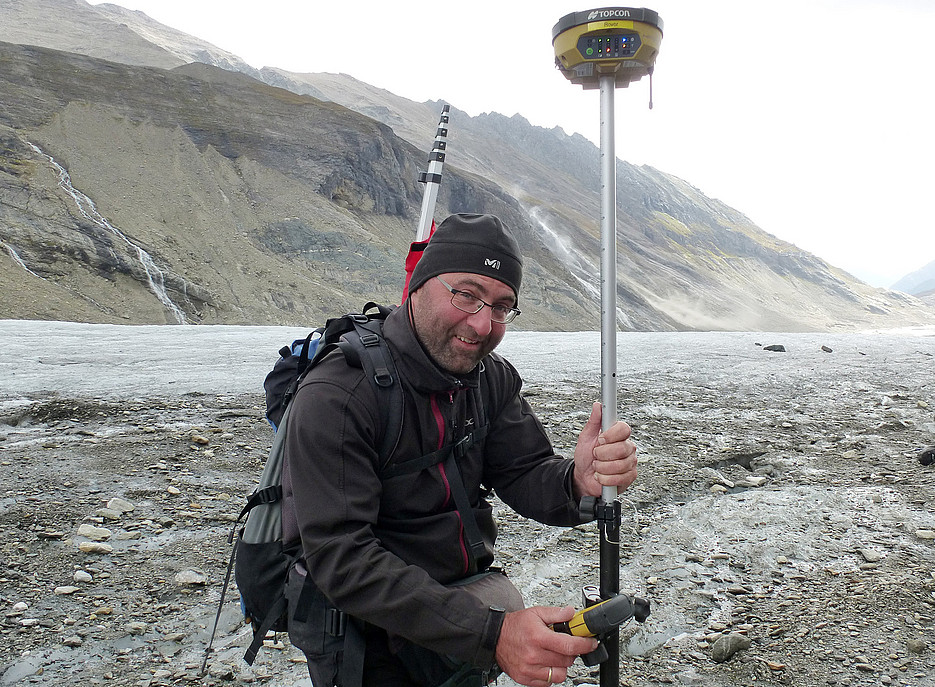
Andreas Kellerer-Pirklbauer with a measuring device at the edge of a glacier, scree on the ground ©University of Graz / Lieb
©University of Graz / Lieb
Andreas Kellerer-Pirklbauer observes and documents the development of glaciers in the Alpine region. Photo: Uni Graz/Lieb
Andrea Steiner, portrait ©© Fotografie Carolin Bohn 2023
© Fotografie Carolin Bohn 2023
Andrea Steiner researches climate change in the atmosphere. Photo: Carolin Bohn
created by Gudrun Pichler

Related news

On the trail of the Big Bang: University of Graz receives 1.5 million euros for doctoral programmes

The Austrian Science Fund FWF has selected the Doctoral Programme in Theoretical Particle Physics at the University of Graz for funding from the Doc.funds. Six young scientists will be funded for 3.5 years. They will gain fundamentally new insights into the origins of the world.

From trans women and knee prostheses: sports science prizes awarded

Walking better with a prosthesis, successfully getting rid of excess weight, training more effectively, more fairness for trans people in sport: these were the topics addressed by the students at the University of Graz who were awarded the sports science prizes for their Master's theses on 3 December 2025.

Influential: Rupert Baumgartner and Holger Hoff among the highly cited researchers

The number of publications in scientific journals is considered to be a measure of a researcher's scientific achievement. How often these works are cited by colleagues provides information about the relevance of the publications. Sustainability researcher Rupert Baumgartner and transdisciplinarity expert Holger Hoff from the University of Graz are among the top 1 per cent of the most cited scientists in their fields of research.

Nobel Lecture 2025: How evolution enters chemistry

During the Nobel Lecture at BioTechMed-Graz, Nobel Prize winner in Chemistry Frances H. Arnold provided insight into her research on the directed evolution of enzymes.

Begin of page section:
Additional information:

University of Graz
Universitaetsplatz 3
8010 Graz
Austria
  • Contact
  • Web Editors
  • Moodle
  • UNIGRAZonline
  • Imprint
  • Data Protection Declaration
  • Accessibility Declaration
Weatherstation
Uni Graz

End of this page section. Go to overview of page sections

End of this page section. Go to overview of page sections

Begin of page section:

End of this page section. Go to overview of page sections