Begin of page section:
Page sections:

  • Go to contents (Accesskey 1)
  • Go to position marker (Accesskey 2)
  • Go to main navigation (Accesskey 3)
  • Go to sub navigation (Accesskey 4)
  • Go to additional information (Accesskey 5)
  • Go to page settings (user/language) (Accesskey 8)
  • Go to search (Accesskey 9)

End of this page section. Go to overview of page sections

Begin of page section:
Page settings:

English en
Deutsch de
Search
Login

End of this page section. Go to overview of page sections

Begin of page section:
Search:

Search for details about Uni Graz
Close

End of this page section. Go to overview of page sections


Search

Begin of page section:
Main navigation:

Page navigation:

  • University

    University
    • About the University
    • Organisation
    • Faculties
    • Library
    • Working at University of Graz
    • Campus
    Developing solutions for the world of tomorrow - that is our mission. Our students and our researchers take on the great challenges of society and carry the knowledge out.
  • Research Profile

    Research Profile
    • Our Expertise
    • Research Questions
    • Research Portal
    • Promoting Research
    • Research Transfer
    • Ethics in Research
    • Commission for Scientific Integrity
    Scientific excellence and the courage to break new ground. Research at the University of Graz creates the foundations for making the future worth living.
  • Studies

    Studies
    • Prospective Students
    • Students
    • Registration for Study Programme (Winter semester 2026/27)
    • Study Days 22-26 June 2026
  • Community

    Community
    • International
    • Location
    • Research and Business
    • Alumni
    The University of Graz is a hub for international research and brings together scientists and business experts. Moreover, it fosters the exchange and cooperation in study and teaching.
Topics
  • Sustainable University
  • Researchers answer
  • Work for us
Close menu

End of this page section. Go to overview of page sections

Begin of page section:
You are here:

University of Graz News Hoch hinaus

End of this page section. Go to overview of page sections

Tuesday, 12 October 2021

Hoch hinaus

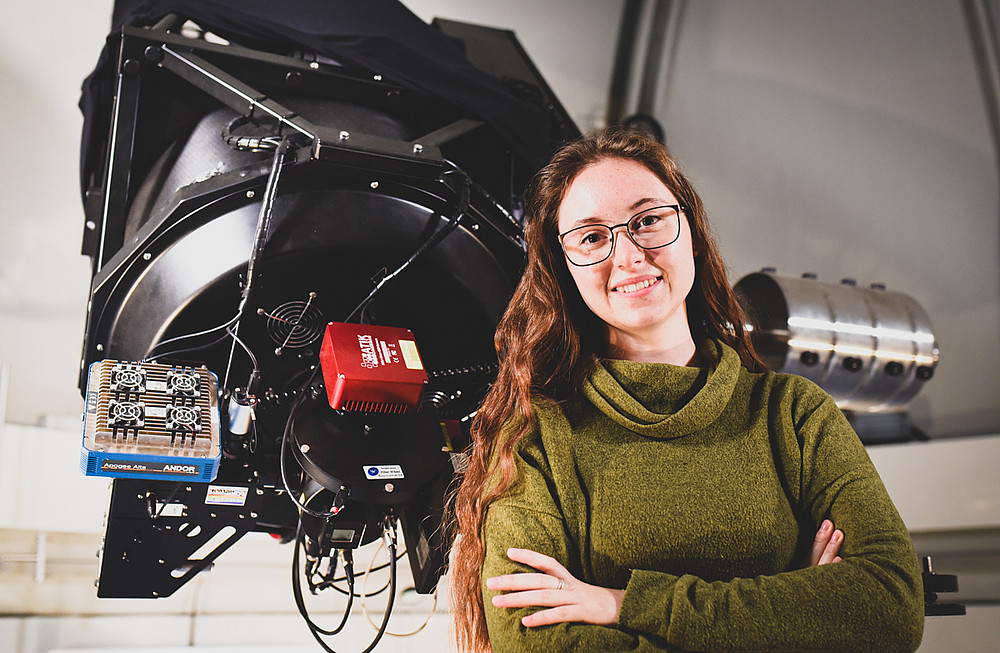
Die Physik-Studentin Victoria Kutnohorsky ist Teil eines Teams, das Mitte Oktober im ESA-Camp in Norwegen eine Höhenforschungsrakete baut. Foto: Uni Graz/Tzivanopoulos

Die Physik-Studentin Victoria Kutnohorsky ist Teil eines Teams, das Mitte Oktober im ESA-Camp in Norwegen eine Höhenforschungsrakete baut. Foto: Uni Graz/Tzivanopoulos

Victoria Kutnohorsky baut an einer Rakete, die Klimadaten aus acht Kilometer Höhe an die Erde schickt

Genau 3394 Kilometer von Graz entfernt, im norwegischen Andøya, konstruieren in nur einer Woche 24 Studierende aus Europa und Kanada eine Höhenforschungsrakete. Der zwei Meter hohe Zylinder soll am 16. Oktober 2021 abheben und in acht Kilometer Höhe wertvolle Wetterdaten an den Boden senden. Mit dabei ist auch Victoria Kutnohorsky, die an der Uni Graz studiert.

Ganz am Anfang der Mission stand ein Posting der European Space Agency (ESA) auf Instagram, den Kutnohorsky auf ihrem Smartphone angeklickt hat. Darin verpackt war ein Aufruf an JungwissenschafterInnen sich freiwillig für den Bau einer Rakete zu melden. „Ich verfasste ein Motivationsschreiben und welche Messtechnik ich mitschicken würde“, erklärt sie. Einige Zeit später bekam sie Rückmeldung, dass sie ins Team aufgenommen wurde und sie konnte am 9. Oktober 2021 nach Andøya in das Space Center der ESA nahe dem Polarkreis reisen. Die Vorbereitungen dafür laufen bereits seit November des vergangenen Jahres. Im Vorfeld konnte sie sich über Webkonferenzen mit den anderen RaketenkonstrukteurInnen austauschen.

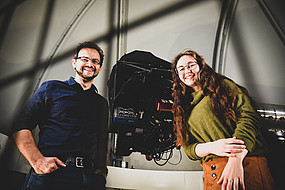
„Der Weltraum und die Astrophysik haben mich schon immer sehr interessiert. Bereits in der Schule wusste ich, dass ich etwas Naturwissenschaftliches machen möchte“, betont Kutnohorsky. Gesagt, getan: Seit 2018 ist sie NAWIGraz-Studierende im Fach Physik und schreibt in ihrer Bachelorarbeit aktuell über Exoplaneten, also über Himmelskörper, die sich außerhalb unseres Sonnensystems befinden. Dazu verbringt die Jungforscherin immer wieder ganze Nächte mit Sternenbeobachtung im Observatorium Lustbühel.

In Norwegen ist die junge Oberösterreicherin Teil der Gruppe, die sich mit Messgeräten und den Sensoren an Bord der Mini-Rakete beschäftigt. „Wir schicken insgesamt acht Sensoren mit. Darunter Instrumente für die Temperaturmessung, einen Druck- und einen Lichtsensor und auch GPS für die Orientierung“, erzählt sie. Ein anderes Team kümmert sich um den Antrieb, andere berechnen die Flugbahn der Rakete. Für die Physikstudentin hat die Reise einen Mehrwert: Neben dem Erlebnis so hoch im Norden Europas am „Fly a rocket“-Programm der ESA teilnehmen zu können, möchte Kutnohorsky die Messdaten auch nachhaltig verwerten. „Ich hoffe wir können genug Informationen sammeln, damit ich sie in einer Vorlesung zum Thema Klimaphysik meinen Mitstudierenden präsentieren kann.“

Mehr Informationen: https://www.esa.int/Education/Fly_A_Rocket
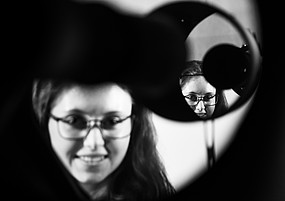
Blick in den Spiegel des ASA-Teleskops am Observatorium Lustbühel in Graz. Foto: Uni Graz/Tzivanopoulos
Victoria Kutnohorsky schreibt ihre Bachelorarbeit bei Paul Beck am Institut für Physik. Foto: Uni Graz/Tzivanopoulos
created by Konstantin Tzivanopoulos

Related news

Full effort in the heat: the Sports Centre was in full swing at the Kleeblattlauf

On 19 June 2026, 2,000 runners and hundreds of supporters made their way to the Rosenhain for a sporting end-of-term event.

Save, invest or guarantee: What Austrians expect from the state

Austria needs to make savings. But where? And what should the Republic actually be spending its money on? The answers are provided by the initial findings of a major study involving the University of Graz. 99 per cent of those surveyed are in favour of the state ensuring healthcare provision. Almost three-quarters would like to see more public funding for education, whilst only around three per cent are in favour of cuts in this sector.

Science meets blockbuster: Campus cinema at the University of Graz

A cinematic treat for the scientific community: the courtyard of the University of Graz’s main building is once again being transformed into an atmospheric open-air cinema this year. From 29 June to 10 July 2026 (Mondays to Fridays from 8.30 pm), blockbusters and documentaries will be shown on the open-air screen. Academics from the University of Graz will be taking a closer look at the films shown, examining them to distinguish fact from fiction.

Complying with the norm: Why Do Standards Shape Our Lives, Elisabeth Staudegger?

Standards determine whether a sheet of paper fits in a printer or whether a charging plug can power multiple devices. These standards shape our everyday lives. But who actually sets these standards? Where are the weaknesses, and how could science help to improve them? Elisabeth Staudegger, Head of the ‘Law and IT’ Department at the Institute for Legal Foundations at the University of Graz, host the Academic Standards Day on 16 June. Here she relays how sciences can contribute to the topic of standardisation and reveals her personal favourite standard.

Begin of page section:
Additional information:

University of Graz
Universitaetsplatz 3
8010 Graz
Austria
  • Contact
  • Web Editors
  • Moodle
  • UNIGRAZonline
  • Imprint
  • Data Protection Declaration
  • Accessibility Declaration
Weatherstation
Uni Graz

End of this page section. Go to overview of page sections

End of this page section. Go to overview of page sections

Begin of page section:

End of this page section. Go to overview of page sections