Begin of page section:
Page sections:

  • Go to contents (Accesskey 1)
  • Go to position marker (Accesskey 2)
  • Go to main navigation (Accesskey 3)
  • Go to sub navigation (Accesskey 4)
  • Go to additional information (Accesskey 5)
  • Go to page settings (user/language) (Accesskey 8)
  • Go to search (Accesskey 9)

End of this page section. Go to overview of page sections

Begin of page section:
Page settings:

English en
Deutsch de
Search
Login

End of this page section. Go to overview of page sections

Begin of page section:
Search:

Search for details about Uni Graz
Close

End of this page section. Go to overview of page sections


Search

Begin of page section:
Main navigation:

Page navigation:

  • University

    University
    • About the University
    • Organisation
    • Faculties
    • Library
    • Working at University of Graz
    • Campus
    Developing solutions for the world of tomorrow - that is our mission. Our students and our researchers take on the great challenges of society and carry the knowledge out.
  • Research Profile

    Research Profile
    • Our Expertise
    • Research Questions
    • Research Portal
    • Promoting Research
    • Research Transfer
    • Ethics in Research
    • Commission for Scientific Integrity
    Scientific excellence and the courage to break new ground. Research at the University of Graz creates the foundations for making the future worth living.
  • Studies

    Studies
    • Prospective Students
    • Students
    • Registration for Study Programme (Winter semester 2026/27)
  • Community

    Community
    • International
    • Location
    • Research and Business
    • Alumni
    The University of Graz is a hub for international research and brings together scientists and business experts. Moreover, it fosters the exchange and cooperation in study and teaching.
Topics
  • Sustainable University
  • Researchers answer
  • Work for us
Close menu

End of this page section. Go to overview of page sections

Begin of page section:
You are here:

University of Graz News Hot Air

End of this page section. Go to overview of page sections

Thursday, 30 July 2020

Hot Air

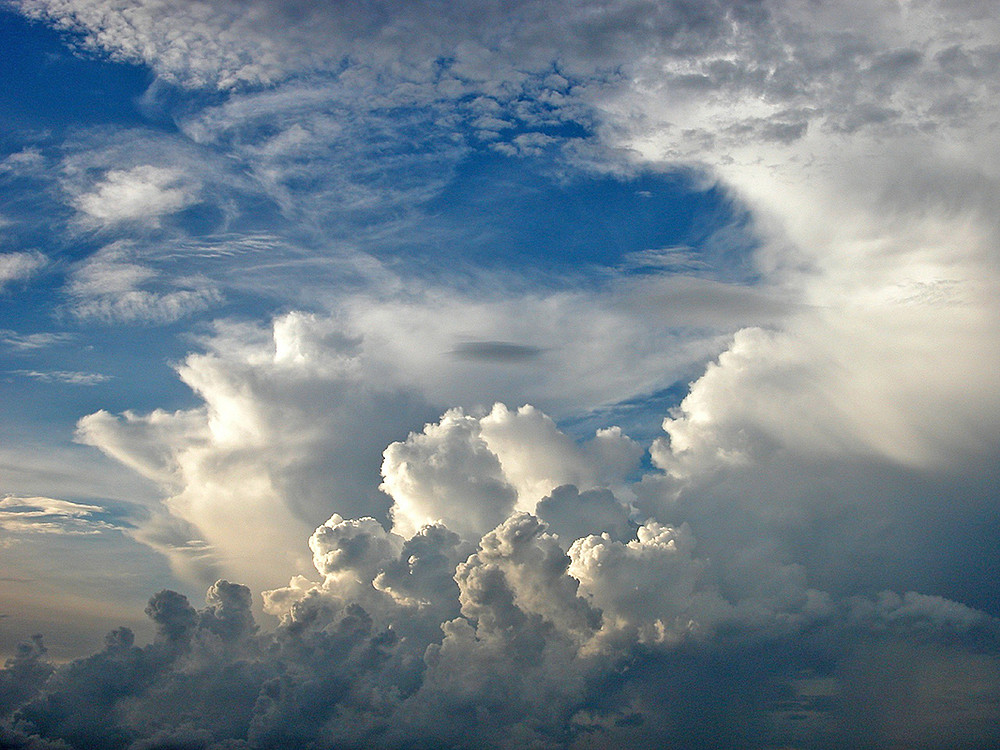
The layering of the atmosphere and the weather alter due to climate change. Researchers at the University of Graz analysed temperature trends in the air. Photo: Pixabay

The layering of the atmosphere and the weather alter due to climate change. Researchers at the University of Graz analysed temperature trends in the air. Photo: Pixabay

Climate researchers at the University of Graz track temperature trends in the atmosphere

Atlantic low, Azores high, frontal rain from the Mediterranean: our weather is shaped by temperature differences and currents in the lowest layer of the atmosphere. If this part of the atmosphere heats up over the long term, it also influences heatwaves in Europe and extreme precipitation. Leading an international study, researchers at the University of Graz have now been able to show consistently how observed temperatures in the troposphere and stratosphere have changed over the past four decades. Their findings are published in the current issue of the Journal of Climate.

“The troposphere, which is the lowest layer of the atmosphere where weather conditions take place, has warmed by 0.25 to 0.35 degrees per decade since the 2000s,” says Andrea Steiner from the Wegener Center for Climate and Global Change at the University of Graz, summarising one of the findings. Over the entire measurement period of the satellite era, the temperature has risen by 0.6 to 0.8 degrees. In the stratosphere, which lies above the troposphere, temperatures have been decreasing – by one to three degrees over the last 40 years. This cooling is caused by the rise in greenhouse gases, which in this layer of the atmosphere re-emit thermal radiation from the Earth into space. The change in ozone concentration also plays a role. Since the late 1990s, the cooling of the lower stratosphere has slowed as the ozone layer has begun to recover.
“The temperature trends in the atmosphere, particularly around the tropics, are even more pronounced than at the Earth’s surface,” point out Steiner and her colleague Florian Ladstädter. Changes in the temperature of these layers influence complex interactions with the Earth’s surface and the oceans, affecting large-scale circulation patterns that shape our global weather patterns. “The greenhouse gases are clearly responsible for this warming. A significant reduction in CO2 remains essential if we are to slow down climate change”, Steiner adds.

New picture
For their study, the researchers from Graz, together with international partners, evaluated and compared a range of data recorded at different altitudes from the late 1970s onwards. Sources included weather satellites, so-called GPS radio occultation measurements and ground-based measurements, with all these pieces of the puzzle coming together to form a consistent picture of atmospheric climate change. “It shows us that long-term observation data is essential for climate research,” say the researchers.

The activity on “Atmospheric Temperature Changes and their Drivers”, which Steiner co-leads, is an international collaboration within the framework of the World Climate Research Programme. The publication was produced as part of the “VERTICLIM – Atmospheric Vertical Structure and Trends in Climate Data” project sponsored by the Austrian Science Fund (FWF).

Further Information: wegcenter.uni-graz.at

Publication:
A. K. Steiner, F. Ladstädter, W. J. Randel, A. C. Maycock, Q. Fu, C. Claud, H. Gleisner, L. Haimberger, S.-P. Ho, P. Keckhut, T. Leblanc, C. Mears, L. Polvani, B. D. Santer, T. Schmidt, V. Sofieva, R. Wing, and C.-Z. Zou, „Observed temperature changes in the troposphere and stratosphere from 1979 to 2018“, Journal of Climate, doi:10.1175/JCLI-D-19-0998.1


created by Dagmar Eklaude

Related news

Complying with the norm: Why Do Standards Shape Our Lives, Elisabeth Staudegger?

Standards determine whether a sheet of paper fits in a printer or whether a charging plug can power multiple devices. These standards shape our everyday lives. But who actually sets these standards? Where are the weaknesses, and how could science help to improve them? Elisabeth Staudegger, Head of the ‘Law and IT’ Department at the Institute for Legal Foundations at the University of Graz, host the Academic Standards Day on 16 June. Here she relays how sciences can contribute to the topic of standardisation and reveals her personal favourite standard.

More body awareness than a culture war

In Italy, sex education lessons will in future only be permitted with parental consent, and will be banned entirely in nurseries and primary schools. At the same time, Pride Month highlights why knowledge about the body, relationships, boundaries and diversity is important for young people. A study by the University of Graz shows how important knowledge about the body, contraception, relationship skills and protection against violence is

Will Austria win the World Cup? Mathematician reveals calculation method

Michael Fischer uses the football tournament as a practical example for highschool lessons.

Survival strategies: How plants respond to drought

According to Geosphere Austria, this spring was the driest in Austria since records began around 170 years ago. The low rainfall put particular pressure on the agricultural sector. And climate change is set to make the situation even worse in the coming decades. We asked Johannes Liesche, a professor at the Department of Biology at the University of Graz, how plants react to water shortages and how they survive periods of drought.

Begin of page section:
Additional information:

University of Graz
Universitaetsplatz 3
8010 Graz
Austria
  • Contact
  • Web Editors
  • Moodle
  • UNIGRAZonline
  • Imprint
  • Data Protection Declaration
  • Accessibility Declaration
Weatherstation
Uni Graz

End of this page section. Go to overview of page sections

End of this page section. Go to overview of page sections

Begin of page section:

End of this page section. Go to overview of page sections