Begin of page section:
Page sections:

  • Go to contents (Accesskey 1)
  • Go to position marker (Accesskey 2)
  • Go to main navigation (Accesskey 3)
  • Go to sub navigation (Accesskey 4)
  • Go to additional information (Accesskey 5)
  • Go to page settings (user/language) (Accesskey 8)
  • Go to search (Accesskey 9)

End of this page section. Go to overview of page sections

Begin of page section:
Page settings:

English en
Deutsch de
Search
Login

End of this page section. Go to overview of page sections

Begin of page section:
Search:

Search for details about Uni Graz
Close

End of this page section. Go to overview of page sections


Search

Begin of page section:
Main navigation:

Page navigation:

  • University

    University
    • About the University
    • Organisation
    • Faculties
    • Library
    • Working at University of Graz
    • Campus
    Developing solutions for the world of tomorrow - that is our mission. Our students and our researchers take on the great challenges of society and carry the knowledge out.
  • Research Profile

    Research Profile
    • Our Expertise
    • Research Questions
    • Research Portal
    • Promoting Research
    • Research Transfer
    • Ethics in Research
    • Commission for Scientific Integrity
    Scientific excellence and the courage to break new ground. Research at the University of Graz creates the foundations for making the future worth living.
  • Studies

    Studies
    • Prospective Students
    • Students
    • Registration for Study Programme (Winter semester 2026/27)
    • Study Days 22-26 June 2026
  • Community

    Community
    • International
    • Location
    • Research and Business
    • Alumni
    The University of Graz is a hub for international research and brings together scientists and business experts. Moreover, it fosters the exchange and cooperation in study and teaching.
Topics
  • Sustainable University
  • Researchers answer
  • Work for us
Close menu

End of this page section. Go to overview of page sections

Begin of page section:
You are here:

University of Graz News Well-balanced

End of this page section. Go to overview of page sections

Tuesday, 17 November 2020

Well-balanced

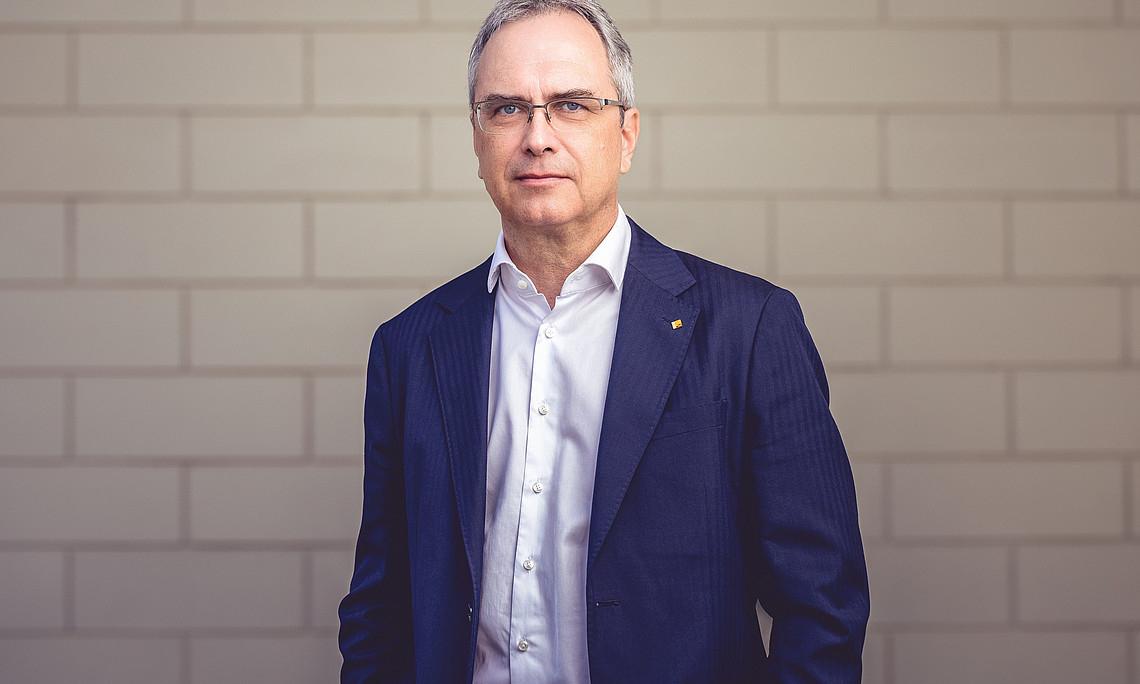
Martina Schweiger, Institute of Molecular Biosciences of the University of Graz, contributed to this publication as a part of the Austrian Excellence Cluster on Lipid Research. Photo: Uni Graz/Grumet.

Martina Schweiger, Institute of Molecular Biosciences of the University of Graz, contributed to this publication as a part of the Austrian Excellence Cluster on Lipid Research. Photo: Uni Graz/Grumet.

Reseachers identify a new factor that offers potential new therapeutic strategy for obesity

Obesity is a serious global health problem and a risk factor for diseases such as type II diabetes, heart disease and fatty liver disease. A central element in the development of obesity is adipose tissue, which comprises fat cells (so-called adipocytes, specialised to store fat) and macrophages (immune system scavenger cells, which are typically associated with the destruction of microbes). Together with researchers from Poland, Germany, Australia and Austria, a team of MedUni Vienna scientists has now discovered the signalling pathways responsible for the development of a valuable type of adipose tissue macrophage (ATM) in obesity, which prevents lipotoxicity. Lipotoxicity is the process whereby fat molecules are deposited in non-adipose tissues. This study has now been published in the top journal Nature Metabolism.

In this study, the researchers, including some from CeMM (Research Center for Molecular Medicine of the Austrian Academy of Sciences) and the University of Graz, specifically studied the PI3K signalling pathway. This is a major metabolic regulator, since it regulates fat storage and plays a major role in the cellular reaction to the hormone insulin. In obesity, diminished insulin action or insulin resistance leads to type II diabetes, which is linked to high blood glucose levels.

Gernot Schabbauer from the Institute of Vascular Biology and Thrombosis Research at MedUni Vienna's Center for Physiology and Pharmacology and senior author of the study has been studying the PI3K signalling pathway in immune cells for several years now: "The key role of PI3K in metabolic processes is proven but its role in adipose tissue macrophages was hitherto unclear." Julia Brunner, co-lead author of the study, adds: "ATMs are like Dr Jekyll and Mr Hyde – in obesity, they can either be good or bad. We assumed that an active PI3K signalling pathway could tip the balance in favour of ‘good’.”

Using techniques such as multicolour flow cytometry, lipidomics, cellular respiration tests and several animal models, the scientists discovered that sustained activity of the PI3K signalling pathway can tip the balance within macrophages for the better: this notably produces specialised ATMs, which are characterised by increased numbers of MARCO (macrophage receptor with collagenous structure) scavenger receptors on their surface.

"We discovered that these MARCO-expressing ATMs are professional lipid scavengers. These cells absorb fat MARCO-dependently and break it down, thereby preventing it from finding its way into the bloodstream," explains Andrea Vogel, co-lead author of the study and PhD student in immunology at MedUni Vienna. Omar Sharif, co-senior author of the study, adds: "Metabolic syndrome and lipotoxicity are characteristic features of obesity. Our work indicates that a higher lipid intake and improved energy metabolism of the ATMs helps to maintain systemic metabolic health. This can have far-reaching impacts for a number of metabolic diseases."

Subsequent studies will now be conducted to establish whether PI3K signalling can also have a lasting influence on the ATM population in humans as well. "Although moderate inhibition of PI3K has already been discussed as a therapeutic strategy for treating metabolic diseases, our data point to potential unexpected side-effects. These might include altered blood lipid levels, caused by the reduced fat absorption of the ATMs," says Schabbauer.

Publication:
Brunner, Julia et. al. The PI3K pathway preserves metabolic health through MARCO-dependent lipid uptake by adipose tissue macrophages. Nature Metabolism.
https://www.nature.com/articles/s42255-020-00311-5



created by Thorsten Medwedeff/ MedUni Wien & Gerhild Leljak

Related news

Staying fit during the holidays: summer sports on the University of Graz campus

The Kleeblattlauf is not the end of the fitness term. Following last year’s successful launch, the University of Graz is once again offering summer sports on campus this year. From 30 June to 16 July 2026, there will be a free exercise programme in the open air. On the shady Südwiese (between the main building and Universitätsplatz 2), anyone interested can get in shape in the afternoons with body workouts, fascia training and yoga.

Getting even hotter: Researchers predict global warming of 1.7 degrees by 2027

While Europe is currently sweltering in the heat, global temperatures are also rising towards concerning record levels. In 2026, Earth’s surface air temperature is expected to reach 1.62 degrees, and in 2027 even 1.71 degrees Celsius above pre-industrial levels. The long-term temperature rise – an average over a 20-year period – is predicted to exceed the 1.5-degree threshold of the Paris Agreement as of 2026 already. For the first time, researchers at the University of Graz have been able to make such a forecast so far in advance. The intensifying El Niño climate event favors forecast skill and thereby facilitates a reliable computation.

Forest fire at Rosenhain: Volunteer fire brigade carried out an evacuation drill at the Jesuit refectory

Thick smoke in the stairwell, flames at the edge of the forest, people missing in the Jesuit refectory at the University of Graz: at Rosenhain, the Graz Volunteer Fire Brigade carried out a drill simulating a scenario that is becoming increasingly realistic given the heat and drought

Full effort in the heat: the Sports Centre was in full swing at the Kleeblattlauf

On 19 June 2026, 2,000 runners and hundreds of supporters made their way to the Rosenhain for a sporting end-of-term event.

Begin of page section:
Additional information:

University of Graz
Universitaetsplatz 3
8010 Graz
Austria
  • Contact
  • Web Editors
  • Moodle
  • UNIGRAZonline
  • Imprint
  • Data Protection Declaration
  • Accessibility Declaration
Weatherstation
Uni Graz

End of this page section. Go to overview of page sections

End of this page section. Go to overview of page sections

Begin of page section:

End of this page section. Go to overview of page sections