



Begin of page section:
Page sections:

  • Go to contents (Accesskey 1)
  • Go to position marker (Accesskey 2)
  • Go to main navigation (Accesskey 3)
  • Go to sub navigation (Accesskey 4)
  • Go to additional information (Accesskey 5)
  • Go to page settings (user/language) (Accesskey 8)
  • Go to search (Accesskey 9)

End of this page section. Go to overview of page sections

Begin of page section:
Page settings:

English en
Deutsch de
Search
Login

End of this page section. Go to overview of page sections

Begin of page section:
Search:

Search for details about Uni Graz
Close

End of this page section. Go to overview of page sections


Search

Begin of page section:
Main navigation:

Page navigation:

  • University

    University
    • About the University
    • Organisation
    • Faculties
    • Library
    • Working at University of Graz
    • Campus
    Developing solutions for the world of tomorrow - that is our mission. Our students and our researchers take on the great challenges of society and carry the knowledge out.
  • Research Profile

    Research Profile
    • Our Expertise
    • Research Questions
    • Research Portal
    • Promoting Research
    • Research Transfer
    • Ethics in Research
    • Commission for Scientific Integrity
    Scientific excellence and the courage to break new ground. Research at the University of Graz creates the foundations for making the future worth living.
  • Studies

    Studies
    • Prospective Students
    • Students
    • Welcome Weeks for First Year Students
  • Community

    Community
    • International
    • Location
    • Research and Business
    • Alumni
    The University of Graz is a hub for international research and brings together scientists and business experts. Moreover, it fosters the exchange and cooperation in study and teaching.
Topics
  • Sustainable University
  • Researchers answer
  • Work for us
Close menu

End of this page section. Go to overview of page sections

Begin of page section:
You are here:

University of Graz News Guter Wirt

End of this page section. Go to overview of page sections

Thursday, 22 December 2016

Guter Wirt

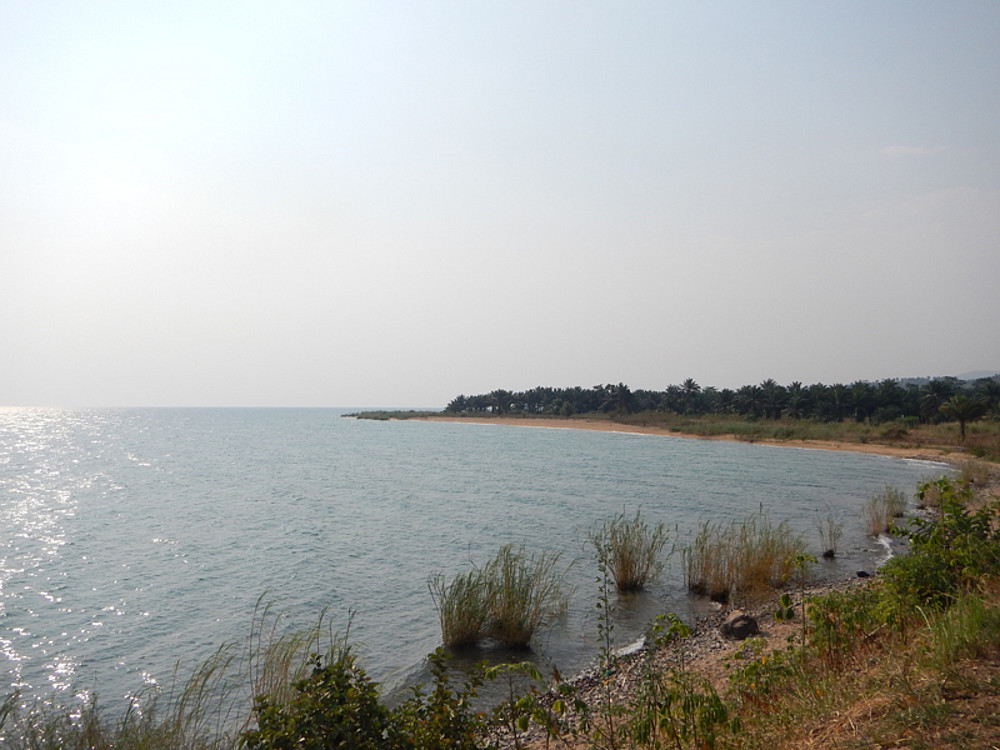
Das Forschungsgebiet des internationalen Teams ist der Tanganjikasee in Ostafrika. Der Tiefwasser-See ist der zweitgrößte und zweitälteste der Welt und verfügt über einen enormen Reichtum an unterschiedliche Fischarten. Foto: Koblmüller

Das Forschungsgebiet des internationalen Teams ist der Tanganjikasee in Ostafrika. Der Tiefwasser-See ist der zweitgrößte und zweitälteste der Welt und verfügt über einen enormen Reichtum an unterschiedliche Tierarten. Foto: Koblmüller

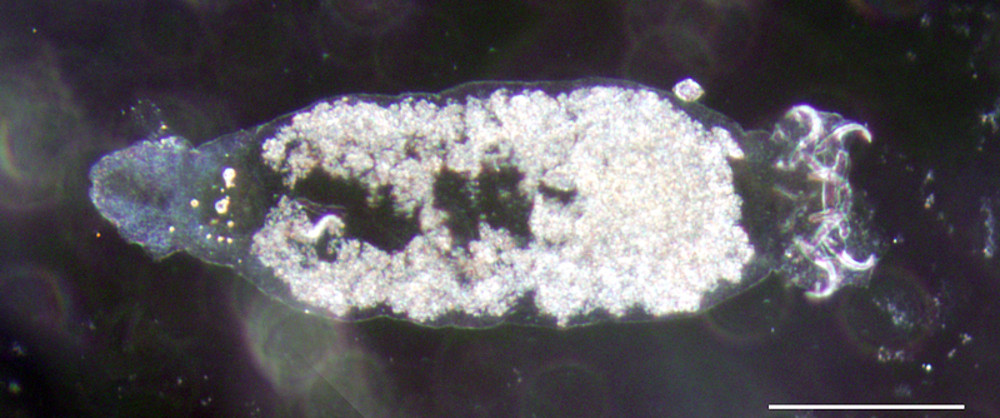
Dieser Plattwurm ist normalerweise als wählerisch bei seiner Wahl eines Wirtes bekannt. Im tiefen Gewässer, wo es weniger Auswahl an Fischen gibt, trifft dies aber nicht zu. Bild: Nikol Kmentová

Zoologen auf den Spuren von wählerischen Fisch-Parasiten im zweittiefsten See der Welt

Der Tanganjikasee in Ostafrika ist der zweittiefste und zweitälteste See der Welt. Er ist bekannt für seinen extremen Reichtum an unterschiedlichsten Tierarten – vor allem an Fischen -, von denen die überwiegende Mehrheit ausschließlich in diesem See vorkommt. ZoologInnen der Karl-Franzens-Universität Graz rund um Priv.-Doz. Dr. Stephan Koblmüller untersuchen bereits seit Jahren jene Faktoren und Prozesse, die dieser Vielfalt zugrundeliegen. Neuere Untersuchungen zeigen, dass zahlreiche Fischarten des Tanganjikasees ihre eigene Parasitenfauna haben, was bedeutet, dass sich viele Parasiten ganz spezifisch an eine bestimmte Wirtsart, an einen bestimmten Fisch, angepasst haben und nur diese befallen. Diese hohe Wirtsspezifität wurde vor allem dadurch erklärt, dass die einzelnen bisher untersuchten Fischarten üblicherweise in großer Anzahl in ihrem bevorzugten Lebensraum zu finden sind und somit die Parasiten kein Problem haben einen passenden Wirt zu finden. Dies gilt allerdings nur für die arten- und individuenreichen Lebensräume im seichten Wasser, die bislang bevorzugt untersucht wurden.

Ein internationales Forscherteam mit starker Beteiligung der Uni Graz hat nun im Tanganjikasee – die maximale Tiefe beträgt dort 1470 Meter – eine Fischparasitenart gefunden, die auch nicht enger miteinander verwandte und bei der lokalen Bevölkerung als Speisefische hochgeschätzte Wirtsarten befällt. Diese Art gehört zur Gruppe der Plattwürmer, die sich eigentlich als besonders wählerisch bei der Auswahl der Wirte auszeichnet. Die ForscherInnen vermuten, dass dies mit dem Vorkommen in tieferem Wasser zusammenhängt, da dort die Fischdichten viel geringer sind. Folglich ist die Auswahl an potenziellen Wirten begrenzt. „Der Tanganjikasee ist eines der wenigen Süßwassersysteme, die eine eigene Tiefwasserfauna aufweisen, und hier konnten wir zum ersten Mal ein Phänomen in Binnengewässern aufzeigen, das bereits aus dem Meer bekannt ist. Die zeigt einmal mehr, wie einzigartig der Tanganjikasee und seine Fauna sind und wie anhand dieses Systems wichtige Erkenntnisse darüber gewonnen werden können, wie biologische Vielfalt entsteht und sich an den jeweiligen Lebensraum anpasst“, sagt Koblmüller.

Die Ergebnisse dieser Studie sind nun in der hochrangigen Fachzeitschrift Scientific Reports erschienen.Kmentová N, Gelnar M, Mendlová M, Van Steenberge M, Koblmüller S & Vanhove MPMl. 2016. Reduced host-specificity in a parasite infecting non-littoral Lake Tanganyika cichlids evidenced by intraspecific morphological and genetic diversity. Scientific Reports (www.nature.com/articles/srep39605).

created by Stephan Koblmüller & Konstantinos Tzivanopoulos

Related news

Jurassic Sounds: Biologist reconstructs insect songs from 165 million years ago

It was apparently not just the roars of the dinosaurs that made up the soundscape of the animal world during the Jurassic period. Crickets and grasshoppers communicated through a variety of songs and high-pitched sounds, as Thorin Jonsson from the Institute of Biology at the University of Graz discovered together with colleagues from the universities of Lincoln, Bristol (UK), Beijing (China) and Tempe (USA). The findings on what are so far the oldest traces of sound on Earth have just been published in the journal PNAS.

EU funding boosts international exchange between universities

The University of Graz is further expanding its international study opportunities through the European university alliance Arqus and is taking the lead in two key projects. In future, students will benefit from even more joint degree programmes and from simplified recognition of academic achievements through the Joint European Degree Label.

Rescue and risks: Researchers have surveyed public perceptions of AI

The use of artificial intelligence has had to be made transparent since 2 August 2026. The EU’s AI Act, which has been in force since then, also sets out how risky an application is and which security measures apply as a result. However, the assessment of risks by the legislation differs in some cases significantly from the perceptions of the Austrian public. This is the finding of a representative study carried out by data scientist Stefan Thalmann from the University of Graz and his team.

The Healing Sea: Researchers discover new approaches to treating chronic inflammation in sponges

Chronic inflammation plays a key role in many diseases, ranging from metabolic disorders and cardiovascular diseases to tissue damage following injuries or infections. “Normally, the body is able to resolve inflammation on its own. If this process becomes unbalanced, immune cells remain permanently active and continue to drive negative changes in the tissue,” explains Andreas Koeberle, a pharmacist at the University of Graz.

Begin of page section:
Additional information:

University of Graz
Universitaetsplatz 3
8010 Graz
Austria
  • Contact
  • Web Editors
  • Moodle
  • UNIGRAZonline
  • Imprint
  • Data Protection Declaration
  • Accessibility Declaration
Weatherstation
Uni Graz

End of this page section. Go to overview of page sections

End of this page section. Go to overview of page sections

Begin of page section:

End of this page section. Go to overview of page sections