Begin of page section:
Page sections:

  • Go to contents (Accesskey 1)
  • Go to position marker (Accesskey 2)
  • Go to main navigation (Accesskey 3)
  • Go to sub navigation (Accesskey 4)
  • Go to additional information (Accesskey 5)
  • Go to page settings (user/language) (Accesskey 8)
  • Go to search (Accesskey 9)

End of this page section. Go to overview of page sections

Begin of page section:
Page settings:

English en
Deutsch de
Search
Login

End of this page section. Go to overview of page sections

Begin of page section:
Search:

Search for details about Uni Graz
Close

End of this page section. Go to overview of page sections


Search

Begin of page section:
Main navigation:

Page navigation:

  • University

    University
    • About the University
    • Organisation
    • Faculties
    • Library
    • Working at University of Graz
    • Campus
    Developing solutions for the world of tomorrow - that is our mission. Our students and our researchers take on the great challenges of society and carry the knowledge out.
  • Research Profile

    Research Profile
    • Our Expertise
    • Research Questions
    • Research Portal
    • Promoting Research
    • Research Transfer
    • Ethics in Research
    • Commission for Scientific Integrity
    Scientific excellence and the courage to break new ground. Research at the University of Graz creates the foundations for making the future worth living.
  • Studies

    Studies
    • Prospective Students
    • Students
    • Welcome Weeks for First Year Students
  • Community

    Community
    • International
    • Location
    • Research and Business
    • Alumni
    The University of Graz is a hub for international research and brings together scientists and business experts. Moreover, it fosters the exchange and cooperation in study and teaching.
Topics
  • Sustainable University
  • Researchers answer
  • Work for us
Close menu

End of this page section. Go to overview of page sections

Begin of page section:
You are here:

University of Graz News Gut gegen Burn-out

End of this page section. Go to overview of page sections

Monday, 02 February 2015

Gut gegen Burn-out
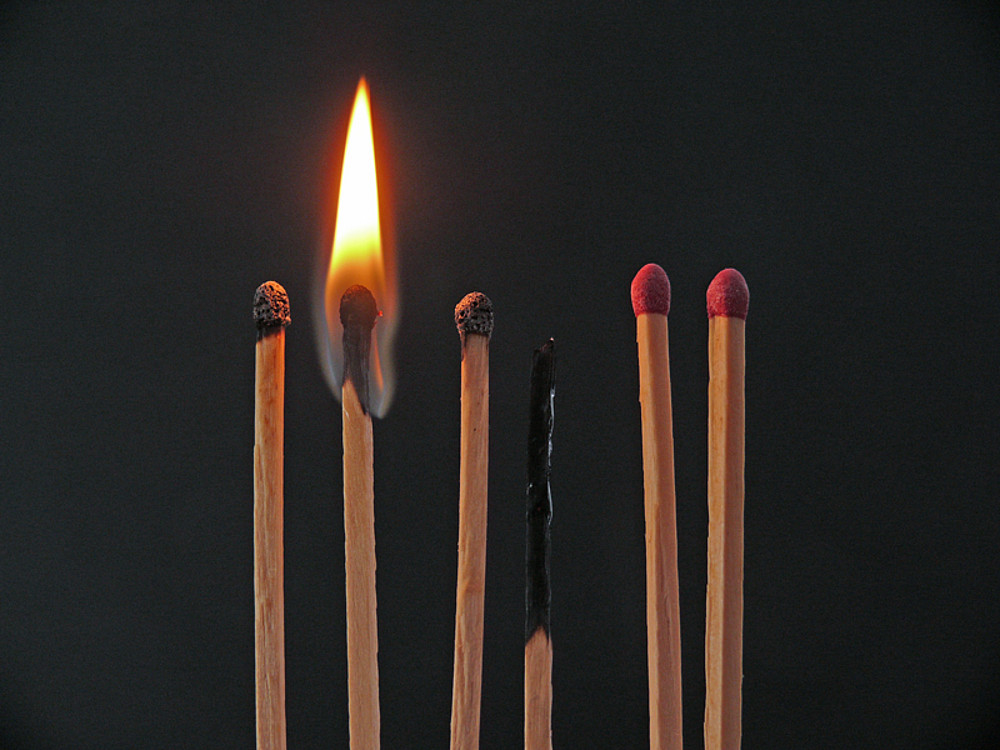
Hilfe bei Burn-out: Durch den Einsatz von Licht wird eine Verbesserung erzielt, haben WissenschafterInnen der Uni Graz herausgefunden. Foto: Lupo/<a href="http://www.pixelio.de">pixelio.de</a>


Hilfe bei Burn-out: Durch den Einsatz von Licht wird eine Verbesserung erzielt, haben WissenschafterInnen der Uni Graz herausgefunden. Foto: Lupo/<a href="http://www.pixelio.de">pixelio.de</a>
WissenschafterInnen der Uni Graz erforschen die Auswirkungen von Licht auf die Psyche

Dass sich Licht positiv auf das Gemüt und das Wohlbefinden auswirkt, war bereits den Menschen im Altertum bekannt. In der Forschung etabliert ist vor allem der Ansatz, dass fehlendes Licht zu einer depressiven Stimmung führen kann. „Gerade in der so genannten dunklen Jahreszeit ist die Lichtmenge geringer als sonst. Dies kann auch der Auslöser für eine Herbst-Winter-Depression sein“, erklärt Univ.-Prof. DDr. Elisabeth Weiss vom Institut für Psychologie der Karl-Franzens-Universität Graz. Schlafstörungen, Antriebslosigkeit, schlechte Konzentrationsfähigkeit und mehr Appetit sind weitere Symptome dieser Krankheit. „In den vergangenen Jahren ist auch das Burn-out – das Ausgebranntsein – in den Fokus der Forschung gerückt. Nun liegen erste Ergebnisse vor“, betont Weiss. Ähnlich wie bei der Depression wirkt sich auch bei Burnout-PatientInnen das Licht positiv auf Erschöpfung und die Stimmung aus, fanden die Uni-Graz-WissenschafterInnen heraus.

Volkskrankheit
Immer mehr Menschen kommen mit den stetig steigenden Anforderungen im Berufsleben nicht zurecht, klagen über Belastungen und zeigen Erschöpfungssymptome. „Diese Belastungen führen zu einem psychischen Ausbrennen“, weiß die Psychologin. Burn-out ließe sich, so die Expertin, nur schwer von einer Depression unterscheiden; es gebe keine klar definierten Kriterien, nach denen diese Krankheit zu klassifizieren sei. Naheliegend ist daher, eine ähnliche Therapieform einzusetzen. Erste Studien an der Uni Graz haben nun gezeigt, dass Licht sehr gut gegen Burn-out wirkt: Es regt die Produktion von Serotonin im Gehirn an und lässt den Melatonin-Spiegel sinken – ist er tagsüber erhöht, sorgt er für Müdigkeit und nachts für Schlafstörungen. „Es gibt nachweislich Veränderungen auf der Neurotransmitter-Ebene. So ist die antidepressive Wirkung zu erklären“, sagt Weiss. Ein Erfolg kann bereits bei einer halbstündigen Licht-Therapie-Sitzung mit 10.000 Lux – das entspricht einem bewölkten Tag draußen – erzielt werden. Bei der Behandlung von demenziellen Erkrankungen wird diese Therapieform bereits erfolgreich eingesetzt. Beste Beispiele für Umsetzungen findet man etwa vermehrt in Altersheimen und geriatrischen Stationen, die zunehmend auf natürliches oder künstliches Licht mit sehr hellem Spektrum zur therapeutischen Unterstützung.

Jahr des Lichts
2015, im dem von der UNESCO ausgerufenen „Internationalen Jahr des Lichts und der lichtbasierten Technologien“, erhalten Forschungen auf diesem Gebiet besondere Aufmerksamkeit. An der Karl-Franzens-Universität Graz finden deshalb in diesem Jubiläumsjahr – mit Unterstützung des Wissenschaftsressorts des Landes Steiermark – verschiedene Vorträgen bis hin zur Ausstellung „Licht und Schatten“ im UniGraz@Museum statt.


created by Konstantinos Tzivanopoulos

Related news

Jurassic Sounds: Biologist reconstructs insect songs from 165 million years ago

It was apparently not just the roars of the dinosaurs that made up the soundscape of the animal world during the Jurassic period. Crickets and grasshoppers communicated through a variety of songs and high-pitched sounds, as Thorin Jonsson from the Institute of Biology at the University of Graz discovered together with colleagues from the universities of Lincoln, Bristol (UK), Beijing (China) and Tempe (USA). The findings on what are so far the oldest traces of sound on Earth have just been published in the journal PNAS.

EU funding boosts international exchange between universities

The University of Graz is further expanding its international study opportunities through the European university alliance Arqus and is taking the lead in two key projects. In future, students will benefit from even more joint degree programmes and from simplified recognition of academic achievements through the Joint European Degree Label.

Rescue and risks: Researchers have surveyed public perceptions of AI

The use of artificial intelligence has had to be made transparent since 2 August 2026. The EU’s AI Act, which has been in force since then, also sets out how risky an application is and which security measures apply as a result. However, the assessment of risks by the legislation differs in some cases significantly from the perceptions of the Austrian public. This is the finding of a representative study carried out by data scientist Stefan Thalmann from the University of Graz and his team.

The Healing Sea: Researchers discover new approaches to treating chronic inflammation in sponges

Chronic inflammation plays a key role in many diseases, ranging from metabolic disorders and cardiovascular diseases to tissue damage following injuries or infections. “Normally, the body is able to resolve inflammation on its own. If this process becomes unbalanced, immune cells remain permanently active and continue to drive negative changes in the tissue,” explains Andreas Koeberle, a pharmacist at the University of Graz.

Begin of page section:
Additional information:

University of Graz
Universitaetsplatz 3
8010 Graz
Austria
  • Contact
  • Web Editors
  • Moodle
  • UNIGRAZonline
  • Imprint
  • Data Protection Declaration
  • Accessibility Declaration
Weatherstation
Uni Graz

End of this page section. Go to overview of page sections

End of this page section. Go to overview of page sections

Begin of page section:

End of this page section. Go to overview of page sections