Begin of page section:
Page sections:

  • Go to contents (Accesskey 1)
  • Go to position marker (Accesskey 2)
  • Go to main navigation (Accesskey 3)
  • Go to sub navigation (Accesskey 4)
  • Go to additional information (Accesskey 5)
  • Go to page settings (user/language) (Accesskey 8)
  • Go to search (Accesskey 9)

End of this page section. Go to overview of page sections

Begin of page section:
Page settings:

English en
Deutsch de
Search
Login

End of this page section. Go to overview of page sections

Begin of page section:
Search:

Search for details about Uni Graz
Close

End of this page section. Go to overview of page sections


Search

Begin of page section:
Main navigation:

Page navigation:

  • University

    University
    • About the University
    • Organisation
    • Faculties
    • Library
    • Working at University of Graz
    • Campus
    Developing solutions for the world of tomorrow - that is our mission. Our students and our researchers take on the great challenges of society and carry the knowledge out.
  • Research Profile

    Research Profile
    • Our Expertise
    • Research Questions
    • Research Portal
    • Promoting Research
    • Research Transfer
    • Ethics in Research
    • Commission for Scientific Integrity
    Scientific excellence and the courage to break new ground. Research at the University of Graz creates the foundations for making the future worth living.
  • Studies

    Studies
    • Prospective Students
    • Students
  • Community

    Community
    • International
    • Location
    • Research and Business
    • Alumni
    The University of Graz is a hub for international research and brings together scientists and business experts. Moreover, it fosters the exchange and cooperation in study and teaching.
  • Spotlight
Topics
  • Sustainable University
  • Researchers answer
  • Work for us
Close menu

End of this page section. Go to overview of page sections

Begin of page section:
You are here:

University of Graz News Green and fair

End of this page section. Go to overview of page sections

Tuesday, 28 June 2022

Green and fair

Smoke from chimneys in front of EU flag

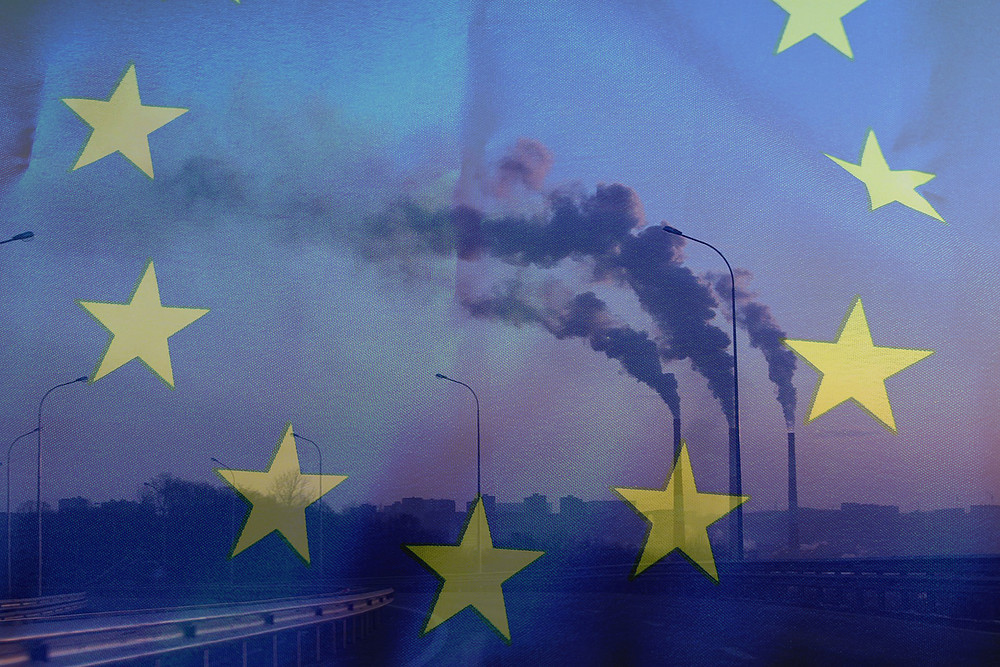
How can the emissions onus be distributed fairly among each of the EU member states? Researchers from the Wegener Center for Climate and Global Change have developed a model Picture: pixabay

University of Graz distributes emission reductions to the 27 EU countries in the "Green Deal"

It is a hot struggle ‒ and not only in climate terms. Even the political discussions in the European Union on how industry, transport, energy supply and agriculture can become climate-neutral by 2050 are on the boil. The EU Parliament is currently working on the laws and directives that will help us reduce emissions in accordance with the "Green Deal". Ultimately, this will mean some countries will have to make greater efforts, while others will have less to do. But how can the emissions onus be distributed fairly among each of the EU member states?
Researchers from the Wegener Center for Climate and Global Change and the International Institutes for Applied Systems Analysis (IIASA) have developed a model that uses 15 indicators to evaluate each of the 27 member states on a fair basis. In addition to financial aspects, these indicators also take social aspects into account.

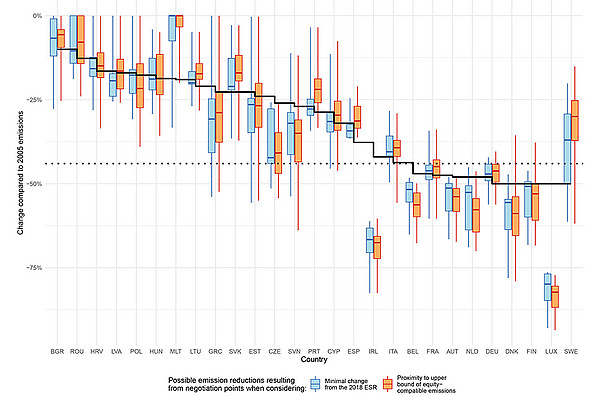
As a result, many countries will have to increase their efforts even more in the future. Among those countries with greater burdens are the Netherlands, Belgium, Denmark and Austria. Others have more leeway, as climate economist Karl Steininger explains: “Germany, for example, has already invested in a more environmentally friendly way over the past two decades. Or Bulgaria and Romania if their lower income is taken into account.” Similarly, Spain and Italy will also be less burdened because they have produced comparatively lower quantities of greenhouse gases in the past. "Austria has expanded renewable energies, but at the same time it is facing a backlog due to consistently high emissions in the past," says Steininger.

This distribution of effort is the result of combining indicators from the three areas performance, responsibility and equality. However, the research team assessed more than just nominal wealth based on gross domestic product by considering:
- What potential does the infrastructure hold, how efficient are administration and politics?
- How high is the proportion of the poorer population and their energy requirements to cover basic needs?
- How high have the emissions of a country been since 1995, and does this mean it may already have used up much of its long-term greenhouse gas budget?

“This tool is available for national negotiations on the Green Deal," Steininger says, confirming the great interest expressed by the EU bodies.

>> Learn more about the tool
>> Paper in Nature Communications

Figure
created by Andreas Schweiger

Related news

Greenery on the rise: over 500 new flowers, perennials and shrubs on campus

Bright blooms and fresh greenery make our hearts beat faster in spring. But it is not just us humans who delight in this colourful growth. For many animals, this splendour provides, above all, food and habitat. There has recently been an increase in this on the University of Graz campus. More than 500 native flowers, perennials and shrubs have been planted on strips of fallow land around Universitätsplatz 2.

Around the world in eight stops: the Long Night of Research at the University of Graz

On 24 April from 5 pm, you can take a short trip around the globe at the University of Graz, discovering pecularities of foreign countries or new local features in the entrance hall of the University Library. The itinerary takes you through introduced animal species, political attitudes and the omnipotence of algorithms. There will also be a programme in the historic reading hall, as well as at the UniGraz@Museum and the University Archive.

Building biological bridges: Chemist discovers an ecological tool for the pharmaceutical industry

Building a relationship on a solid foundation is also important in chemistry. To produce medicines, disinfectants or plant protection products, stable bonds between carbon atoms must be formed. Conventional chemical methods rely on environmentally harmful reagents and solvents to carry out the desired reaction. This process also produces unusable by-products. Chemist Lilla Gal has discovered an enzyme that enables the same process to take place efficiently and sustainably. The results of her research were recently published in the prestigious journal Angewandte Chemie.

Higher Education Strategy 2040: Austria’s universities on course for the future

Austria has 77 higher education institutions, which is above the EU average – but does this really make sense? The new Higher Education Strategy 2040 focuses on cooperation rather than mergers. As one of the six largest universities in Austria, the University of Graz plays a central role in this.

Begin of page section:
Additional information:

University of Graz
Universitaetsplatz 3
8010 Graz
Austria
  • Contact
  • Web Editors
  • Moodle
  • UNIGRAZonline
  • Imprint
  • Data Protection Declaration
  • Accessibility Declaration
Weatherstation
Uni Graz

End of this page section. Go to overview of page sections

End of this page section. Go to overview of page sections

Begin of page section:

End of this page section. Go to overview of page sections