



Begin of page section:
Page sections:

  • Go to contents (Accesskey 1)
  • Go to position marker (Accesskey 2)
  • Go to main navigation (Accesskey 3)
  • Go to sub navigation (Accesskey 4)
  • Go to additional information (Accesskey 5)
  • Go to page settings (user/language) (Accesskey 8)
  • Go to search (Accesskey 9)

End of this page section. Go to overview of page sections

Begin of page section:
Page settings:

English en
Deutsch de
Search
Login

End of this page section. Go to overview of page sections

Begin of page section:
Search:

Search for details about Uni Graz
Close

End of this page section. Go to overview of page sections


Search

Begin of page section:
Main navigation:

Page navigation:

  • University

    University
    • About the University
    • Organisation
    • Faculties
    • Library
    • Working at University of Graz
    • Campus
    Developing solutions for the world of tomorrow - that is our mission. Our students and our researchers take on the great challenges of society and carry the knowledge out.
  • Research Profile

    Research Profile
    • Our Expertise
    • Research Questions
    • Research Portal
    • Promoting Research
    • Research Transfer
    • Ethics in Research
    • Commission for Scientific Integrity
    Scientific excellence and the courage to break new ground. Research at the University of Graz creates the foundations for making the future worth living.
  • Studies

    Studies
    • Prospective Students
    • Students
    • Registration for Study Programme (Winter semester 2026/27)
    • Study Days 22-26 June 2026
  • Community

    Community
    • International
    • Location
    • Research and Business
    • Alumni
    The University of Graz is a hub for international research and brings together scientists and business experts. Moreover, it fosters the exchange and cooperation in study and teaching.
Topics
  • Sustainable University
  • Researchers answer
  • Work for us
Close menu

End of this page section. Go to overview of page sections

Begin of page section:
You are here:

University of Graz News Gottes Gesetze

End of this page section. Go to overview of page sections

Thursday, 10 March 2022

Gottes Gesetze

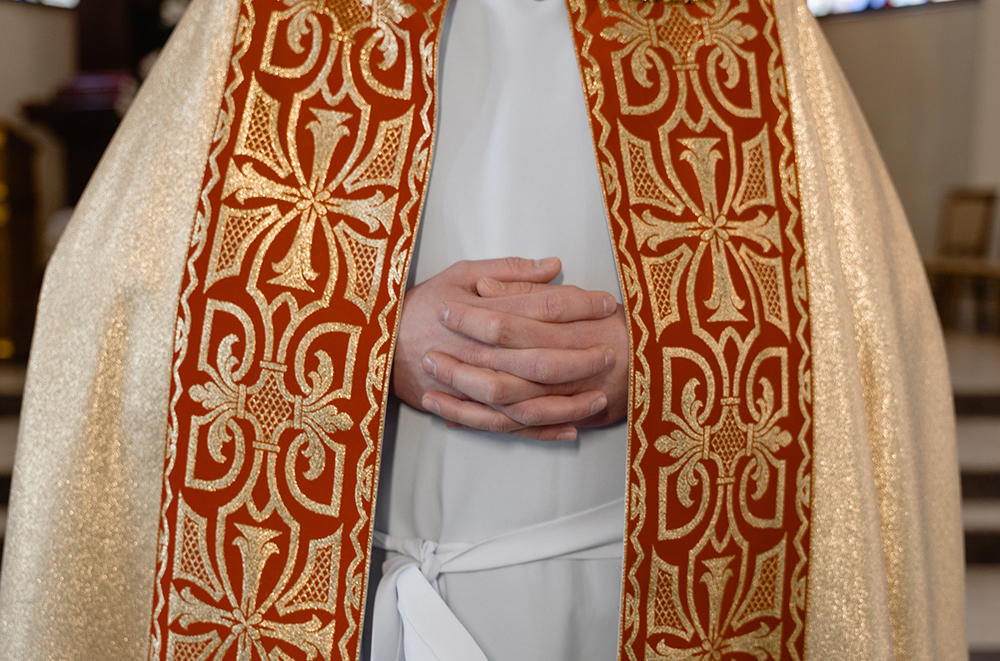
Ob Priester heiraten können, wird in der Katholischen Kirchen intensiv diskutiert. Foto: Mart Production - Pexels

Ob Priester heiraten können, wird in der Katholischen Kirchen intensiv diskutiert. Foto: Mart Production - Pexels

Priesterinnen und verheiratete Pfarrer? Kirchenrechts-Expertin Sabine Konrad erklärt, was überhaupt möglich wäre

Pfarrer sollen heiraten und Priesterinnen zugelassen werden dürfen. In der Öffentlichkeit werden die Stimmen lauter, die ein Umdenken in der Katholischen Kirche fordern. Doch wie sehr sind Zölibat und Weihevorbot von Frauen in Stein gemeißelt? Kann der Papst alles ändern? Sabine Konrad, Leiterin des Instituts für Kanonisches Recht an der Universität Graz, schildert im Interview die Hintergründe.

Ein steirischer Pfarrer legte kürzlich sein Amt zurück, weil er mit einer Frau zusammenleben möchte. Die Schlagzeile hat die Diskussion über eine Abschaffung des Zölibats erneut angeheizt. Wer könnte die Ehelosigkeit von Priestern überhaupt aufheben?
Sabine Konrad: Grundsätzlich kennen wir in der Katholischen Kirche mehrere rechtliche Ordnungen. Das Naturrecht und das göttliche Recht, dessen Grundlage die Heilige Schrift und die Offenbarung bildet, wie etwa die Zehn Gebote und die Unauflöslichkeit der Ehe. Und das Kirchenrecht, in dem auch der Zölibat verankert ist. Da der Papst in der Universalkirche die Gesetzgebungsgewalt hat, könnte er das ändern.

Er muss niemanden um Zustimmung bitten?
Konrad: Da es sich um eine gravierende Änderung handelt, würde er das wohl kaum ohne die entsprechende Mehrheit der kirchlichen Amtsträger tun. Denn es könnte sonst sogar eine Spaltung nach sich ziehen. Wir dürfen nicht vergessen, die Debatte über das Zölibat findet vor allem in Mitteleuropa statt. Und das ist nur ein Ausschnitt in der Weltkirche.

Dabei gibt es doch auch verheiratete katholische Priester?
Konrad: Ja, zum Beispiel in der Ukrainisch Griechisch-Katholischen Kirche, wo sich aus der orthodoxen Tradition heraus diese Sonderform entwickelt hat. Die Bedingung ist, die Hochzeit muss vor der Weihe stattfinden. Und wenn vormals evangelische Pastoren zum katholischen Glauben konvertiert sind, dürfen diese mit Zustimmung des Bischofs geweiht werden und verheiratet das Priesteramt ausüben.

Kann der Papst auch verordnen, dass Frauen als Priesterinnen zugelassen werden?
Konrad: Das Weiheverbot von Frauen wurde 1994 durch Papst Johannes Paul II. in das allgemeine Glaubensgut aufgenommen. Das kann nun selbst der Papst nicht mehr ändern. Auch dieses Thema wird derzeit vor allem in deutschsprachigen Ländern diskutiert. In anderen EU-Ländern – wie Kroatien – beschränken sich Studentinnen an einigen Fakultäten ausschließlich auf das Lehramt, die Fachtheologie ist oft männlich dominiert. Für TheologInnen, die keine Priester sind, gibt es keine Anstellungsmöglichkeiten, weil es aufgrund der hohen Anzahl an Priestern und deren Nachwuchs keinen Bedarf an Seelsorge durch Laien gibt.

created by Andreas Schweiger

Related news

Full effort in the heat: the Sports Centre was in full swing at the Kleeblattlauf

On 19 June 2026, 2,000 runners and hundreds of supporters made their way to the Rosenhain for a sporting end-of-term event.

Save, invest or guarantee: What Austrians expect from the state

Austria needs to make savings. But where? And what should the Republic actually be spending its money on? The answers are provided by the initial findings of a major study involving the University of Graz. 99 per cent of those surveyed are in favour of the state ensuring healthcare provision. Almost three-quarters would like to see more public funding for education, whilst only around three per cent are in favour of cuts in this sector.

Science meets blockbuster: Campus cinema at the University of Graz

A cinematic treat for the scientific community: the courtyard of the University of Graz’s main building is once again being transformed into an atmospheric open-air cinema this year. From 29 June to 10 July 2026 (Mondays to Fridays from 8.30 pm), blockbusters and documentaries will be shown on the open-air screen. Academics from the University of Graz will be taking a closer look at the films shown, examining them to distinguish fact from fiction.

Complying with the norm: Why Do Standards Shape Our Lives, Elisabeth Staudegger?

Standards determine whether a sheet of paper fits in a printer or whether a charging plug can power multiple devices. These standards shape our everyday lives. But who actually sets these standards? Where are the weaknesses, and how could science help to improve them? Elisabeth Staudegger, Head of the ‘Law and IT’ Department at the Institute for Legal Foundations at the University of Graz, host the Academic Standards Day on 16 June. Here she relays how sciences can contribute to the topic of standardisation and reveals her personal favourite standard.

Begin of page section:
Additional information:

University of Graz
Universitaetsplatz 3
8010 Graz
Austria
  • Contact
  • Web Editors
  • Moodle
  • UNIGRAZonline
  • Imprint
  • Data Protection Declaration
  • Accessibility Declaration
Weatherstation
Uni Graz

End of this page section. Go to overview of page sections

End of this page section. Go to overview of page sections

Begin of page section:

End of this page section. Go to overview of page sections

