



Begin of page section:
Page sections:

  • Go to contents (Accesskey 1)
  • Go to position marker (Accesskey 2)
  • Go to main navigation (Accesskey 3)
  • Go to sub navigation (Accesskey 4)
  • Go to additional information (Accesskey 5)
  • Go to page settings (user/language) (Accesskey 8)
  • Go to search (Accesskey 9)

End of this page section. Go to overview of page sections

Begin of page section:
Page settings:

English en
Deutsch de
Search
Login

End of this page section. Go to overview of page sections

Begin of page section:
Search:

Search for details about Uni Graz
Close

End of this page section. Go to overview of page sections


Search

Begin of page section:
Main navigation:

Page navigation:

  • University

    University
    • About the University
    • Organisation
    • Faculties
    • Library
    • Working at University of Graz
    • Campus
    Developing solutions for the world of tomorrow - that is our mission. Our students and our researchers take on the great challenges of society and carry the knowledge out.
  • Research Profile

    Research Profile
    • Our Expertise
    • Research Questions
    • Research Portal
    • Promoting Research
    • Research Transfer
    • Ethics in Research
    • Commission for Scientific Integrity
    Scientific excellence and the courage to break new ground. Research at the University of Graz creates the foundations for making the future worth living.
  • Studies

    Studies
    • Prospective Students
    • Students
    • Registration for Study Programme (Winter semester 2026/27)
  • Community

    Community
    • International
    • Location
    • Research and Business
    • Alumni
    The University of Graz is a hub for international research and brings together scientists and business experts. Moreover, it fosters the exchange and cooperation in study and teaching.
Topics
  • Sustainable University
  • Researchers answer
  • Work for us
Close menu

End of this page section. Go to overview of page sections

Begin of page section:
You are here:

University of Graz News Gleichstellung in Palästina stärken

End of this page section. Go to overview of page sections

Friday, 12 January 2018

Gleichstellung in Palästina stärken

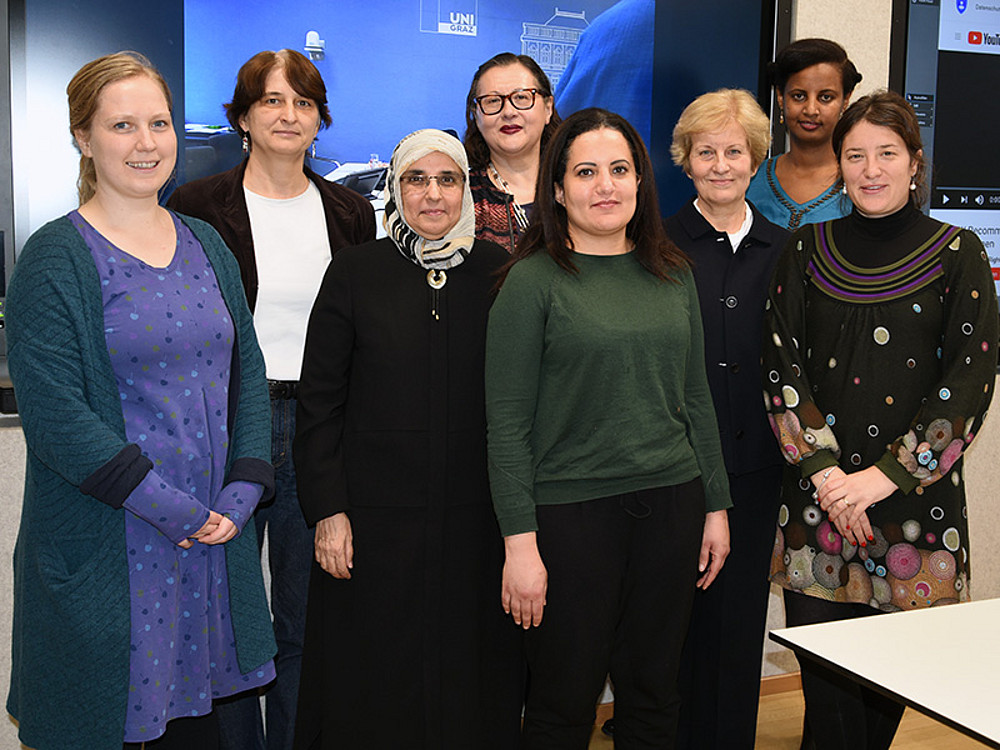
Projektmitarbeiterin Jana Mikats, Prof. Libora Oates-Indruchová, Prof. Sanaa Abou Dagga, Richterin Lilian Hofmeister, Hada Ayran, Projektmitarbeiterin Brigitte Hartveld-Holzner, Kifle Woldeyesus Elshaday, Liliana Ronconi (v.l.). Fotos: Uni Graz/Pichler

Workshop an der Uni Graz: Projektmitarbeiterin Jana Mikats, Prof. Libora Oates-Indruchová, Prof. Sanaa Abou Dagga, Richterin Lilian Hofmeister, Hada Ayran, Projektmitarbeiterin Brigitte Hartveld-Holzner, Kifle Woldeyesus Elshaday, Liliana Ronconi (v.l.). Fotos: Uni Graz/Pichler

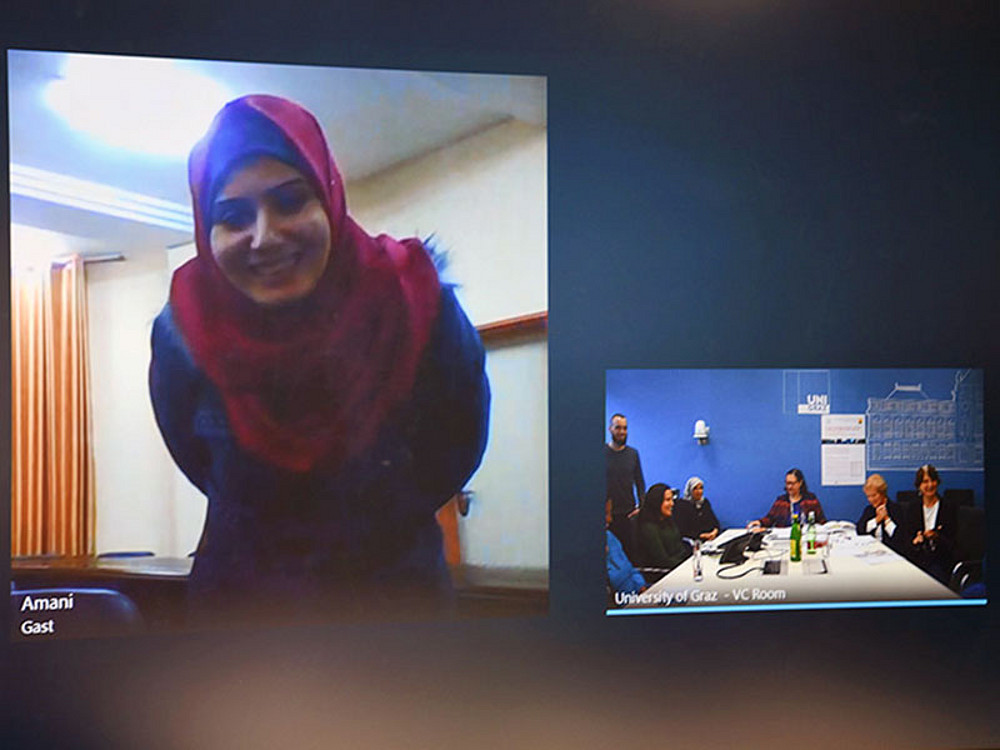
Projektmitarbeiterinnen in Gaza nahmen per Videokonferenz am Workshop teil, unter ihnen Amani Ahmed ...

Projektmitarbeiterinnen in Gaza nahmen per Videokonferenz am Workshop teil, unter ihnen Amani Ahmed ...

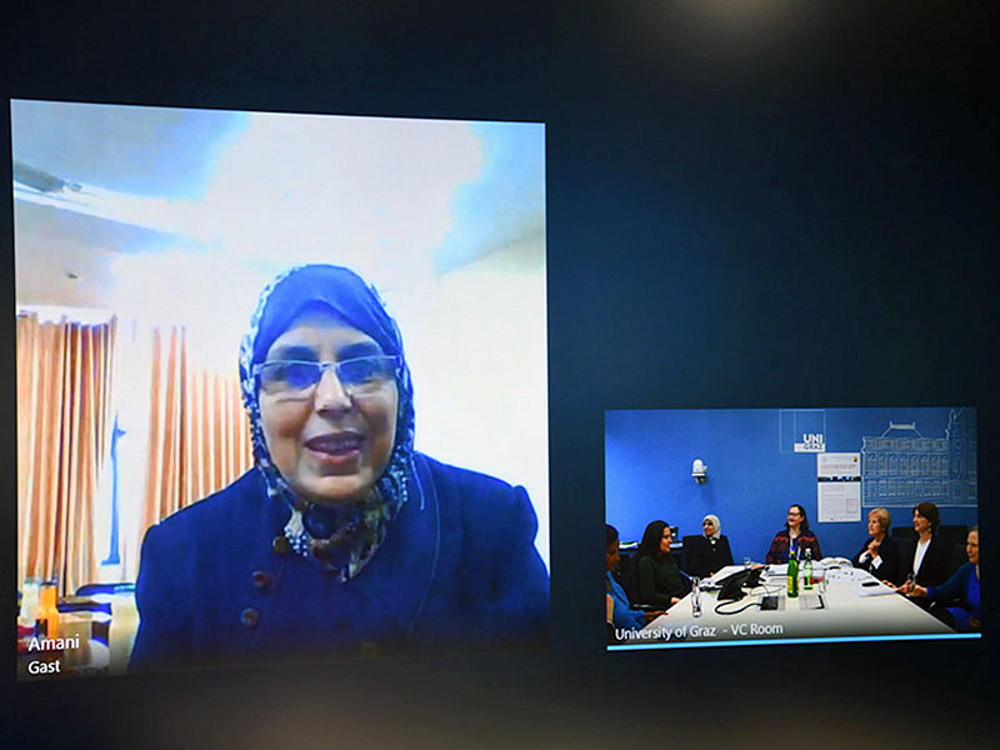
... und Prof. Hala Al Khazandar

... und Prof. Hala Al Khazandar

Die Uni Graz kooperiert mit der Islamischen Universität Gaza in einem dreijährigen Bildungsprojekt

Geschlechtergerechtigkeit zählt zu den zentralen Anliegen der Universität Graz – in Forschung und Lehre ebenso wie auf institutioneller Ebene. Einer Einladung der Islamic University Gaza (IUG) folgend startete Univ.-Prof. Dr. Libora Oates-Indruchová, Professorin für Soziologie der Geschlechterverhältnisse an der Uni Graz, 2017 ein dreijähriges Bildungsprojekt mit der palästinensischen Universität, um Empowerment von Frauen und Geschlechtergleichstellung in Gaza zu fördern. Ziel ist, an der IUG durch die Entwicklung von Bildungs-, Forschungs- und strukturellen Kapazitäten ein „Women's & Gender Studies Centre“ zu gründen. Finanziert wird das Vorhaben im Rahmen des Bildungsprogramms APPEAR der Österreichischen Entwicklungszusammenarbeit. Von 8. bis 11. Jänner 2018 war nun Prof. Sanaa Abou-Dagga, Projektleiterin in Palästina, erstmals zu Gast an der Karl-Franzens-Universität.

Der Besuch in Graz bot zahlreiche Gelegenheiten zu Austausch und Diskussion. Zum einen konnte sich die Psychologin und Bildungsexpertin Sanaa Abou-Dagga vor Ort über die vielfältigen Aktivitäten und die Strukturen zur Förderung von Gleichstellung informieren. Zum anderen gab sie in einem Vortrag Einblick in das Leben von Frauen in Gaza.
Auch ein Workshop unter der Leitung von Richterin Dr. Lilian Hofmeister, österreichische Vertreterin im UN-Ausschuss für die Beseitigung der Diskriminierung der Frau (Committee on the Elimination of Discrimination against Women, CEDAW), stand auf dem Programm. Thema waren unter anderem die Rolle von Palästina im CEDAW und die Umsetzung des Schutzes der Frauenrechte in einem muslimisch geprägten Umfeld. Workshop-Teilnehmerinnen aus Äthiopien und Argentinien brachten Erfahrungen mit CEDAW aus ihren Ländern ein. Prof. Abou-Daggas Assistentin, Amani Ahmed, die für diesen Besuch in Graz leider keine Ausreisegenehmigung erhalten hatte, wurde per Videokonferenz zugeschaltet.

Die Islamic University Gaza hat rund 20 000 Studierende und bietet über 100 Studien an. „Das Women's & Gender Studies Centre wird das nötige Wissen und die materiellen Ressourcen bereitstellen, um an unserer Universität ein Masterprogramm in Women's & Gender Studies zu etablieren und auch Zielgruppen außerhalb der Universität anzusprechen“, informiert Sanaa Abou-Dagga. Es ist konzipiert als Anlaufstelle und Drehscheibe für Uni-Angehörige sowie für AkteurInnen der Hochschulbildung und von Frauenorganisationen, für die Regierungsverwaltung und auch die allgemeine Öffentlichkeit.

Neben der Entwicklung von Lehrveranstaltungen für das neue Masterstudium soll auch der „Human Rights“-Kurs überarbeitet sowie eine englisch- und arabischsprachige Fachbibliothek eingerichtet werden. Außerdem ist ein einjähriges postgraduelles Modul in „Interdisciplinary Gender Studies“ für Studierende und MitarbeiterInnen der IUG geplant, bei dem die KursteilnehmerInnen in einem virtuellen Unterrichtsraum auf Studierende der Uni Graz treffen.
„Hinzu kommt eine Forschungskooperation, bei der Studierende beider Universitäten parallel an denselben Themen, aber mit jeweils unterschiedlichen theoretischen und disziplinären Zugängen arbeiten“, ergänzt Oates-Indruchová, die die Idee zu diesen sogenannten „Mirror MA Theses“ hatte.

Das Women's & Gender Studies Centre will auch Trainingsmodule anbieten. Öffentliche Vorlesungen zu diesem Themenfeld wird es sowohl in Gaza als auch in Graz geben.
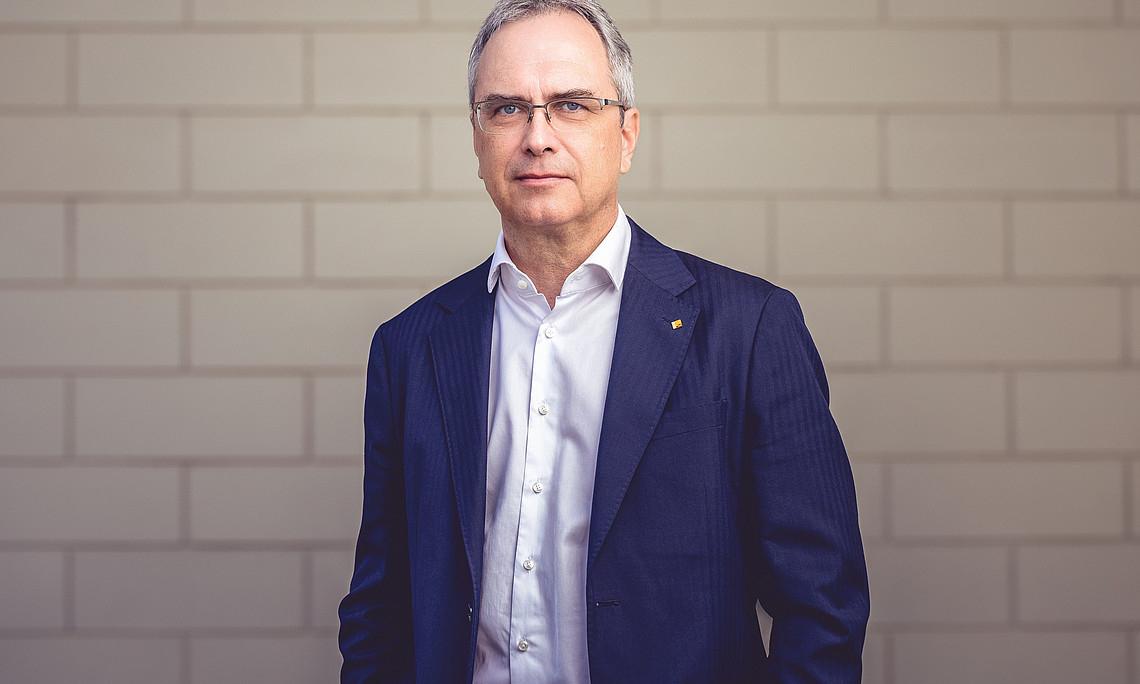

created by Gudrun Pichler

Related news

Theologian at the University of Graz: What the excommunication of the Society of St Pius X

Following the schism involving the Society of St Pius X, there is a need for discussion. Bernd Hillebrand from the University of Graz explains why the Vatican took this step, what role anti-democratic tendencies play, and why the Society’s sacraments are no longer recognised as valid under canon law for Catholics with immediate effect.

“HeinrichBiCool”: University of Graz demonstrates the effects of green facades and roofs

The University of Graz has launched a pioneering project at the University Centre for Theology. Its name, “HeinrichBiCool”, says it all: a comprehensive system of green facades and roof will cool the building at Heinrichstraße 80 during the summer. At the same time, this will create a new habitat for plants and animals, helping to increase biodiversity. The accompanying monitoring programme will provide detailed data on the impact of the measures on indoor climate, energy consumption and biodiversity. The findings will lay a scientifically sound foundation for further projects aimed at making cities sustainable, climate-resilient and liveable. The partners in this project, funded by the Austrian Research Promotion Agency (FFG), are AEE INTEC – Institute for Sustainable Technologies, Technisches Büro Siegfried Stark, the landscape architecture and urban planning firm “studio boden”, and Ökoteam Graz.

When stress melts away in your mouth: nicotine pouches are widespread among Styrian students

Sociologists at the University of Graz, in collaboration with VIVID – the Centre for Addiction Prevention, have carried out a survey involving more than 600 participants. Around a quarter of them use these products. The ability to use them discreetly and flexibly is a key motivation.

Desert sand, microplastics, cancer cells: David Clases awarded ERC grant for analytical method

Nanoparticles trapped in polar ice can reveal a great deal about the climate 100,000 years ago. Chemist David Clases is developing unique methods to analyse them in detail. He will now adapt these methods for use with larger particles in order to glean even more information about Earth’s history. The method can be used for a wide range of other purposes – for example, in medical diagnostics or the investigation of environmental pollution. Clases has been awarded a Proof-of-Concept Grant by the European Research Council (ERC) for this work.

Begin of page section:
Additional information:

University of Graz
Universitaetsplatz 3
8010 Graz
Austria
  • Contact
  • Web Editors
  • Moodle
  • UNIGRAZonline
  • Imprint
  • Data Protection Declaration
  • Accessibility Declaration
Weatherstation
Uni Graz

End of this page section. Go to overview of page sections

End of this page section. Go to overview of page sections

Begin of page section:

End of this page section. Go to overview of page sections

