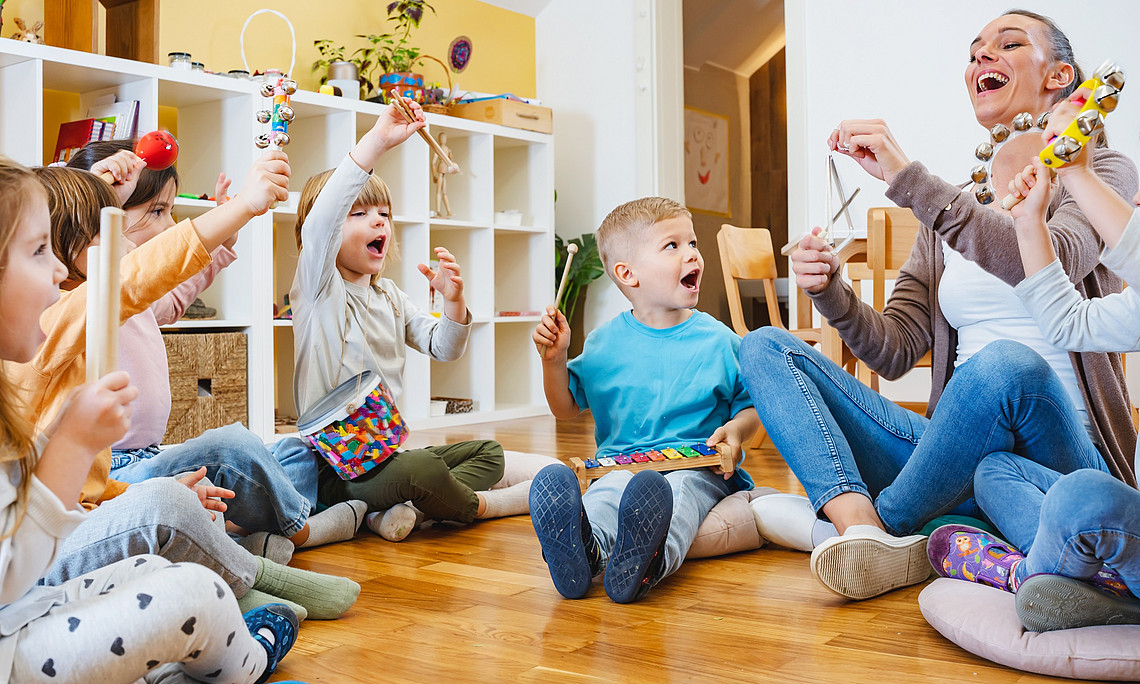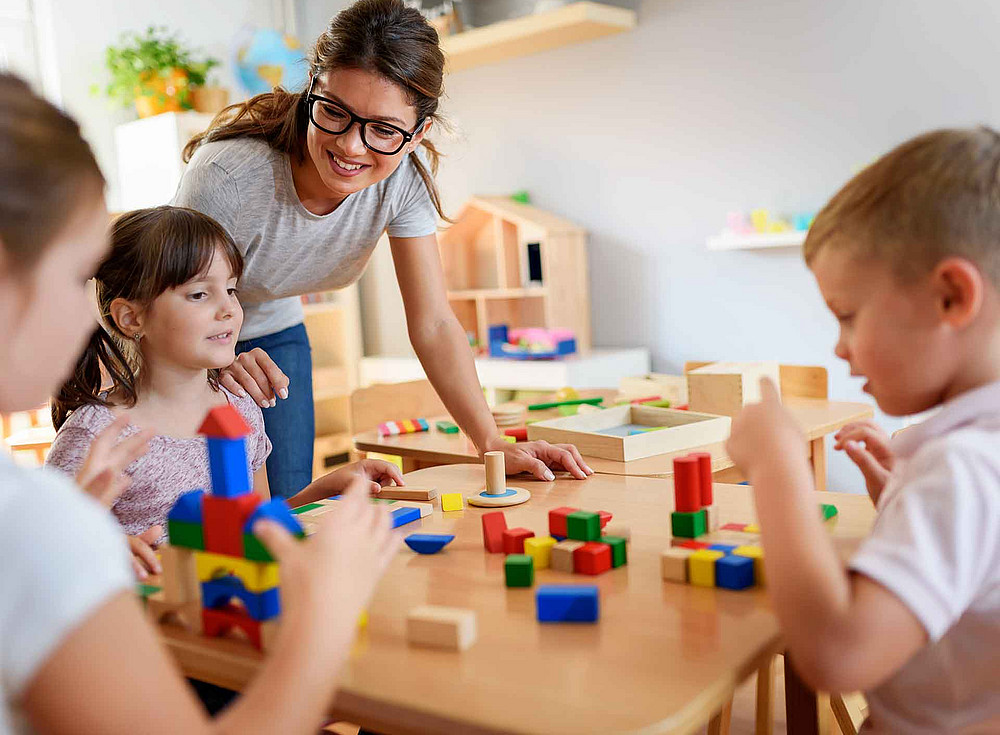
“Nurseries and kindergartens are a reflection of our society; they, too, have become more diverse,” states Eva Pölzl-Stefanec from the Centre for Professionalisation in Early Years Education. Even children under the age of six have language difficulties, health issues or family problems. “There are increasing problems with resolving conflicts or regulating emotions,” reports Pölzl-Stefanec. This is by no means specific to Austria, as a recent project under the EU’s Erasmus+ initiative demonstrates. Led by the University of Graz, researchers from the universities of Stavanger (Norway), Karlova in Prague (Czech Republic) and West Attica in Athens (Greece) are developing solutions to offer children – regardless of their background, language or living circumstances – the best possible start in life and early childhood education in nurseries and kindergartens.
Workload
The aim of the ‘Playing and Learning for Equal Opportunities and Success’ (PLEOS) project is to develop tools to help early years educators cope better with the mounting demands. “On top of that, there is a shortage of staff in all four participating countries,” reports project leader Eva Pölzl-Stefanec. “The professionals are very committed,” the researcher emphasises. Nevertheless, she says, the shortage leads to high levels of stress for early years educators and, in the worst case, to a widening of inequalities. “Identifying these inequalities requires both time and expertise. Furthermore, quieter children are at risk of being overlooked,” warns the education expert.
Learning from one another
Further research is currently underway into the factors that both hinder and promote equality of opportunity in early years education. Although the systems can vary considerably, Pölzl-Stefanec is convinced that we can learn from one another.
In Norway, there is a legal right to a place in nursery from the age of one, regardless of where one lives. Furthermore, the focus is on the children’s well-being. The Czech Republic, on the other hand, places great emphasis on cognitive learning support.
Austria classifies all facilities for children aged between zero and six as educational institutions on an equal footing, although different requirements apply in the various federal states.
All project partners agree that, in addition to sufficient places, high-quality care provided by professionals is essential. “Investments in this area pay off twice over: they yield the highest social return for the state. At the same time, they level the playing field in terms of early educational opportunities before social inequalities become permanently entrenched,” emphasises Eva Pölzl-Stefanec.
Find out more about the project at https://pleos.uni-graz.at/de/