Begin of page section:
Page sections:

  • Go to contents (Accesskey 1)
  • Go to position marker (Accesskey 2)
  • Go to main navigation (Accesskey 3)
  • Go to sub navigation (Accesskey 4)
  • Go to additional information (Accesskey 5)
  • Go to page settings (user/language) (Accesskey 8)
  • Go to search (Accesskey 9)

End of this page section. Go to overview of page sections

Begin of page section:
Page settings:

English en
Deutsch de
Search
Login

End of this page section. Go to overview of page sections

Begin of page section:
Search:

Search for details about Uni Graz
Close

End of this page section. Go to overview of page sections


Search

Begin of page section:
Main navigation:

Page navigation:

  • University

    University
    • About the University
    • Organisation
    • Faculties
    • Library
    • Working at University of Graz
    • Campus
    Developing solutions for the world of tomorrow - that is our mission. Our students and our researchers take on the great challenges of society and carry the knowledge out.
  • Research Profile

    Research Profile
    • Our Expertise
    • Research Questions
    • Research Portal
    • Promoting Research
    • Research Transfer
    • Ethics in Research
    • Commission for Scientific Integrity
    Scientific excellence and the courage to break new ground. Research at the University of Graz creates the foundations for making the future worth living.
  • Studies

    Studies
    • Prospective Students
    • Students
    • Registration for Study Programme (Winter semester 2026/27)
  • Community

    Community
    • International
    • Location
    • Research and Business
    • Alumni
    The University of Graz is a hub for international research and brings together scientists and business experts. Moreover, it fosters the exchange and cooperation in study and teaching.
Topics
  • Sustainable University
  • Researchers answer
  • Work for us
Close menu

End of this page section. Go to overview of page sections

Begin of page section:
You are here:

University of Graz News GEWI trifft IT

End of this page section. Go to overview of page sections

Wednesday, 18 February 2015

GEWI trifft IT
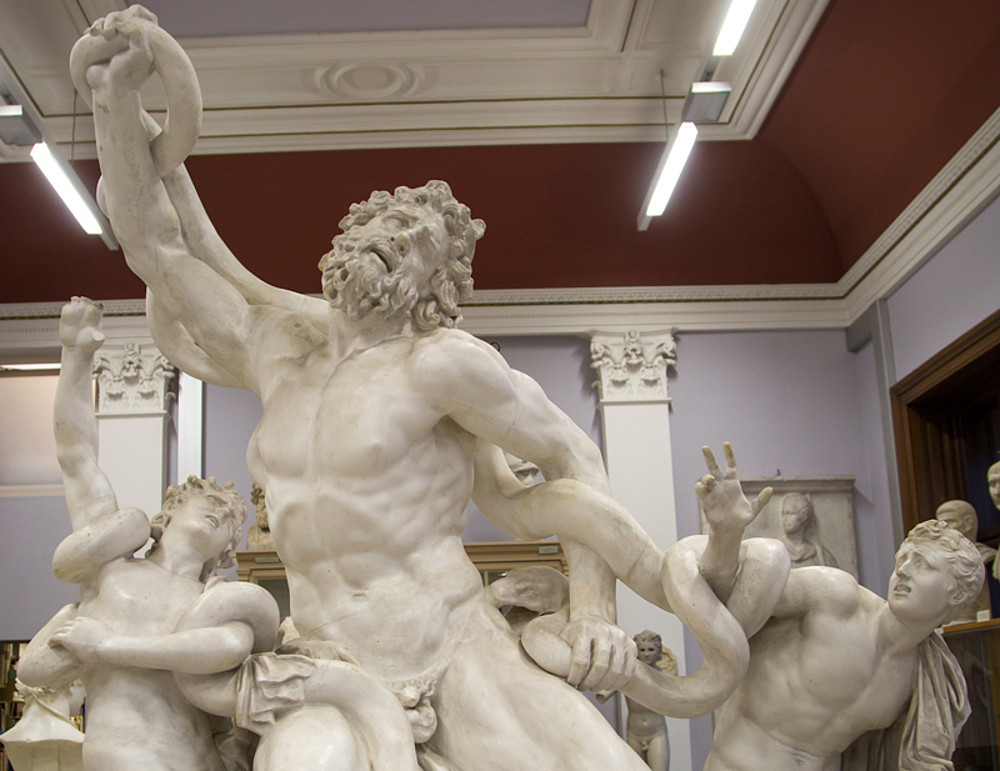
Im Fokus der Tagung steht die Zukunft der digitalen Geisteswissenschaften. Foto: Uni Graz/Lunghammer


Am 23. Februar 2015 startet an der Uni Graz eine internationale Tagung zu digitalen Geisteswissenschaften

Informationstechnologie ist aus der geisteswissenschaftlichen Forschung nicht mehr wegzudenken. Der Einsatz von Computern bietet nicht nur neue Möglichkeiten und Methoden der Forschung, sondern hat die Wissenschaft selbst grundlegend verändert. Von 23. bis 27. Februar 2015 ist die Karl-Franzens-Universität Graz daher Schauplatz der Jahrestagung des Verbandes „Digital Humanities im deutschsprachigen Raum“. Unter dem Motto „Von Daten zu Erkenntnissen: Digitale Geisteswissenschaften als Mittler zwischen Information und Interpretation“ werden zu dieser internationalen Konferenz rund 400 ExpertInnen aus Deutschland, Österreich, der Schweiz aber auch aus nicht deutschsprachigen europäischen Ländern an der Universität Graz erwartet. In zahlreichen Workshops, Vorträgen und Diskussionen erörtern die TeilnehmerInnen zentrale Aspekte von Digital Humanities, darunter vor allem die Fragestellung, welche Bedeutung Daten bei der Generierung geisteswissenschaftlichen Wissens in der Zukunft haben werden. Organisiert wird die größte Tagung dieser Art im deutschsprachigen Raum vom Zentrum für Informationsmodellierung – Austrian Centre for Digital Humanities an der Uni Graz.

„Wir erfassen in unseren internationalen Projekten Kulturgut, wie zum Beispiel Bilder und Texte, digital. Unser Ziel ist es, den Begriff ,Digitale Edition‘ als allgemeines, methodisches Konzept der Geisteswissenschaften zu etablieren. Die Informationstechnologie ist das Werkzeug, das uns dabei hilft. Im Rahmen der Tagung sollen neue Wege erschlossen werden“, erklärt Mag. Walter Scholger vom Zentrum für Informationsmodellierung und Teil des Organisationsteams der Konferenz. So stecken in einem Bild mehr Informationen als auf den ersten Blick sichtbar; Texte lassen sich – sind sie einmal digital erfasst und aufbereitet – aus unterschiedlichen Perspektiven lesen und interpretieren.

Zentrum für Informationsmodellierung – Austrian Centre for Digital Humanities
Gerade auf dem Gebiet der modernen Textmodellierung ist das im Jahr 2008 gegründete Zentrum österreichweit federführend. Zahlreiche Groß-Projekte mit europäischen PartnerInnen gehören ebenso zum Portfolio wie das durch die Hochschulraumstrukturmittel finanzierte Vorhaben „Repositorium Steirisches Wissenschaftserbe“, in dem steirisches Kultur- und Wissenserbe erfasst und auf einer Plattform für die Öffentlichkeit zugänglich gemacht wird.

Tagungsseite:
http://dhd2015.uni-graz.at/de/

Weitere Informationen unter:

http://informationsmodellierung.uni-graz.at/de/  


created by Konstantinos Tzivanopoulos

Related news

Sport beyond the World Cup: the TV channel “Welt der Wunder” features diabetes research from the University of Graz

Keeping blood sugar levels in check during physical exertion is a particular challenge for people with type 1 diabetes. Othmar Moser examines how those affected manage to balance physical activity, sport and their metabolic disorder.

"Mathematics explains the world"

How can life be quantified? And what can science reveal that remains hidden from the naked eye? The 14th European Conference on Mathematical and Theoretical Biology at the University of Graz is dedicated to these questions. From 13 to 17 July, around 1,300 researchers from all over the world will gather on campus to discuss models, biological processes and the future of data-driven medicine. Klemens Fellner, Dean of the Faculty of Natural Sciences and Mathematics and a mathematician, talks about the language that explains the world

Internationally up-to-date: University of Graz offers new degree programmes in art studies

From the Old Masters to AI art – three newly designed degree programmes offer students at the University of Graz fresh perspectives on artistic production. In addition to historical art, the programmes place a greater emphasis on contemporary and global developments. The registration period is open.

The Nazi elite school Napola: Historian seeks memories and personal documents

They were to be brought up to become the future elite of National Socialism: boys and girls aged ten and over who, following the ‘Anschluss’ of Austria to the German Reich, attended a so-called Napola (short for Nationalpolitische Lehranstalt; also known as NPEA, Nationalpolitische Erziehungsanstalt). There were nine such institutions in what is now Austria between 1939 and 1945.

Begin of page section:
Additional information:

University of Graz
Universitaetsplatz 3
8010 Graz
Austria
  • Contact
  • Web Editors
  • Moodle
  • UNIGRAZonline
  • Imprint
  • Data Protection Declaration
  • Accessibility Declaration
Weatherstation
Uni Graz

End of this page section. Go to overview of page sections

End of this page section. Go to overview of page sections

Begin of page section:

End of this page section. Go to overview of page sections