




Begin of page section:
Page sections:

  • Go to contents (Accesskey 1)
  • Go to position marker (Accesskey 2)
  • Go to main navigation (Accesskey 3)
  • Go to sub navigation (Accesskey 4)
  • Go to additional information (Accesskey 5)
  • Go to page settings (user/language) (Accesskey 8)
  • Go to search (Accesskey 9)

End of this page section. Go to overview of page sections

Begin of page section:
Page settings:

English en
Deutsch de
Search
Login

End of this page section. Go to overview of page sections

Begin of page section:
Search:

Search for details about Uni Graz
Close

End of this page section. Go to overview of page sections


Search

Begin of page section:
Main navigation:

Page navigation:

  • University

    University
    • About the University
    • Organisation
    • Faculties
    • Library
    • Working at University of Graz
    • Campus
    Developing solutions for the world of tomorrow - that is our mission. Our students and our researchers take on the great challenges of society and carry the knowledge out.
  • Research Profile

    Research Profile
    • Our Expertise
    • Research Questions
    • Research Portal
    • Promoting Research
    • Research Transfer
    • Ethics in Research
    • Commission for Scientific Integrity
    Scientific excellence and the courage to break new ground. Research at the University of Graz creates the foundations for making the future worth living.
  • Studies

    Studies
    • Prospective Students
    • Students
    • Welcome Weeks for First Year Students
  • Community

    Community
    • International
    • Location
    • Research and Business
    • Alumni
    The University of Graz is a hub for international research and brings together scientists and business experts. Moreover, it fosters the exchange and cooperation in study and teaching.
Topics
  • Sustainable University
  • Researchers answer
  • Work for us
Close menu

End of this page section. Go to overview of page sections

Begin of page section:
You are here:

University of Graz News Gesunde Generationen

End of this page section. Go to overview of page sections

Wednesday, 24 May 2017

Gesunde Generationen

Ausgewogene Ernährung und ausreichend Bewegung: Spätestens vor der 12. Woche sollten schwangere Frauen auf einen gesunden Lebensstil umsteigen. Foto: egor105/pixabay.com.

Ausgewogene Ernährung und ausreichend Bewegung: Spätestens vor der 12. Woche sollten schwangere Frauen auf einen gesunden Lebensstil umsteigen. Foto: egor105/pixabay.com.

Grazer ForscherInnen untersuchen, wie man Schwangerschaftsdiabetes verhindern kann

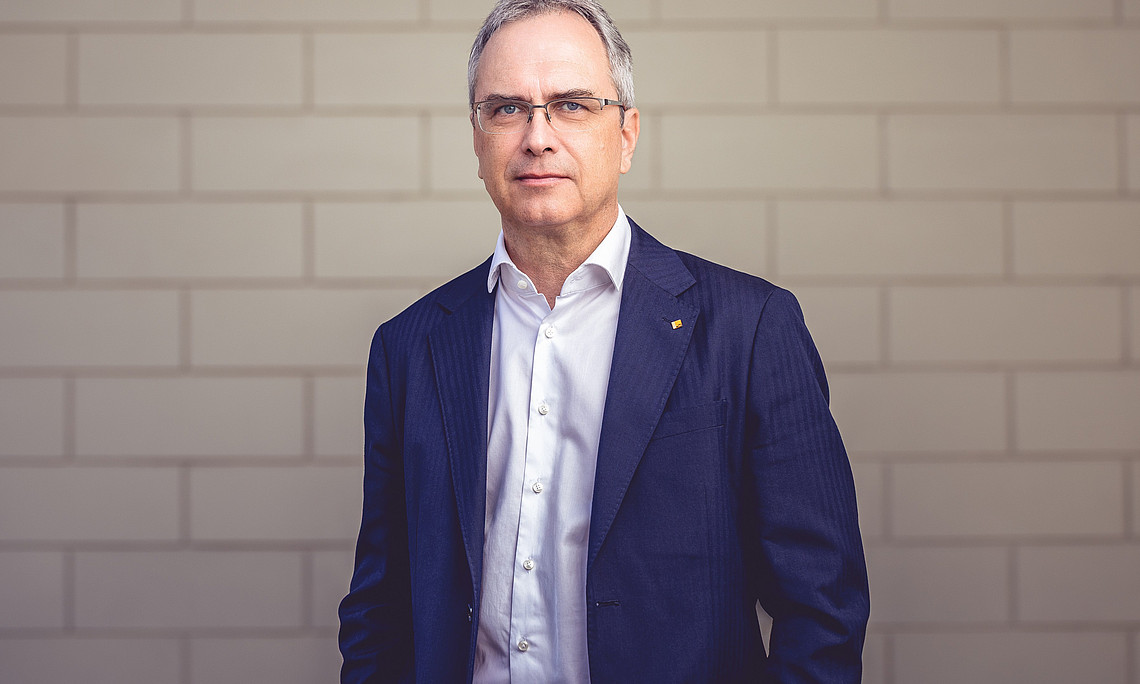
Im groß angelegten Forschungsprojekt DALI, kurz für „Vitamin D And Lifestyle Intervention for Gestational Diabetes“, untersuchen WissenschafterInnen aus elf europäischen Ländern, wie man Schwangerschaftsdiabetes bei übergewichtigen Frauen verhindern kann. Entscheidend ist, auf einen gesunden, aktiven Lebensstil umzusteigen – und zwar noch vor dem vierten Monat. Das ergaben die Interventionsstudien, die von Univ.-Prof. Dr. Mireille van Poppel, PhD, Professorin für Bewegung und Public Health am Institut für Sportwissenschaft der Karl-Franzens-Universität Graz, entwickelt wurden. Koordiniert wird das Projekt von Univ.-Prof. Dr. Gernot Desoye von der Universitätsklinik für Frauenheilkunde und Geburtshilfe der Medizinischen Universität Graz.


Weniger Fett und Kohlehydrate, mehr Proteine und Bewegung: Jene der 436 Studienteilnehmerinnen aus ganz Europa, die nach einer umfassenden Beratung im zweiten Drittel der Schwangerschaft ihren Lebensstil geändert hatten, nahmen bis zum achten Monat am wenigsten an Gewicht zu. Das wirkte sich positiv auf den gesamten Verlauf der Schwangerschaft sowie auf das allgemeine Wohlbefinden der werdenden Mütter aus. Allerdings hatte das Counselling keinen Einfluss auf das Risiko der Studienteilnehmerinnen, Gestationsdiabetes zu entwickeln. Die ForscherInnen schließen daraus, dass für die Frauen – alle hatten einen zu hohen Body-Mass-Index – der Umstieg auf gesunde Ernährung und mehr Aktivität vermutlich zu spät kam: „Eine Neuorientierung der Gewohnheiten sollte idealerweise schon vor dem Eintritt der Schwangerschaft, jedenfalls aber vor dem vierten Monat passieren, um Diabetes verhindern zu können“, bestätigt van Poppel. Doch auch nach der 12. Woche sei eine Änderung des Lebensstils auf jeden Fall ratsam, um die Gesundheit von Mutter und Neugeborenem zu stärken: „Wir konnten feststellen, dass jede vierte Teilnehmerin an depressiven Verstimmungen litt, was sicherlich mit einer überproportionalen Gewichtszunahme zusammenhängt. Diese Kilos wird man nach der Geburt schwer wieder los“, so van Poppel.


Von einem gesunden mütterlichen Körper dagegen können im besten Fall drei Generationen profitieren, schildert die Wissenschafterin: „.Das Risiko, an Typ-II-Diabetes zu erkranken, kann beispielsweise an den Fötus weitergegeben werden. Ist dieser weiblich, ist möglicherweise auch die Enkelgeneration betroffen.“ In der Folgestudie „DALIFUS“ werden die langfristigen Effekte von Beratung in der Schwangerschaft auf Mütter und ihre Kinder untersucht.


Mireille van Poppels Professur „Bewegung und Public Health“ ist an der Umwelt-, Regional- und Bildungswissenschaftlichen Fakultät (URBI) der Uni Graz angesiedelt. Die URBI-Fakultät feiert heuer ihr zehnjähriges Bestehen.


Publikation: Mireille N. M. van Poppel et.al. “Effect of Physical Activity and/or Healthy Eating on GDM Risk: The DALI Lifestyle Study”. J Clin Endocrinol Metab (2017) 102 (3): 903-913. DOI: https://doi.org/10.1210/jc.2016-3455

created by Gerhild Kastrun

Related news

Jurassic Sounds: Biologist reconstructs insect songs from 165 million years ago

It was apparently not just the roars of the dinosaurs that made up the soundscape of the animal world during the Jurassic period. Crickets and grasshoppers communicated through a variety of songs and high-pitched sounds, as Thorin Jonsson from the Institute of Biology at the University of Graz discovered together with colleagues from the universities of Lincoln, Bristol (UK), Beijing (China) and Tempe (USA). The findings on what are so far the oldest traces of sound on Earth have just been published in the journal PNAS.

EU funding boosts international exchange between universities

The University of Graz is further expanding its international study opportunities through the European university alliance Arqus and is taking the lead in two key projects. In future, students will benefit from even more joint degree programmes and from simplified recognition of academic achievements through the Joint European Degree Label.

Rescue and risks: Researchers have surveyed public perceptions of AI

The use of artificial intelligence has had to be made transparent since 2 August 2026. The EU’s AI Act, which has been in force since then, also sets out how risky an application is and which security measures apply as a result. However, the assessment of risks by the legislation differs in some cases significantly from the perceptions of the Austrian public. This is the finding of a representative study carried out by data scientist Stefan Thalmann from the University of Graz and his team.

The Healing Sea: Researchers discover new approaches to treating chronic inflammation in sponges

Chronic inflammation plays a key role in many diseases, ranging from metabolic disorders and cardiovascular diseases to tissue damage following injuries or infections. “Normally, the body is able to resolve inflammation on its own. If this process becomes unbalanced, immune cells remain permanently active and continue to drive negative changes in the tissue,” explains Andreas Koeberle, a pharmacist at the University of Graz.

Begin of page section:
Additional information:

University of Graz
Universitaetsplatz 3
8010 Graz
Austria
  • Contact
  • Web Editors
  • Moodle
  • UNIGRAZonline
  • Imprint
  • Data Protection Declaration
  • Accessibility Declaration
Weatherstation
Uni Graz

End of this page section. Go to overview of page sections

End of this page section. Go to overview of page sections

Begin of page section:

End of this page section. Go to overview of page sections
