Begin of page section:
Page sections:

  • Go to contents (Accesskey 1)
  • Go to position marker (Accesskey 2)
  • Go to main navigation (Accesskey 3)
  • Go to sub navigation (Accesskey 4)
  • Go to additional information (Accesskey 5)
  • Go to page settings (user/language) (Accesskey 8)
  • Go to search (Accesskey 9)

End of this page section. Go to overview of page sections

Begin of page section:
Page settings:

English en
Deutsch de
Search
Login

End of this page section. Go to overview of page sections

Begin of page section:
Search:

Search for details about Uni Graz
Close

End of this page section. Go to overview of page sections


Search

Begin of page section:
Main navigation:

Page navigation:

  • University

    University
    • About the University
    • Organisation
    • Faculties
    • Library
    • Working at University of Graz
    • Campus
    Developing solutions for the world of tomorrow - that is our mission. Our students and our researchers take on the great challenges of society and carry the knowledge out.
  • Research Profile

    Research Profile
    • Our Expertise
    • Research Questions
    • Research Portal
    • Promoting Research
    • Research Transfer
    • Ethics in Research
    • Commission for Scientific Integrity
    Scientific excellence and the courage to break new ground. Research at the University of Graz creates the foundations for making the future worth living.
  • Studies

    Studies
    • Prospective Students
    • Students
  • Community

    Community
    • International
    • Location
    • Research and Business
    • Alumni
    The University of Graz is a hub for international research and brings together scientists and business experts. Moreover, it fosters the exchange and cooperation in study and teaching.
Topics
  • Sustainable University
  • Researchers answer
  • Work for us
Close menu

End of this page section. Go to overview of page sections

Begin of page section:
You are here:

University of Graz News Zeitspanne

End of this page section. Go to overview of page sections

Monday, 17 December 2018

Zeitspanne

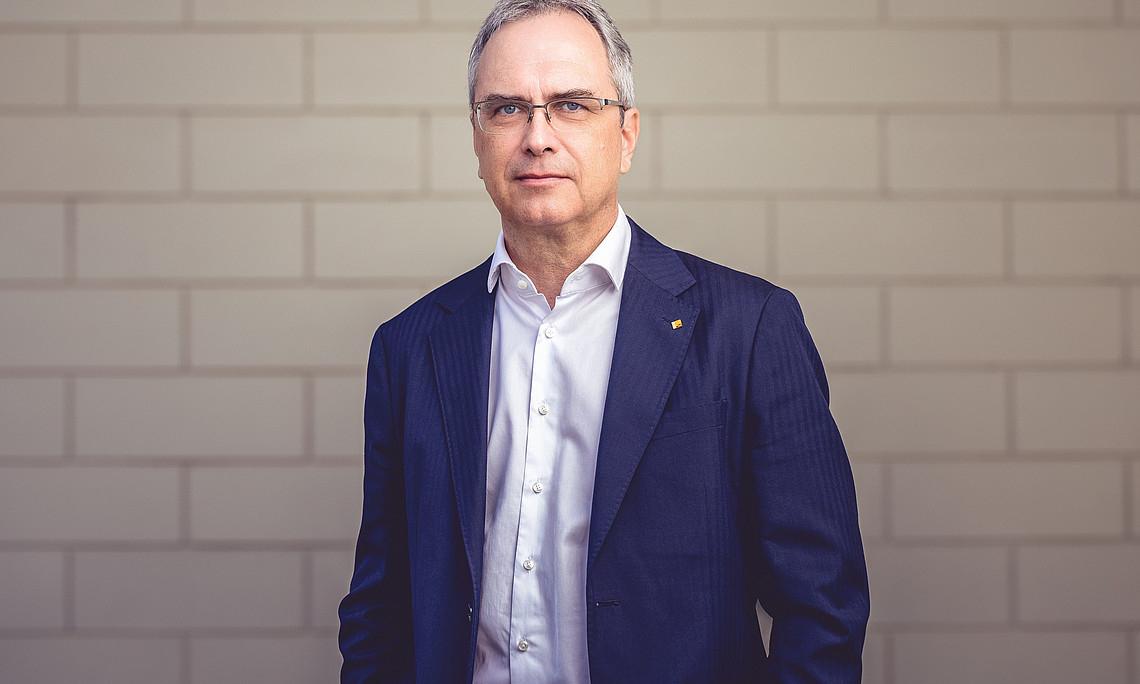
Dieter A. Binder ist anerkannter Experte für Österreichische Geschichte. Foto: KK

Dieter A. Binder ist anerkannter Experte für Österreichische Geschichte. Foto: KK

Geschichte schreiben: Historiker Dieter A. Binder im wissenschaftlichen „Unruhestand“

Es sei „ein komisches Gefühl“, an jenem Ort, wo die eigene universitäre Laufbahn von 47 Jahren begonnen hatte, „heute so gesittet abzutreten“, gestand Dieter A. Binder am 14. Dezember 2018 im Meerscheinschlössl der Universität Graz. Grund des feierlichen Zusammentreffens: Der anerkannte Historiker für österreichische Geschichte wurde in den Ruhestand verabschiedet. 
Etwa 130 Gäste, darunter WissenschafterInnen der Universität Graz, VertreterInnen des Wissenschafts- sowie des Verteidigungsministeriums, des Bundesheeres, der Stadt Graz und des Landes Steiermark kamen zum Festakt und folgten den Ausführungen über die globale Bedeutung der Österreichischen Geschichte von Pieter M. Judson vom European University Institute in Florenz, den Dieter A. Binder um den Festvortrag gebeten hatte.
Binder, Träger des Großen Ehrenzeichens für Verdienste um die Republik Österreich, sei vor allem für zweierlei dankbar: „Für die Freundschaften, die seit Jahrzehnten bis heute bestehen und damit in eine Zeit hineinreichen, in der Egoismus beinahe als Norm definiert wird.“

Binder war bis Oktober 2018 außerordentlicher Professor für Österreichische an der Universität Graz und hat weiterhin die Professur für Kulturgeschichte und Kulturanthropologie an der Andrássy Universität Budapest inne. Zu seinen Forschungsschwerpunkten zählen unter anderem österreichische Geschichte, österreichische Zeitgeschichte, politische Kultur im 20. Jahrhundert, Nationalsozialismus, Antisemitismus, Freimaurerforschung, Wissenschaftsgeschichte sowie Kulturanthropologie. 

Zur Person: Dieter A. Binder forscht und lehrt seit 1983 am Institut für Geschichte der Universität Graz, seit 2003 auch an der Andrássy Universität Budapest. Darüber hinaus war der Historiker an der State University of New York at Binghamton sowie an der Université Cheikh Anta Diop de Dakar tätig. Binder ist Träger zahlreicher Auszeichnungen und Preise, darunter der Leopold-Kunschak-Preis, das Ehrenkreuz für Wissenschaft und Kunst 1. Klasse, das Große Ehrenzeichen für Verdienste um die Republik Österreich und das Große Verdienstzeichen des Landes Salzburg. 
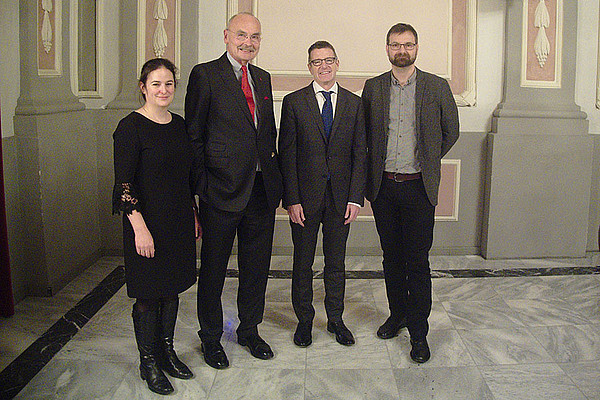
Dieter Binder (2. v. l.) mit FachkollegInnen: Ursula Mindler, Pieter Judson und Gerald Lamprecht (v. l.) Foto: Anna Maria Steiner
created by Anna Steiner & Andreas Schweiger

Related news

Uni Vibes: Where science and art come together

At the third Uni Vibes event hosted by the University of Graz, visitors enjoyed science, music and performances on campus. Guided tours focusing on democracy, educational sciences and the Graz Centre of Physics demonstrated how research shapes community life, urban development and culture.

Protest against budget cuts: universities send a united message in Graz

On 28 May, thousands of students, researchers and staff from all Styrian universities demonstrated in Graz against the announced budget cuts. University management and student representatives warned of severe consequences for research, teaching and the region’s standing as a centre of academic excellence.

Overcoming boundaries: Can we manage without prisons and camps?

The US immigration agency ICE has sparked fear and horror. Not only are migrants criminalised and brutally persecuted, but earlier this year, ICE officers killed two US citizens in Minneapolis. Against the backdrop of these dramatic events, the University of Graz is shedding light on the role of deportation and detention centres as part of the international conference ‘Camps, Belonging, and Abolition Democracy’. Researchers aim to develop scenarios for how a future without prisons and the death penalty can become a reality.

From one to many: Uni Graz researchers identify a mechanism for the origin of species

When a habitat changes, animals, plants and even humans must adapt to the new environmental conditions. Those who manage this fastest and best will prevail. Over time, new species that are specialised for specific habitats also develop. Zoologist Christian Sturmbauer and his research group at the University of Graz, together with international partners, have now demonstrated that the molecular biological process of “alternative splicing” – contrary to previous assumptions – contributes highly effectively to the formation of new species. Different combinations of parts of the same gene give rise to various, structurally slightly different variants of functional proteins. This leads very rapidly to significant changes. The research findings were published in the renowned journal Proceedings of the National Academy of Sciences.

Begin of page section:
Additional information:

University of Graz
Universitaetsplatz 3
8010 Graz
Austria
  • Contact
  • Web Editors
  • Moodle
  • UNIGRAZonline
  • Imprint
  • Data Protection Declaration
  • Accessibility Declaration
Weatherstation
Uni Graz

End of this page section. Go to overview of page sections

End of this page section. Go to overview of page sections

Begin of page section:

End of this page section. Go to overview of page sections