



Begin of page section:
Page sections:

  • Go to contents (Accesskey 1)
  • Go to position marker (Accesskey 2)
  • Go to main navigation (Accesskey 3)
  • Go to sub navigation (Accesskey 4)
  • Go to additional information (Accesskey 5)
  • Go to page settings (user/language) (Accesskey 8)
  • Go to search (Accesskey 9)

End of this page section. Go to overview of page sections

Begin of page section:
Page settings:

English en
Deutsch de
Search
Login

End of this page section. Go to overview of page sections

Begin of page section:
Search:

Search for details about Uni Graz
Close

End of this page section. Go to overview of page sections


Search

Begin of page section:
Main navigation:

Page navigation:

  • University

    University
    • About the University
    • Organisation
    • Faculties
    • Library
    • Working at University of Graz
    • Campus
    Developing solutions for the world of tomorrow - that is our mission. Our students and our researchers take on the great challenges of society and carry the knowledge out.
  • Research Profile

    Research Profile
    • Our Expertise
    • Research Questions
    • Research Portal
    • Promoting Research
    • Research Transfer
    • Ethics in Research
    • Commission for Scientific Integrity
    Scientific excellence and the courage to break new ground. Research at the University of Graz creates the foundations for making the future worth living.
  • Studies

    Studies
    • Prospective Students
    • Students
    • Registration for Study Programme (Winter semester 2026/27)
  • Community

    Community
    • International
    • Location
    • Research and Business
    • Alumni
    The University of Graz is a hub for international research and brings together scientists and business experts. Moreover, it fosters the exchange and cooperation in study and teaching.
Topics
  • Sustainable University
  • Researchers answer
  • Work for us
Close menu

End of this page section. Go to overview of page sections

Begin of page section:
You are here:

University of Graz News Geschichte in 3D

End of this page section. Go to overview of page sections

Wednesday, 10 April 2019

Geschichte in 3D

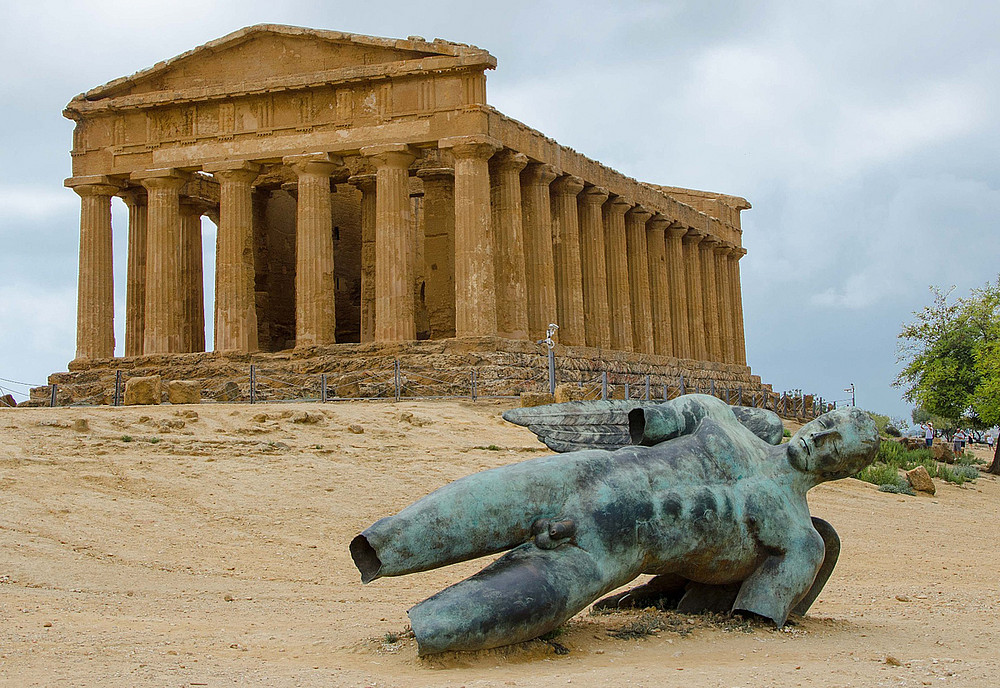
Archäologische Stätten, wie hier in der Region Sizilien, werden auch mit digitalen Methoden erforscht. Foto: Pixabay.com

Archäologische Stätten, wie hier in der Region Sizilien, werden auch mit digitalen Methoden erforscht. Foto: Pixabay.com

Am Beispiel 3D-Scann dieser attischen Kopfkannen kann man sehen, wie die Handwerker in der Antike gearbeitet haben. Digitale Verfahren verraten genaue Details über das Objekt, die mit dem freien Auge nicht erkennbar sind. Foto: Uni Graz, Hexagon

Am Beispiel "3D-Scan" dieser attischen Kopfkannen kann man sehen, wie die Handwerker in der Antike gearbeitet haben. Digitale Verfahren verraten genaue Details über das Objekt, die mit dem freien Auge nicht erkennbar sind. Foto: Uni Graz, Hexagon

Digitale Methoden geben neue Einblicke in die archäologische Forschung

Digitale Methoden lassen die Wissenschaft einen neuen Blick auf museale Objekte werfen. Am Beispiel der Archäologie können so weitaus wertvollere Daten gewonnen werden, als bisher durch Feldforschung und Archivierung antiker Gegenstände möglich war. Im Rahmen der Tagung „Neue Analysen von digitalen Daten musealer Objekte“ werden am 12. April 2019 an der Universität Graz aktuelle Forschungsmethoden vorgestellt und diskutiert.

Bereits am Beispiel attischer Kopfkannen konnten Grazer ArchäologInnen erfolgreich zeigen, wie sich jahrtausende alte Keramik mittels Scanner in für die Wissenschaft aufschlussreiche 3D-Modelle und Daten verwandelt. Durch diese Verfahren ließen sich etwa Rückschlüsse auf die Massenproduktion von Keramikgefäßen in der Antike ziehen. Die digitalen Vergleiche helfen auch dabei, Fragmente eines Gegenstands zuzuordnen. Einsetzbar ist die 3D-Scan-Methode bei fast allen aus Matrizen gefertigten Objekten, wie etwa Terrakotten, bei Siegelabdrücken und ähnlichen Artefakten. Aber auch der Tourismus und der Handel können von diesem Verfahren profitieren, da es originalgetreue Nachbildungen antiker Gefäße ermöglicht.

Die internationale Veranstaltung, die alle zwei Jahre stattfindet, bringt WissenschafterInnen aus den Bereichen der Archäologie und den auf Visualisierung und Datenmanagement spezialisierten technischen Disziplinen zusammen. Der Schwerpunkt der Vorträge und des Workshops wird auf der Datenanalyse und neue Ansätze der Archivierung musealer Objekte liegen.
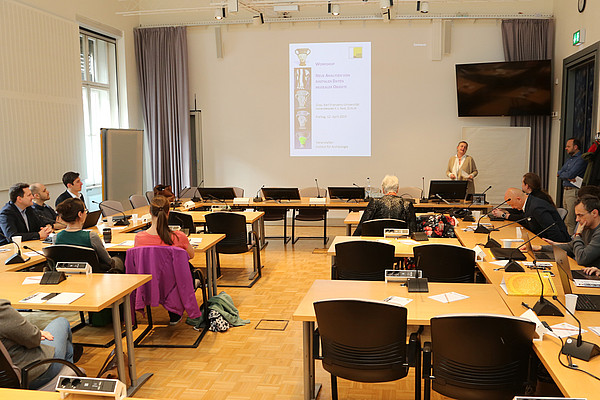
Digitale Daten musealer Objekte war Inhalt einer Fachtagung, die vom Institut für Archäologie organisiert wurde. Foto: Uni Graz/Tzivanopoulos
created by Konstantin Tzivanopoulos

Related news

Staying fit during the holidays: summer sports on the University of Graz campus

The Kleeblattlauf is not the end of the fitness term. Following last year’s successful launch, the University of Graz is once again offering summer sports on campus this year. From 30 June to 16 July 2026, there will be a free exercise programme in the open air. On the shady Südwiese (between the main building and Universitätsplatz 2), anyone interested can get in shape in the afternoons with body workouts, fascia training and yoga.

Getting even hotter: Researchers predict global warming of 1.7 degrees by 2027

While Europe is currently sweltering in the heat, global temperatures are also rising towards concerning record levels. In 2026, Earth’s surface air temperature is expected to reach 1.62 degrees, and in 2027 even 1.71 degrees Celsius above pre-industrial levels. The long-term temperature rise – an average over a 20-year period – is predicted to exceed the 1.5-degree threshold of the Paris Agreement as of 2026 already. For the first time, researchers at the University of Graz have been able to make such a forecast so far in advance. The intensifying El Niño climate event favors forecast skill and thereby facilitates a reliable computation.

Forest fire at Rosenhain: Volunteer fire brigade carried out an evacuation drill at the Jesuit refectory

Thick smoke in the stairwell, flames at the edge of the forest, people missing in the Jesuit refectory at the University of Graz: at Rosenhain, the Graz Volunteer Fire Brigade carried out a drill simulating a scenario that is becoming increasingly realistic given the heat and drought

Full effort in the heat: the Sports Centre was in full swing at the Kleeblattlauf

On 19 June 2026, 2,000 runners and hundreds of supporters made their way to the Rosenhain for a sporting end-of-term event.

Begin of page section:
Additional information:

University of Graz
Universitaetsplatz 3
8010 Graz
Austria
  • Contact
  • Web Editors
  • Moodle
  • UNIGRAZonline
  • Imprint
  • Data Protection Declaration
  • Accessibility Declaration
Weatherstation
Uni Graz

End of this page section. Go to overview of page sections

End of this page section. Go to overview of page sections

Begin of page section:

End of this page section. Go to overview of page sections


