



Begin of page section:
Page sections:

  • Go to contents (Accesskey 1)
  • Go to position marker (Accesskey 2)
  • Go to main navigation (Accesskey 3)
  • Go to sub navigation (Accesskey 4)
  • Go to additional information (Accesskey 5)
  • Go to page settings (user/language) (Accesskey 8)
  • Go to search (Accesskey 9)

End of this page section. Go to overview of page sections

Begin of page section:
Page settings:

English en
Deutsch de
Search
Login

End of this page section. Go to overview of page sections

Begin of page section:
Search:

Search for details about Uni Graz
Close

End of this page section. Go to overview of page sections


Search

Begin of page section:
Main navigation:

Page navigation:

  • University

    University
    • About the University
    • Organisation
    • Faculties
    • Library
    • Working at University of Graz
    • Campus
    Developing solutions for the world of tomorrow - that is our mission. Our students and our researchers take on the great challenges of society and carry the knowledge out.
  • Research Profile

    Research Profile
    • Our Expertise
    • Research Questions
    • Research Portal
    • Promoting Research
    • Research Transfer
    • Ethics in Research
    • Commission for Scientific Integrity
    Scientific excellence and the courage to break new ground. Research at the University of Graz creates the foundations for making the future worth living.
  • Studies

    Studies
    • Prospective Students
    • Students
  • Community

    Community
    • International
    • Location
    • Research and Business
    • Alumni
    The University of Graz is a hub for international research and brings together scientists and business experts. Moreover, it fosters the exchange and cooperation in study and teaching.
  • Spotlight
Topics
  • Sustainable University
  • Researchers answer
  • Work for us
Close menu

End of this page section. Go to overview of page sections

Begin of page section:
You are here:

University of Graz News Gemeinsam zum Doktorat

End of this page section. Go to overview of page sections

Wednesday, 27 March 2013

Gemeinsam zum Doktorat

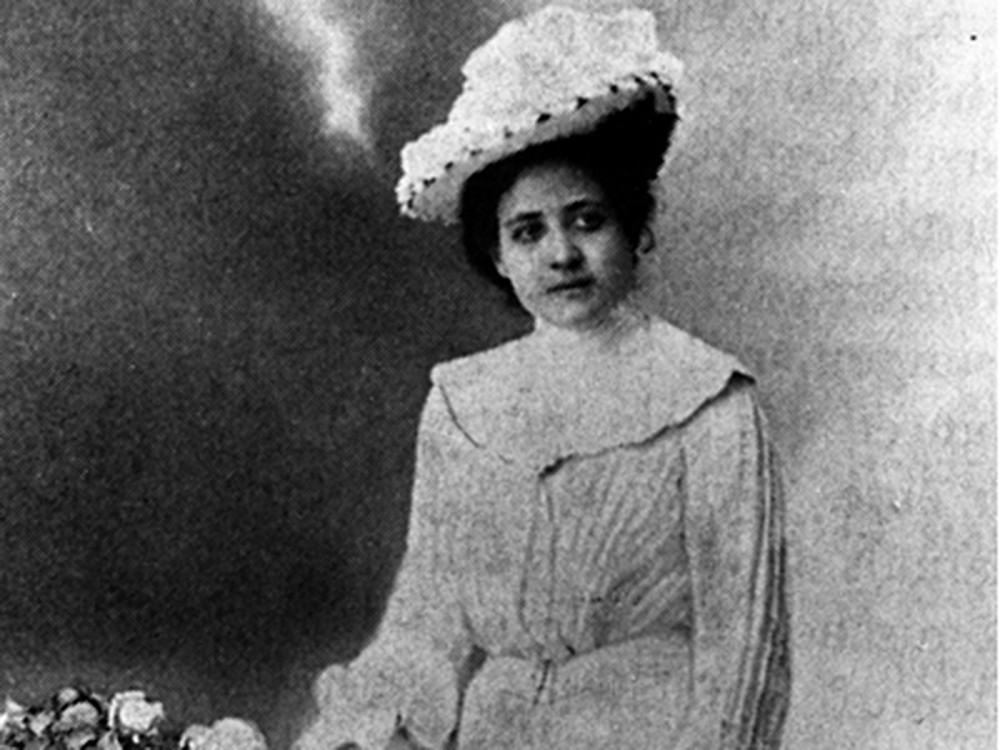
Seraphine Puchleitner, die Namenspatronin des neuen Preises für DoktorandInnenbetreuung, war 1902 die erste Frau, die an der Universität Graz promoviert hat.

Seraphine Puchleitner, die Namenspatronin des neuen Preises für DoktorandInnenbetreuung, war 1902 die erste Frau, die an der Universität Graz promoviert hat.

Eine hochkarätige Jury hat den/die GewinnerIn des ersten Seraphine-Puchleitner-Preises ermittelt. Er wird am 25. April 2013 überreicht.

Eine hochkarätige Jury hat den/die GewinnerIn des ersten Seraphine-Puchleitner-Preises ermittelt. Er wird am 25. April 2013 überreicht.

Uni Graz vergibt österreichweit den ersten Preis für DoktorandInnenbetreuung

Hervorragende Betreuung im Doktorat garantiert auf lange Sicht qualitativ hochwertige Forschung und Lehre. Im Kontext der voranschreitenden Quantifizierung wissenschaftlicher Leistungen findet besonderes Engagement in der DoktorandInnenbetreuung jedoch nicht immer die verdiente Anerkennung.


Deshalb hat die Karl-Franzens-Universität Graz mit dem "Seraphine-Puchleitner-Preis" eine österreichweit einzigartige Auszeichnung für DoktorandInnenbetreuung ins Leben gerufen. Der nach der ersten Doktoratsabsolventin der Universität Graz benannte Preis wird am Donnerstag, 25. April 2013, um 17:30 Uhr in der Aula der Universität verliehen.

Die SiegerInnen stehen bereits fest. Begonnen hat das Auswahlverfahren für die PreisträgerInnen schon im Oktober 2012. Von zum Teil mehreren DoktorandInnen wurden 45 Betreuende mit meist sehr ausführlichen Begründungen nominiert, das sind fast 12 Prozent der an der Universität Graz tätigen Habilitierten. "Diese ausgesprochen hohe Zahl ist sicher ein Beleg für den großen persönlichen Einsatz vieler DissertationsbetreuerInnen für ihre DoktorandInnen", bestätigt Dr. Gerald Lind vom DocService der Uni Graz.


Nach einer zweiten Runde, bei der die Betreuenden um eine Darlegung ihrer Betreuungsgrundsätze gebeten wurden, waren schließlich noch 31 Personen im Rennen. Daraus wurde ein/e SiegerIn ermittelt, weiters werden drei Anerkennungspreise vergeben.

Die Entscheidung über die auszuzeichnenden Betreuenden wurde in einer Sitzung getroffen, an der als Jurymitglieder Martin Polaschek (Vizerektor für Studium und Lehre), Peter Scherrer (Vizerektor für Forschung und Nachwuchsförderung), Peter Holzer (Dekan für Doktoratsstudien, Medizinische Universität Graz), Alexandra Dorfer (Leiterin des Lehr- und Studienservice), Vera Kummer (ÖH Doktorat GEWI) und Michael Harnisch (ÖH Doktorat SOWI) teilnahmen.


Die Preisverleihung findet im Rahmen der DocService-Jahrestagung zum Thema „Forschungssupervision Deluxe – Erfolgreiche Formate in der DoktorandInnenbetreuung“ am 25. April 2013 statt. 

created by Gerhild Kastrun

Related news

Greenery on the rise: over 500 new flowers, perennials and shrubs on campus

Bright blooms and fresh greenery make our hearts beat faster in spring. But it is not just us humans who delight in this colourful growth. For many animals, this splendour provides, above all, food and habitat. There has recently been an increase in this on the University of Graz campus. More than 500 native flowers, perennials and shrubs have been planted on strips of fallow land around Universitätsplatz 2.

Around the world in eight stops: the Long Night of Research at the University of Graz

On 24 April from 5 pm, you can take a short trip around the globe at the University of Graz, discovering pecularities of foreign countries or new local features in the entrance hall of the University Library. The itinerary takes you through introduced animal species, political attitudes and the omnipotence of algorithms. There will also be a programme in the historic reading hall, as well as at the UniGraz@Museum and the University Archive.

Building biological bridges: Chemist discovers an ecological tool for the pharmaceutical industry

Building a relationship on a solid foundation is also important in chemistry. To produce medicines, disinfectants or plant protection products, stable bonds between carbon atoms must be formed. Conventional chemical methods rely on environmentally harmful reagents and solvents to carry out the desired reaction. This process also produces unusable by-products. Chemist Lilla Gal has discovered an enzyme that enables the same process to take place efficiently and sustainably. The results of her research were recently published in the prestigious journal Angewandte Chemie.

Higher Education Strategy 2040: Austria’s universities on course for the future

Austria has 77 higher education institutions, which is above the EU average – but does this really make sense? The new Higher Education Strategy 2040 focuses on cooperation rather than mergers. As one of the six largest universities in Austria, the University of Graz plays a central role in this.

Begin of page section:
Additional information:

University of Graz
Universitaetsplatz 3
8010 Graz
Austria
  • Contact
  • Web Editors
  • Moodle
  • UNIGRAZonline
  • Imprint
  • Data Protection Declaration
  • Accessibility Declaration
Weatherstation
Uni Graz

End of this page section. Go to overview of page sections

End of this page section. Go to overview of page sections

Begin of page section:

End of this page section. Go to overview of page sections


