Begin of page section:
Page sections:

  • Go to contents (Accesskey 1)
  • Go to position marker (Accesskey 2)
  • Go to main navigation (Accesskey 3)
  • Go to sub navigation (Accesskey 4)
  • Go to additional information (Accesskey 5)
  • Go to page settings (user/language) (Accesskey 8)
  • Go to search (Accesskey 9)

End of this page section. Go to overview of page sections

Begin of page section:
Page settings:

English en
Deutsch de
Search
Login

End of this page section. Go to overview of page sections

Begin of page section:
Search:

Search for details about Uni Graz
Close

End of this page section. Go to overview of page sections


Search

Begin of page section:
Main navigation:

Page navigation:

  • University

    University
    • About the University
    • Organisation
    • Faculties
    • Library
    • Working at University of Graz
    • Campus
    Developing solutions for the world of tomorrow - that is our mission. Our students and our researchers take on the great challenges of society and carry the knowledge out.
  • Research Profile

    Research Profile
    • Our Expertise
    • Research Questions
    • Research Portal
    • Promoting Research
    • Research Transfer
    • Ethics in Research
    Scientific excellence and the courage to break new ground. Research at the University of Graz creates the foundations for making the future worth living.
  • Studies

    Studies
    • Prospective Students
    • Students
  • Community

    Community
    • International
    • Location
    • Research and Business
    • Alumni
    The University of Graz is a hub for international research and brings together scientists and business experts. Moreover, it fosters the exchange and cooperation in study and teaching.
  • Spotlight
Topics
  • Our digital Advent calendar
  • Sustainable University
  • Researchers answer
  • Work for us
Close menu

End of this page section. Go to overview of page sections

Begin of page section:
You are here:

University of Graz News Geliebt. Gekrönt. Geköpft.

End of this page section. Go to overview of page sections

Tuesday, 18 December 2012

Geliebt. Gekrönt. Geköpft.

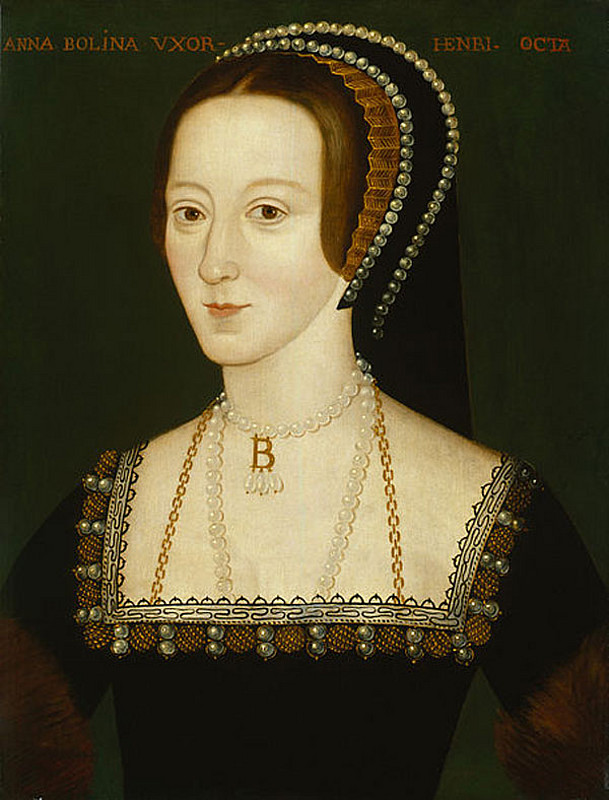
Anne Boleyn: Weil sie König Henry VIII keine Söhne gebar, wurde sie als Verräterin und Ehebrecherin hingerichtet. Foto: Wikimedia Commons.

Anne Boleyn: Weil sie König Henry VIII keine Söhne gebar, wurde sie als Verräterin und Ehebrecherin hingerichtet. Foto: Wikimedia Commons.

Neue Publikation zur Wahrnehmung der Hinrichtung Anne Boleyns

Sie verdrehte einem willensstarken Monarchen den Kopf, stieg von der einfachen Geliebten zur mächtigen Königin auf, war Grund für die Entstehung der anglikanischen Kirche und wurde nach nur knapp 3 Jahren als Erste Frau des Landes als Verräterin und Ehebrecherin enthauptet: Anne Boleyn (1501?-1536) ist wohl eine der berühmtesten Gestalten der britischen Historie. Eine neue im unipress-Verlag erschienene Publikation beleuchtet die Wahrnehmung der Hinrichtung Boleyns, wie sie aus zeitgenössischen Korrespondezen hervorgeht. 


"Ab mit dem Kopf!" hieß es für Anne Boleyn am 19. Mai 1536 - und so nennt sich auch das Buch von Sarah Bundschuh. Die Historikerin beleuchtet darin, wie Freunde und - die in der Zahl weit überlegenen - Feinde Anne Boleyns ihre Enthauptung beurteilten, verfolgten und darüber berichteten. Allein die unterschiedlichen Bezeichnungen, die Höflinge und Botschafter für Boleyn in ihren Briefen benutzen, zeigt ihre negative Grundstimmung: "So genannte Königin", "Hure", "Sie-Teufel" oder einfach nur "diese Frau" herrschen dabei vor. Beweise, dass Anne Mordkomplotte gegen ihren Gatten geschmiedet, diesen mehrmals betrogen und Inzest mit ihrem eigenen Bruder George begangen hatte, lassen sich bis heute nicht eindeutig belegen.


Anne Boleyn war eine der Hofdamen von Catherine of Aragon, der Gattin König Henry des Achten von England. Als Catherine ihrem Mann keine lebenden Söhne gebar, verstieß Henry sie, um Anne zu heiraten. Dafür war eine Abspaltung von der katholischen Kirchen in Rom notwendig, denn der Papst akzeptierte keine Scheidung. Obwohl Henry diese letzten Endes durchbrachte, sich dafür von Rom lossagte, die anglikanische Kirche gründete und Anne schließlich heiratete, blieb sie unbeliebt - bei Hofe und in der Bevölkerung. Nur ein männlicher Thronerbe hätte ihre Position festigen können. Doch sie gebar "nur" ein Mädchen, die spätere Königin Elizabeth I., die England in ein glorreiches Zeitalter führen sollte. Anne Boleyn nutze das nichts.


Mehrere Fehlgeburten, böswillig geschürte Gerüchte und ein hitziger Charakter, dem manches Fehlverhalten geschuldet war, besiegelten schließlich ihr Schicksal: Als erste geköpfte Königin ging Anne Boleyn in die Geschichte Englands ein. Henry VIII. heiratet zwei Wochen später zum dritten Mal - der Weg war frei für einen legitimen Erben.

Zurück bleibt die Geschichte eine Aufsteigerin, ihr kurzer Triumph und tiefer Fall. 


Sarah Bundschuh: "Ab mit dem Kopf! Die Wahrnehmung der Hinrichtung Anne Boleyns (1536)". UPG - unipress, 2012.

created by Gerhild Kastrun

Related news

Chemical Christmas show at the University of Graz: An explosive evening at the Schauspielh

At the beginning of December, the University of Graz transformed the theater into a laboratory: as part of “Chemical Life,” teacher training students staged a chemical Christmas show for Styrian school classes—complete with ethanol rockets, nitrogen snow, and glowing effects. An evening designed to inspire interest in studying chemistry.

Train by train: Koralm railway accelerates exchange between the Universities

Lectures at the University of Klagenfurt in the morning, seminars at the University of Graz in the afternoon: Austria's longest tunnel and a journey time of around 45 minutes make it easy. The Koralm railway increases the speed of networking between the two university locations. The collaboration builds on existing cooperation - for example in the areas of teacher training, Slavic studies and as employers, the universities are well coordinated.

On the trail of the Big Bang: University of Graz receives 1.5 million euros for doctoral programmes

The Austrian Science Fund FWF has selected the Doctoral Programme in Theoretical Particle Physics at the University of Graz for funding from the Doc.funds. Six young scientists will be funded for 3.5 years. They will gain fundamentally new insights into the origins of the world.

From trans women and knee prostheses: sports science prizes awarded

Walking better with a prosthesis, successfully getting rid of excess weight, training more effectively, more fairness for trans people in sport: these were the topics addressed by the students at the University of Graz who were awarded the sports science prizes for their Master's theses on 3 December 2025.

Begin of page section:
Additional information:

University of Graz
Universitaetsplatz 3
8010 Graz
Austria
  • Contact
  • Web Editors
  • Moodle
  • UNIGRAZonline
  • Imprint
  • Data Protection Declaration
  • Accessibility Declaration
Weatherstation
Uni Graz

End of this page section. Go to overview of page sections

End of this page section. Go to overview of page sections

Begin of page section:

End of this page section. Go to overview of page sections