Begin of page section:
Page sections:

  • Go to contents (Accesskey 1)
  • Go to position marker (Accesskey 2)
  • Go to main navigation (Accesskey 3)
  • Go to sub navigation (Accesskey 4)
  • Go to additional information (Accesskey 5)
  • Go to page settings (user/language) (Accesskey 8)
  • Go to search (Accesskey 9)

End of this page section. Go to overview of page sections

Begin of page section:
Page settings:

English en
Deutsch de
Search
Login

End of this page section. Go to overview of page sections

Begin of page section:
Search:

Search for details about Uni Graz
Close

End of this page section. Go to overview of page sections


Search

Begin of page section:
Main navigation:

Page navigation:

  • University

    University
    • About the University
    • Organisation
    • Faculties
    • Library
    • Working at University of Graz
    • Campus
    Developing solutions for the world of tomorrow - that is our mission. Our students and our researchers take on the great challenges of society and carry the knowledge out.
  • Research Profile

    Research Profile
    • Our Expertise
    • Research Questions
    • Research Portal
    • Promoting Research
    • Research Transfer
    • Ethics in Research
    Scientific excellence and the courage to break new ground. Research at the University of Graz creates the foundations for making the future worth living.
  • Studies

    Studies
    • Prospective Students
    • Students
  • Community

    Community
    • International
    • Location
    • Research and Business
    • Alumni
    The University of Graz is a hub for international research and brings together scientists and business experts. Moreover, it fosters the exchange and cooperation in study and teaching.
  • Spotlight
Topics
  • Our digital Advent calendar
  • Sustainable University
  • Researchers answer
  • Work for us
Close menu

End of this page section. Go to overview of page sections

Begin of page section:
You are here:

University of Graz News Gelebte Diversität an den Hochschulen

End of this page section. Go to overview of page sections

Friday, 25 January 2013

Gelebte Diversität an den Hochschulen

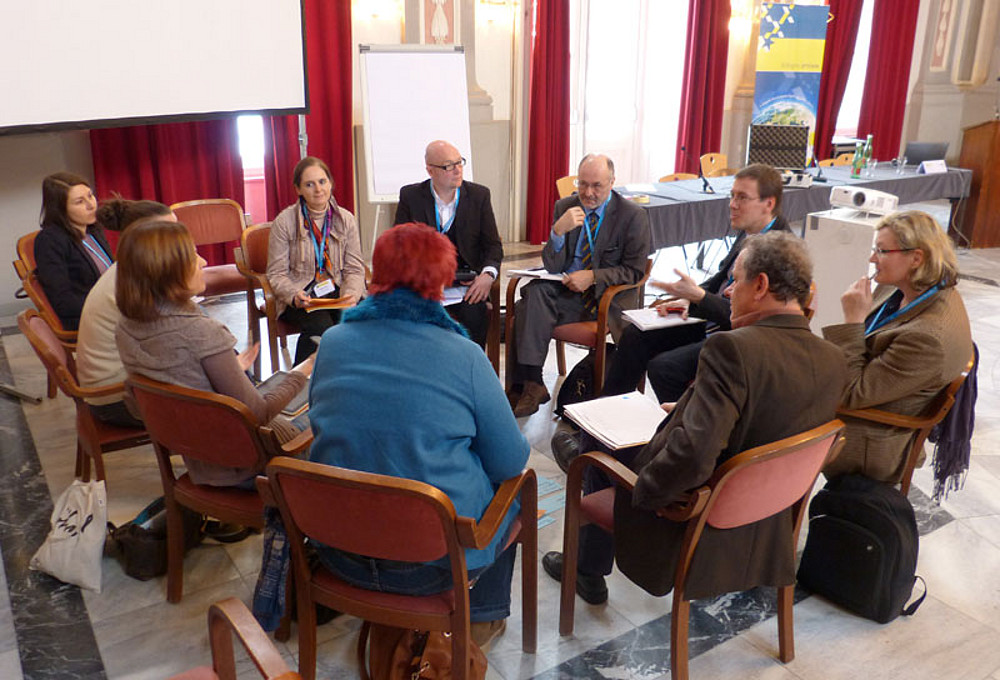
Die soziale Dimension in der Hochschulbildung stand im Mittelpunkt einer Diskussionsveranstaltung der Nationalagentur Lebenslanges Lernen an der Uni Graz.

Die soziale Dimension in der Hochschulbildung stand im Mittelpunkt einer Diskussionsveranstaltung der Nationalagentur Lebenslanges Lernen an der Uni Graz.

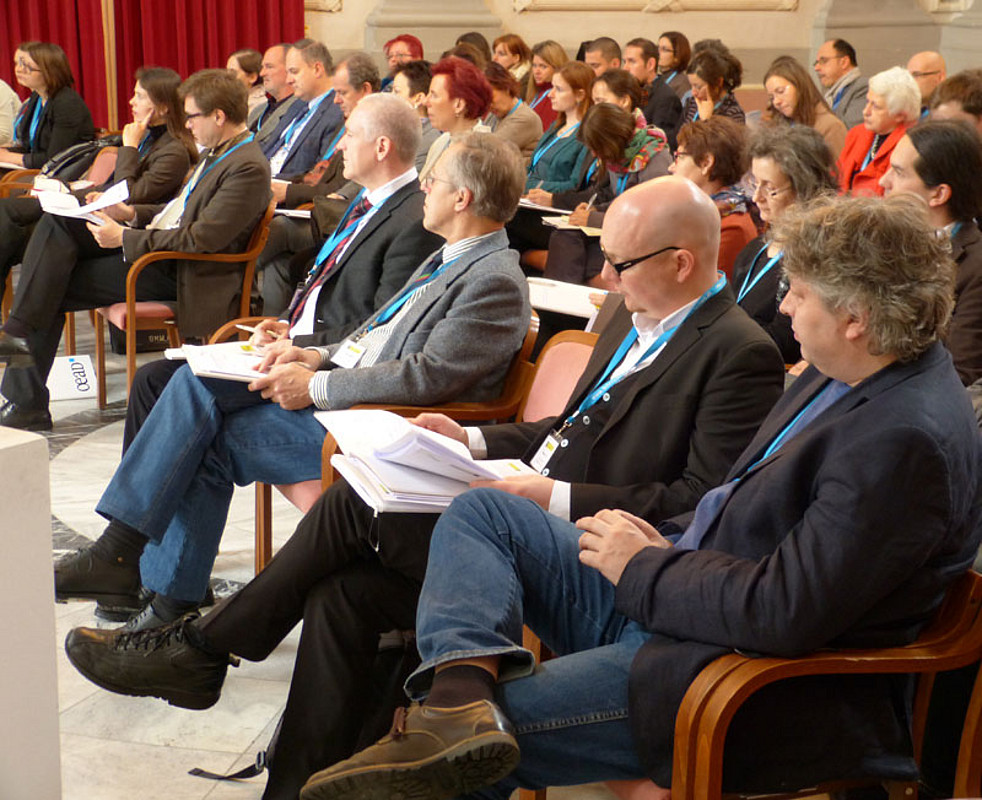
Zahlreiche VertreterInnen verschiedener Hochschulen und Partnerinstitutionen sowie Studierende besuchten das Seminar.

Zahlreiche VertreterInnen verschiedener Hochschulen und Partnerinstitutionen sowie Studierende besuchten das Seminar.

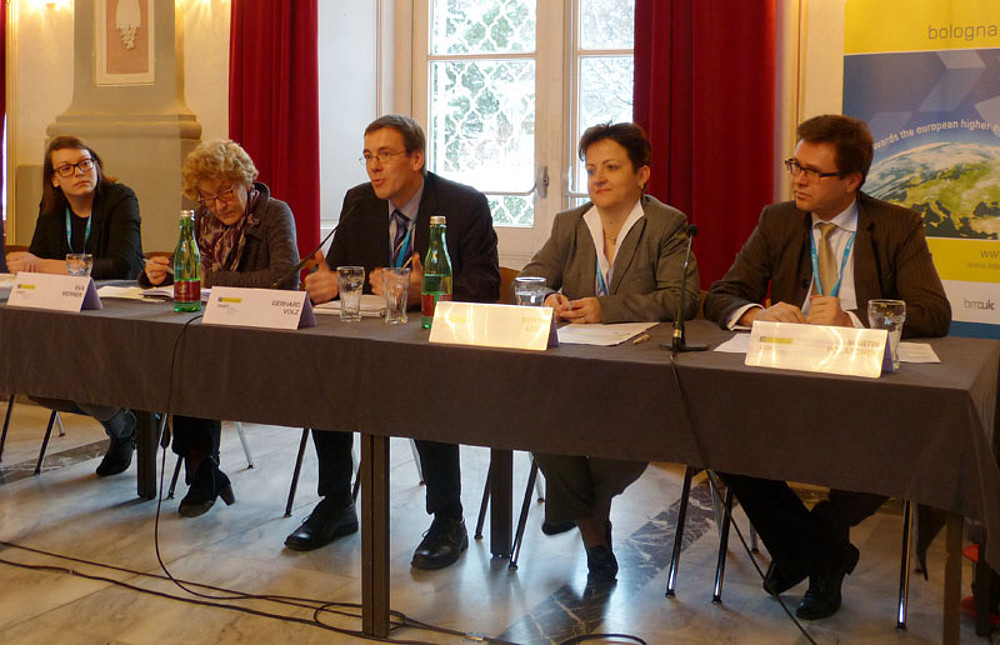
Seitens der Uni Graz nahm Vizerektor Martin Polaschek (ganz rechts) teil. Foto: OeAD-GmbH/Nationalagentur Lebenslanges Lernen.

Seitens der Uni Graz nahm Vizerektor Martin Polaschek (ganz rechts) teil. Foto: OeAD-GmbH/Nationalagentur Lebenslanges Lernen.

Bologna Seminar zu sozialen Dimension in der Hochschulbildung

Die soziale Dimension in der Hochschulbildung war kürzlich Thema eines Arbeitsseminars der Nationalagentur "Lebenslanges Lernen" (OeAD-GmbH) an der Universität Graz. HochschulvertreterInnen, Studierende, VertreterInnen von Institutionen der Sozialpartnerschaft sowie des Bundesministeriums für Wissenschaft und Forschung nahmen an dem Seminar teil, dessen Grundlage die empirischen Erhebungen aus der Studierendensozialerhebung 2011 des IHS (Institut für Höhere Studien) war. 


Die Action Line „soziale Dimension“ ist im Bologna Prozess verankert und hat das Ziel, Chancengleichheit beim Hochschulzugang sowie Vereinbarkeit von Studium, Beruf und Familie umzusetzen. In Impulsreferaten sprachen Julia Freidl (Österreichische HochschülerInnenschaft) über ein alternatives Modell der sozialen Absicherung für Studierende und Dominic Orr (Institut für Hochschulforschung/HIS, Hannover) über den Einfluss der sozialen Herkunft auf internationale Mobilität. 


In weiteren Workshops wurden Studienfinanzierungssysteme in Europa verglichen. Zudem waren Studierende mit besonderen Bedürfnissen und deren Herausforderungen während des Studiums sowieVereinbarkeit von Studium und Beruf wichtige Gesprächsthemen.


Bei einer abschließenden Podiumsdiskussion äußerten die DiskutantInnen ihre Wünsche an die österreichische Bildungspolitik:


- Vizerektor Martin Polaschek betonte die Verantwortung der Universitäten, Flexibilität bei der Unterstützung von Studierenden an den Tag zu legen und wünschte sich politisches Commitment hinsichtlich der Ressourcen für Hochschulen.


- Berta Leeb, Vizerektorin der Privaten PH der Diözese Linz, regte eine Verbesserung der Studien- und Rahmenbedingungen für Studierende mit nicht-deutscher Muttersprache an.


- Eva Werner, Rektorin der FH IMC Krems, sah die dringende Notwendigkeit in der Einrichtung psychologischer Studierendenberatungsstellen an allen Hochschulen.


- Martin Unger (IHS) und Julia Freidl (ÖH) waren sich einig, dass die Gruppe der Studierenden zunehmend heterogener wird. Sie erhofften sich Anerkennung dieser Realität, ein Bekenntnis zur Diversität und dementsprechende Reformen von Seiten der Bildungspolitik. 


created by Gudrun Leitzenberger & Gerhild Kastrun

Related news

Chemical Christmas show at the University of Graz: An explosive evening at the Schauspielh

At the beginning of December, the University of Graz transformed the theater into a laboratory: as part of “Chemical Life,” teacher training students staged a chemical Christmas show for Styrian school classes—complete with ethanol rockets, nitrogen snow, and glowing effects. An evening designed to inspire interest in studying chemistry.

Train by train: Koralm railway accelerates exchange between the Universities

Lectures at the University of Klagenfurt in the morning, seminars at the University of Graz in the afternoon: Austria's longest tunnel and a journey time of around 45 minutes make it easy. The Koralm railway increases the speed of networking between the two university locations. The collaboration builds on existing cooperation - for example in the areas of teacher training, Slavic studies and as employers, the universities are well coordinated.

On the trail of the Big Bang: University of Graz receives 1.5 million euros for doctoral programmes

The Austrian Science Fund FWF has selected the Doctoral Programme in Theoretical Particle Physics at the University of Graz for funding from the Doc.funds. Six young scientists will be funded for 3.5 years. They will gain fundamentally new insights into the origins of the world.

From trans women and knee prostheses: sports science prizes awarded

Walking better with a prosthesis, successfully getting rid of excess weight, training more effectively, more fairness for trans people in sport: these were the topics addressed by the students at the University of Graz who were awarded the sports science prizes for their Master's theses on 3 December 2025.

Begin of page section:
Additional information:

University of Graz
Universitaetsplatz 3
8010 Graz
Austria
  • Contact
  • Web Editors
  • Moodle
  • UNIGRAZonline
  • Imprint
  • Data Protection Declaration
  • Accessibility Declaration
Weatherstation
Uni Graz

End of this page section. Go to overview of page sections

End of this page section. Go to overview of page sections

Begin of page section:

End of this page section. Go to overview of page sections