Begin of page section:
Page sections:

  • Go to contents (Accesskey 1)
  • Go to position marker (Accesskey 2)
  • Go to main navigation (Accesskey 3)
  • Go to sub navigation (Accesskey 4)
  • Go to additional information (Accesskey 5)
  • Go to page settings (user/language) (Accesskey 8)
  • Go to search (Accesskey 9)

End of this page section. Go to overview of page sections

Begin of page section:
Page settings:

English en
Deutsch de
Search
Login

End of this page section. Go to overview of page sections

Begin of page section:
Search:

Search for details about Uni Graz
Close

End of this page section. Go to overview of page sections


Search

Begin of page section:
Main navigation:

Page navigation:

  • University

    University
    • About the University
    • Organisation
    • Faculties
    • Library
    • Working at University of Graz
    • Campus
    Developing solutions for the world of tomorrow - that is our mission. Our students and our researchers take on the great challenges of society and carry the knowledge out.
  • Research Profile

    Research Profile
    • Our Expertise
    • Research Questions
    • Research Portal
    • Promoting Research
    • Research Transfer
    • Ethics in Research
    Scientific excellence and the courage to break new ground. Research at the University of Graz creates the foundations for making the future worth living.
  • Studies

    Studies
    • Prospective Students
    • Students
  • Community

    Community
    • International
    • Location
    • Research and Business
    • Alumni
    The University of Graz is a hub for international research and brings together scientists and business experts. Moreover, it fosters the exchange and cooperation in study and teaching.
  • Spotlight
Topics
  • Our digital Advent calendar
  • Sustainable University
  • Researchers answer
  • Work for us
Close menu

End of this page section. Go to overview of page sections

Begin of page section:
You are here:

University of Graz News Geld und Glaube

End of this page section. Go to overview of page sections

Thursday, 20 March 2014

Geld und Glaube

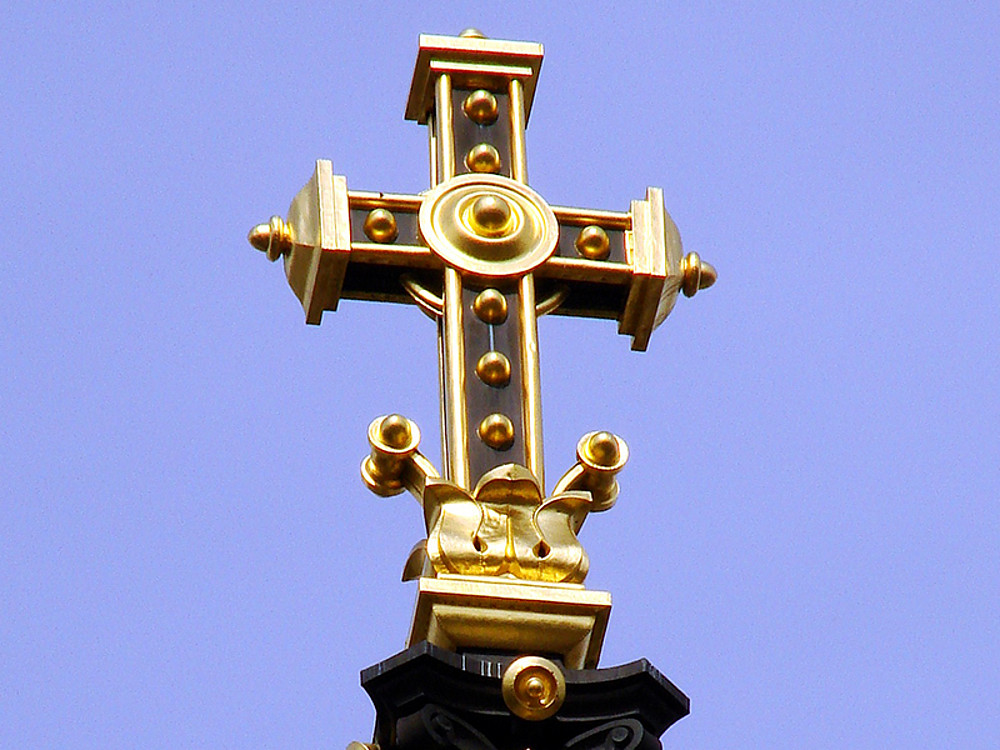
Unterschiedliche historische Entwicklungen führten in Europa zu verschiedenen Formen der Kirchenfinanzierung. Foto: Thomas Max Müller/pixelio.de

Unterschiedliche historische Entwicklungen führten in Europa zu verschiedenen Formen der Kirchenfinanzierung. Foto: Thomas Max Müller/pixelio.de

Theologe der Uni Graz präsentiert verschiedene Modelle der Kirchenfinanzierung in Europa

Die Bewahrung des kulturellen Erbes ist allen Ländern Europas ein wichtiges Anliegen. Kirchen und Religionsgemeinschaften spielen in diesem Zusammenhang eine zentrale Rolle. Bei der Kirchenfinanzierung setzen die Staaten auf ganz unterschiedliche Modelle. Der viel diskutierte österreichische Kirchenbeitrag ist nur eines davon. Ein neues Buch, herausgegeben von Ao.Univ.-Prof. Dr. Rudolf K. Höfer, Theologe an der Uni Graz, stellt verschiedene Varianten und Möglichkeiten vor dem Hintergrund historischer und aktueller Entwicklungen vor.


In Österreich heben die Kirchen selbst von ihren Mitgliedern Beiträge ein. Das entsprechende Gesetz wurde 1939 nach dem Anschluss an Hitler-Deutschland erlassen. Unterschiedliche historische Entwicklungen führten in Europa zu verschiedenen Formen der Kirchenfinanzierung. Sie werden in einem neuen Buch vorgestellt und mit Blick auf gegenwärtige gesellschaftliche Entwicklungen diskutiert. „Neun AutorInnen beschreiben die Kirchenfinanzierung in ausgewählten europäischen Ländern und prüfen, ob das jeweilige Modell noch tragfähig ist oder Änderungen braucht“, fasst Herausgeber Rudolf K. Höfer vom Institut für Kirchengeschichte und kirchliche Zeitgeschichte der Karl-Franzens-Universität Graz die Inhalte zusammen.


Die Modelle reichen von einer ausschließlich staatlichen Finanzierung in Belgien über die vom Staat eingehobene Kirchensteuer in Schweden, Norwegen, Finnland, Dänemark und Deutschland bis zu der Variante, dass alle BürgerInnen einen Steueranteil einer religiösen, kulturellen oder sozialen Institution ihrer Wahl widmen können. Letzteres ist in Spanien, Italien und Ungarn der Fall. In Liechtenstein steht dieses Modell vor der Einführung. In Frankreich und Slowenien dominieren private Spenden, in England finanziert sich die Kirche überwiegend aus eigenem Vermögen.

Die meisten Länder fördern Spenden an Kirchen durch steuerliche Absetzbarkeit, um diese Organisationen, die im kulturellen und sozialen Bereich wertvolle Beiträge für die Gesellschaft leisten, zu unterstützen.

„Kardinal Christoph Schönborn hatte 2012 eine Diskussion über die Kirchenfinanzierungsmodelle begrüßt. Das vorliegende Buch will dazu einen Beitrag liefern“, unterstreicht Rudolf K. Höfer.


Rudolf K. Höfer (Hg.), Kirchenfinanzierung in Europa. Modelle und Trends, Theologie im kulturellen Dialog 25, Tyrolia Innsbruck 2014

created by Gudrun Pichler

Related news

Chemical Christmas show at the University of Graz: An explosive evening at the Schauspielh

At the beginning of December, the University of Graz transformed the theater into a laboratory: as part of “Chemical Life,” teacher training students staged a chemical Christmas show for Styrian school classes—complete with ethanol rockets, nitrogen snow, and glowing effects. An evening designed to inspire interest in studying chemistry.

Train by train: Koralm railway accelerates exchange between the Universities

Lectures at the University of Klagenfurt in the morning, seminars at the University of Graz in the afternoon: Austria's longest tunnel and a journey time of around 45 minutes make it easy. The Koralm railway increases the speed of networking between the two university locations. The collaboration builds on existing cooperation - for example in the areas of teacher training, Slavic studies and as employers, the universities are well coordinated.

On the trail of the Big Bang: University of Graz receives 1.5 million euros for doctoral programmes

The Austrian Science Fund FWF has selected the Doctoral Programme in Theoretical Particle Physics at the University of Graz for funding from the Doc.funds. Six young scientists will be funded for 3.5 years. They will gain fundamentally new insights into the origins of the world.

From trans women and knee prostheses: sports science prizes awarded

Walking better with a prosthesis, successfully getting rid of excess weight, training more effectively, more fairness for trans people in sport: these were the topics addressed by the students at the University of Graz who were awarded the sports science prizes for their Master's theses on 3 December 2025.

Begin of page section:
Additional information:

University of Graz
Universitaetsplatz 3
8010 Graz
Austria
  • Contact
  • Web Editors
  • Moodle
  • UNIGRAZonline
  • Imprint
  • Data Protection Declaration
  • Accessibility Declaration
Weatherstation
Uni Graz

End of this page section. Go to overview of page sections

End of this page section. Go to overview of page sections

Begin of page section:

End of this page section. Go to overview of page sections