Begin of page section:
Page sections:

  • Go to contents (Accesskey 1)
  • Go to position marker (Accesskey 2)
  • Go to main navigation (Accesskey 3)
  • Go to sub navigation (Accesskey 4)
  • Go to additional information (Accesskey 5)
  • Go to page settings (user/language) (Accesskey 8)
  • Go to search (Accesskey 9)

End of this page section. Go to overview of page sections

Begin of page section:
Page settings:

English en
Deutsch de
Search
Login

End of this page section. Go to overview of page sections

Begin of page section:
Search:

Search for details about Uni Graz
Close

End of this page section. Go to overview of page sections


Search

Begin of page section:
Main navigation:

Page navigation:

  • University

    University
    • About the University
    • Organisation
    • Faculties
    • Library
    • Working at University of Graz
    • Campus
    Developing solutions for the world of tomorrow - that is our mission. Our students and our researchers take on the great challenges of society and carry the knowledge out.
  • Research Profile

    Research Profile
    • Our Expertise
    • Research Questions
    • Research Portal
    • Promoting Research
    • Research Transfer
    • Ethics in Research
    • Commission for Scientific Integrity
    Scientific excellence and the courage to break new ground. Research at the University of Graz creates the foundations for making the future worth living.
  • Studies

    Studies
    • Prospective Students
    • Students
    • Registration for Study Programme (Winter semester 2026/27)
  • Community

    Community
    • International
    • Location
    • Research and Business
    • Alumni
    The University of Graz is a hub for international research and brings together scientists and business experts. Moreover, it fosters the exchange and cooperation in study and teaching.
Topics
  • Sustainable University
  • Researchers answer
  • Work for us
Close menu

End of this page section. Go to overview of page sections

Begin of page section:
You are here:

University of Graz News Gefahr für die Leber

End of this page section. Go to overview of page sections

Thursday, 08 October 2015

Gefahr für die Leber

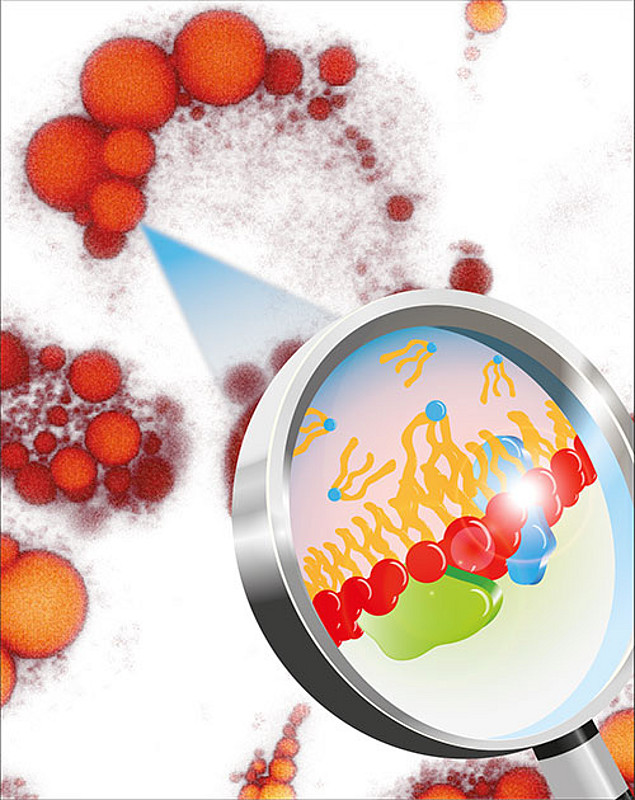
Mit Hilfe modernster Technologien konnten die mikroskopisch kleinen Fetttröpfchen von Sternzellen unter die Lupe genommen werden. Grafik: Thomas Eichmann

Mit Hilfe modernster Technologien konnten die mikroskopisch kleinen Fetttröpfchen von Sternzellen unter die Lupe genommen werden. Grafik: Thomas Eichmann

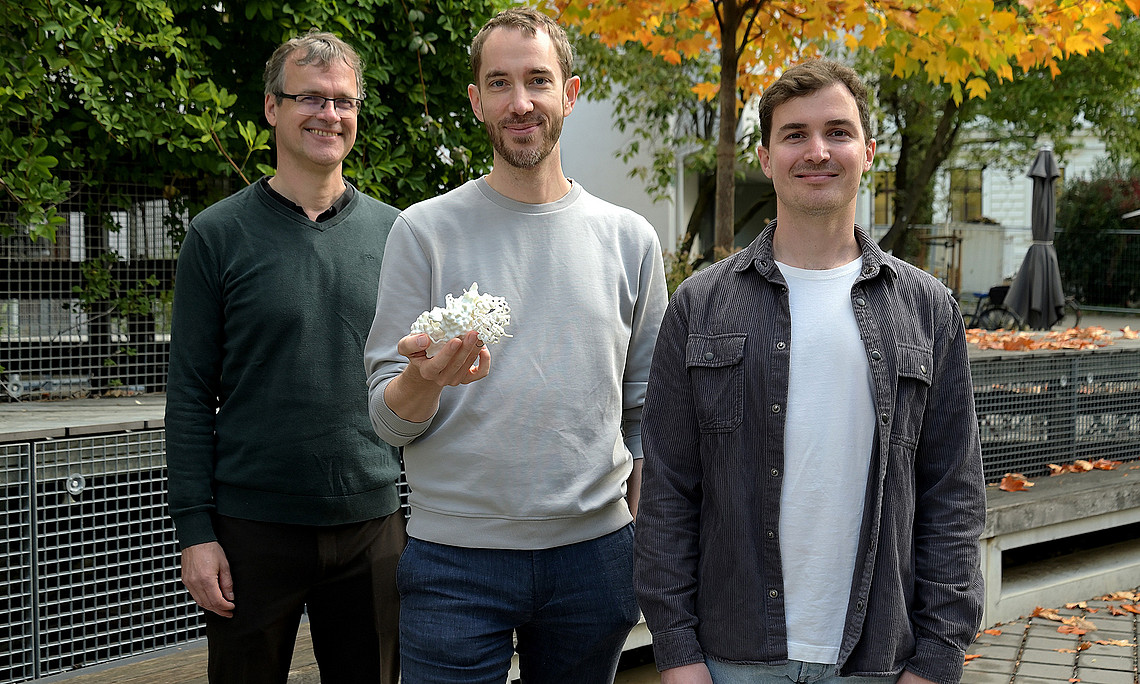
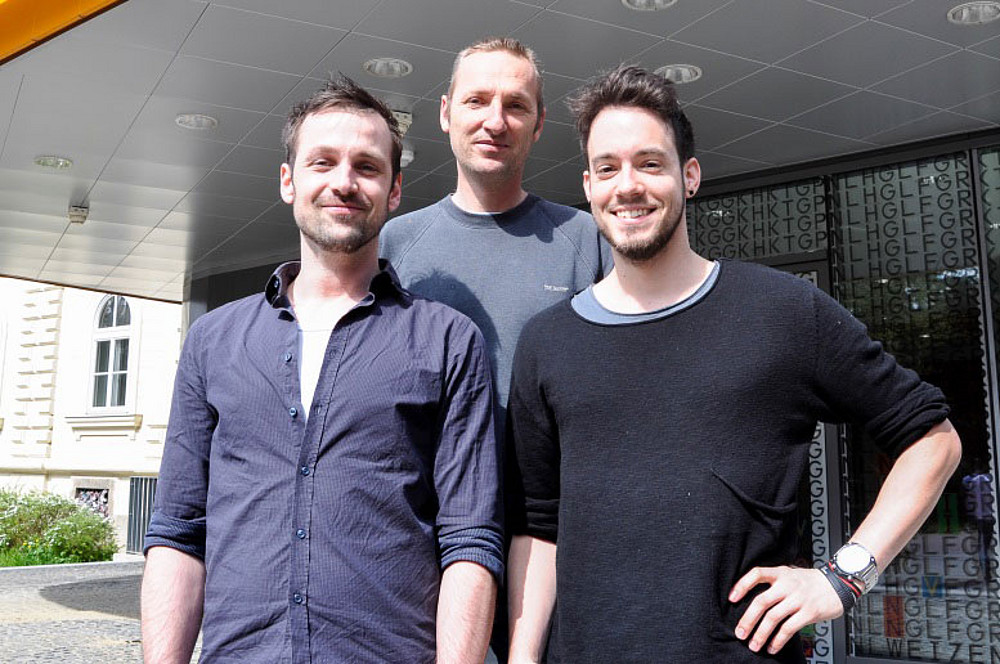
Thomas Eichmann, Achim Lass und Lukas Grumet (v.l.) Foto: Uni Graz/Tzivanopoulos

Thomas Eichmann, Achim Lass und Lukas Grumet (v.l.) Foto: Uni Graz/Tzivanopoulos

ForscherInnen der Uni Graz entschlüsseln erstmals Fettzusammensetzung und Proteine von Sternzellen

Bei der Entwicklung schwerer Lebererkrankungen spielen Sternzellen eine zentrale Rolle. Bleibt beispielsweise eine Fettleber unbehandelt, so kann es zu einer Aktivierung dieses Zelltyps kommen. Dadurch transformieren Sternzellen zu Muskel-ähnlichen Zellen, und es ändern sich auch ihre Eigenschaften. Diese Aktivierung wird als Schlüsselereignis der Entwicklung von der Fettleber zur Leberfibrose und schließlich zum Leberkrebs betrachtet. ForscherInnen der Karl-Franzens-Universität Graz ist es nun erstmals gelungen, die exakte Fettzusammensetzung sowie die Identität spezieller Proteine von Sternzellen zu entschlüsseln. Ihre Arbeit, die in der aktuellen Ausgabe des renommierten Journal of Lipid Research publiziert wurde, leistet einen grundlegenden Beitrag zum Verständnis der Physiologie von Sternzellen. „Wäre es möglich, ihre Aktivierung zu verhindern, könnte das einen positiven Einfluss auf die Entwicklung schwerer Leberkrankheiten haben“, so Assoz. Prof. Dr. Achim Lass, Leiter der Arbeitsgruppe dieser Studie am Institut für Molekulare Biowissenschaften der Uni Graz.

Eines der Hauptmerkmale der Aktivierung von Sternzellen ist der rasche Abbau zellulärer, mikroskopisch kleiner Fetttröpfchen. Um jedes dieser Tröpfchen legt sich eine Hülle aus einer Vielzahl verschiedener Proteine, wobei manche davon für den Auf-, andere für den Abbau verantwortlich sind. „Kommt es nun zu einer Aktivierung der Sternzellen, so werden jene Proteine aktiv, die den Abbau der Fetttröpfchen vorantreiben“, erklärt Achim Lass.
„Durch den Einsatz einer sogenannten unsterblichen Zelllinie konnten wir beliebig viele Sternzellen in unserem Labor züchten“, berichten Lukas Grumet, MSc, und Dr. Thomas Eichmann, die Erstautoren der aktuellen Publikation. Durch verschiedene Kooperationen im Rahmen der universitätsübergreifenden Forschungsinitiative BioTechMed-Graz gelang es den Forschern schließlich, das Lipidom – die genaue Fettzusammensetzung – sowie das Proteom – die Identität aller Proteine – der Fetttröpfchen aus gezüchteten Sternzellen zu charakterisieren.
„Bei dem Proteom handelt es sich sozusagen um eine molekularbiologische Namensliste der Proteine“, so Achim Lass. „Jetzt versuchen wir mehr über die gefundenen Proteine in Erfahrung zu bringen, um den zellbiologischen Ablauf der Leberfibrosen besser zu verstehen.“

Publikation:
Adipose triglyceride lipase and comparative gene identification-58 are lipid droplet proteins of the hepatic stellate cell-line HSC-T6. The Journal of Lipid Research. First Published on August 31, 2015.
Thomas O. Eichmann, Lukas Grumet, Ulrike Taschler, Jürgen Hartler, Christoph Heier, Aaron Woblistin, Laura Pajed, Manfred Kollroser, Gerald Rechberger, Gerhard G. Thallinger, Rudolf Zechner, Günter Haemmerle, Robert Zimmermann, and Achim Lass; University of Graz
doi: 10.1194/jlr.M062372


created by Lukas Grumet und Gudrun Pichler

Related news

Sport beyond the World Cup: the TV channel “Welt der Wunder” features diabetes research from the University of Graz

Keeping blood sugar levels in check during physical exertion is a particular challenge for people with type 1 diabetes. Othmar Moser examines how those affected manage to balance physical activity, sport and their metabolic disorder.

"Mathematics explains the world"

How can life be quantified? And what can science reveal that remains hidden from the naked eye? The 14th European Conference on Mathematical and Theoretical Biology at the University of Graz is dedicated to these questions. From 13 to 17 July, around 1,300 researchers from all over the world will gather on campus to discuss models, biological processes and the future of data-driven medicine. Klemens Fellner, Dean of the Faculty of Natural Sciences and Mathematics and a mathematician, talks about the language that explains the world

Internationally up-to-date: University of Graz offers new degree programmes in art studies

From the Old Masters to AI art – three newly designed degree programmes offer students at the University of Graz fresh perspectives on artistic production. In addition to historical art, the programmes place a greater emphasis on contemporary and global developments. The registration period is open.

The Nazi elite school Napola: Historian seeks memories and personal documents

They were to be brought up to become the future elite of National Socialism: boys and girls aged ten and over who, following the ‘Anschluss’ of Austria to the German Reich, attended a so-called Napola (short for Nationalpolitische Lehranstalt; also known as NPEA, Nationalpolitische Erziehungsanstalt). There were nine such institutions in what is now Austria between 1939 and 1945.

Begin of page section:
Additional information:

University of Graz
Universitaetsplatz 3
8010 Graz
Austria
  • Contact
  • Web Editors
  • Moodle
  • UNIGRAZonline
  • Imprint
  • Data Protection Declaration
  • Accessibility Declaration
Weatherstation
Uni Graz

End of this page section. Go to overview of page sections

End of this page section. Go to overview of page sections

Begin of page section:

End of this page section. Go to overview of page sections