




Begin of page section:
Page sections:

  • Go to contents (Accesskey 1)
  • Go to position marker (Accesskey 2)
  • Go to main navigation (Accesskey 3)
  • Go to sub navigation (Accesskey 4)
  • Go to additional information (Accesskey 5)
  • Go to page settings (user/language) (Accesskey 8)
  • Go to search (Accesskey 9)

End of this page section. Go to overview of page sections

Begin of page section:
Page settings:

English en
Deutsch de
Search
Login

End of this page section. Go to overview of page sections

Begin of page section:
Search:

Search for details about Uni Graz
Close

End of this page section. Go to overview of page sections


Search

Begin of page section:
Main navigation:

Page navigation:

  • University

    University
    • About the University
    • Organisation
    • Faculties
    • Library
    • Working at University of Graz
    • Campus
    Developing solutions for the world of tomorrow - that is our mission. Our students and our researchers take on the great challenges of society and carry the knowledge out.
  • Research Profile

    Research Profile
    • Our Expertise
    • Research Questions
    • Research Portal
    • Promoting Research
    • Research Transfer
    • Ethics in Research
    • Commission for Scientific Integrity
    Scientific excellence and the courage to break new ground. Research at the University of Graz creates the foundations for making the future worth living.
  • Studies

    Studies
    • Prospective Students
    • Students
  • Community

    Community
    • International
    • Location
    • Research and Business
    • Alumni
    The University of Graz is a hub for international research and brings together scientists and business experts. Moreover, it fosters the exchange and cooperation in study and teaching.
  • Spotlight
Topics
  • Sustainable University
  • Researchers answer
  • Work for us
Close menu

End of this page section. Go to overview of page sections

Begin of page section:
You are here:

University of Graz News Gefährlicher Musenkuss

End of this page section. Go to overview of page sections

Monday, 29 April 2013

Gefährlicher Musenkuss

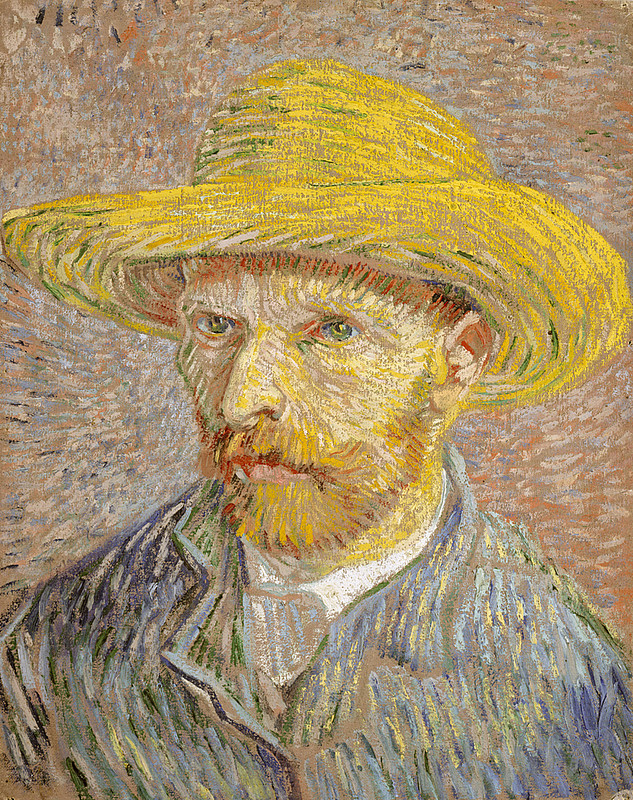
Wahnsinnig genial: Vincent van Gogh soll sich in einem manischen Anfall ein Ohr abgeschnitten haben. Wie eng Genialität und Wahn miteinander verknüpft sind, wird an der Uni Graz untersucht. Foto: Wikimedia Commons.

Wahnsinnig genial: Vincent van Gogh soll sich in einem manischen Anfall ein Ohr abgeschnitten haben. Wie eng Genialität und Wahn miteinander verknüpft sind, wird an der Uni Graz untersucht. Foto: Wikimedia Commons.

Unsere Beiträge werden mit dem kostenlosen Web-Service von <a href="https://auphonic.com">Auphonic</a> nachbearbeitet.

Unsere Beiträge werden mit dem kostenlosen Web-Service von <a href="https://auphonic.com">Auphonic</a> nachbearbeitet.

Neue Webradio-Woche mit vier Themen

Geniestreich oder Wahnvorstellung: Kreativität begleitet uns in verschiedenem Ausmaß durchs Leben. Wie viel Wahn allerdings im Musenkuss stecken kann, zeigen Beispiele genialer Künstler wie Vincent van Gogh. Wie ein Geistesblitz sich von der alltäglichen Originalität unterscheidet und wie psychische Erkrankungen mit Genialität zusammenhängen können, untersucht Assoz.-Prof. Dr. Andreas Fink vom Institut für Psychologie der Uni Graz. Er beschäftigt sich mit den kognitiven und neuronalen Grundlagen der Kreativität. 


Einen aktuellen, erfreulichen Anlass greift das Webradio diese Woche außerdem auf: Heute, am 29. April 2013, finden an der TU Graz vier Sub Auspiciis Promotionen statt. Diese ist die höchste Ehrung für Studienleistungen in Österreich. Das Webradio traf Dipl.-Ing.
Daniel Krenn, einen der vier Anwärter, die heute den Ehrenring der Republik Österreich erhalten. Welches Thema ihn in seiner Dissertation beschäftigte und welcher Umstand für gute Leistungen wichtig ist, schildert er im Webradio-Interview.


Die "Aktuell Gefragt"-Rubrik beleuchtet diese Woche die Biobank der Med Uni Graz. Diese Serviceeinrichtung, die nicht nur Gewebeproben sondern auch Körperflüssigkeiten wie Urin oder Blut lagert, dient der umfassenden Erforschung von Krankheitsursachen und der Verbesserung von Diagnostik und Therapie. Über Ursprung, Ziele und Leistungen der Grazer Biobank berichtet Dr. Berthold Huppertz im Gespräch mit dem Webradio der Grazer Universitäten.


Zeitgenössische Musik ist ein Schwerpunkt der Kunstuniversität Graz und steht diese Woche im Webradio-Scheinwerferlicht. Wir haben mit dem Wegbereiter für die Etablierung eines eigenen Studienganges für „Performance Practice in Contemporary Music“, kurz PPCM, an der KUG gesprochen: Komponist und Dirigent Gerd Kühr, ordentlicher Professor für Komposition und Musiktheorie, umreißt Inhalt und Ziele des Studiengangs PPCM.


Das Webradio der Grazer Universitäten liefert jeden Montag, ab 9 Uhr, vier neue Beiträge rund um das Geschehen an allen Grazer Universitäten, die auf http://webradio.uni-graz.at online zu hören sind bzw. zum Download bereit stehen.


Natürlich stehen alle Beiträge - bis zurück zum Start des Webradios als Einzelprojekt an der Uni Graz im Oktober 2009 - auch im online Archiv zum Nachhören zur Verfügung. Auch itunesU sind die Beiträge des Webradios vertreten.
 

Jeden Dienstag von 9:30 bis 10 Uhr sind die Info-Beiträge des Webradios außerdem auf Radio Helsinki 92,6 MHz im Rahmen der Sendung "Hör-Saal" auch auf analoge Weise zu hören - und natürlich über den Radio-Helsinki-Livestream: http://helsinki.at/livestream


created by Gerhild Kastrun

Related news

Greenery on the rise: over 500 new flowers, perennials and shrubs on campus

Bright blooms and fresh greenery make our hearts beat faster in spring. But it is not just us humans who delight in this colourful growth. For many animals, this splendour provides, above all, food and habitat. There has recently been an increase in this on the University of Graz campus. More than 500 native flowers, perennials and shrubs have been planted on strips of fallow land around Universitätsplatz 2.

Around the world in eight stops: the Long Night of Research at the University of Graz

On 24 April from 5 pm, you can take a short trip around the globe at the University of Graz, discovering pecularities of foreign countries or new local features in the entrance hall of the University Library. The itinerary takes you through introduced animal species, political attitudes and the omnipotence of algorithms. There will also be a programme in the historic reading hall, as well as at the UniGraz@Museum and the University Archive.

Building biological bridges: Chemist discovers an ecological tool for the pharmaceutical industry

Building a relationship on a solid foundation is also important in chemistry. To produce medicines, disinfectants or plant protection products, stable bonds between carbon atoms must be formed. Conventional chemical methods rely on environmentally harmful reagents and solvents to carry out the desired reaction. This process also produces unusable by-products. Chemist Lilla Gal has discovered an enzyme that enables the same process to take place efficiently and sustainably. The results of her research were recently published in the prestigious journal Angewandte Chemie.

Higher Education Strategy 2040: Austria’s universities on course for the future

Austria has 77 higher education institutions, which is above the EU average – but does this really make sense? The new Higher Education Strategy 2040 focuses on cooperation rather than mergers. As one of the six largest universities in Austria, the University of Graz plays a central role in this.

Begin of page section:
Additional information:

University of Graz
Universitaetsplatz 3
8010 Graz
Austria
  • Contact
  • Web Editors
  • Moodle
  • UNIGRAZonline
  • Imprint
  • Data Protection Declaration
  • Accessibility Declaration
Weatherstation
Uni Graz

End of this page section. Go to overview of page sections

End of this page section. Go to overview of page sections

Begin of page section:

End of this page section. Go to overview of page sections

