



Begin of page section:
Page sections:

  • Go to contents (Accesskey 1)
  • Go to position marker (Accesskey 2)
  • Go to main navigation (Accesskey 3)
  • Go to sub navigation (Accesskey 4)
  • Go to additional information (Accesskey 5)
  • Go to page settings (user/language) (Accesskey 8)
  • Go to search (Accesskey 9)

End of this page section. Go to overview of page sections

Begin of page section:
Page settings:

English en
Deutsch de
Search
Login

End of this page section. Go to overview of page sections

Begin of page section:
Search:

Search for details about Uni Graz
Close

End of this page section. Go to overview of page sections


Search

Begin of page section:
Main navigation:

Page navigation:

  • University

    University
    • About the University
    • Organisation
    • Faculties
    • Library
    • Working at University of Graz
    • Campus
    Developing solutions for the world of tomorrow - that is our mission. Our students and our researchers take on the great challenges of society and carry the knowledge out.
  • Research Profile

    Research Profile
    • Our Expertise
    • Research Questions
    • Research Portal
    • Promoting Research
    • Research Transfer
    • Ethics in Research
    • Commission for Scientific Integrity
    Scientific excellence and the courage to break new ground. Research at the University of Graz creates the foundations for making the future worth living.
  • Studies

    Studies
    • Prospective Students
    • Students
  • Community

    Community
    • International
    • Location
    • Research and Business
    • Alumni
    The University of Graz is a hub for international research and brings together scientists and business experts. Moreover, it fosters the exchange and cooperation in study and teaching.
Topics
  • Sustainable University
  • Researchers answer
  • Work for us
Close menu

End of this page section. Go to overview of page sections

Begin of page section:
You are here:

University of Graz News In need of protection

End of this page section. Go to overview of page sections

Monday, 23 January 2023

In need of protection

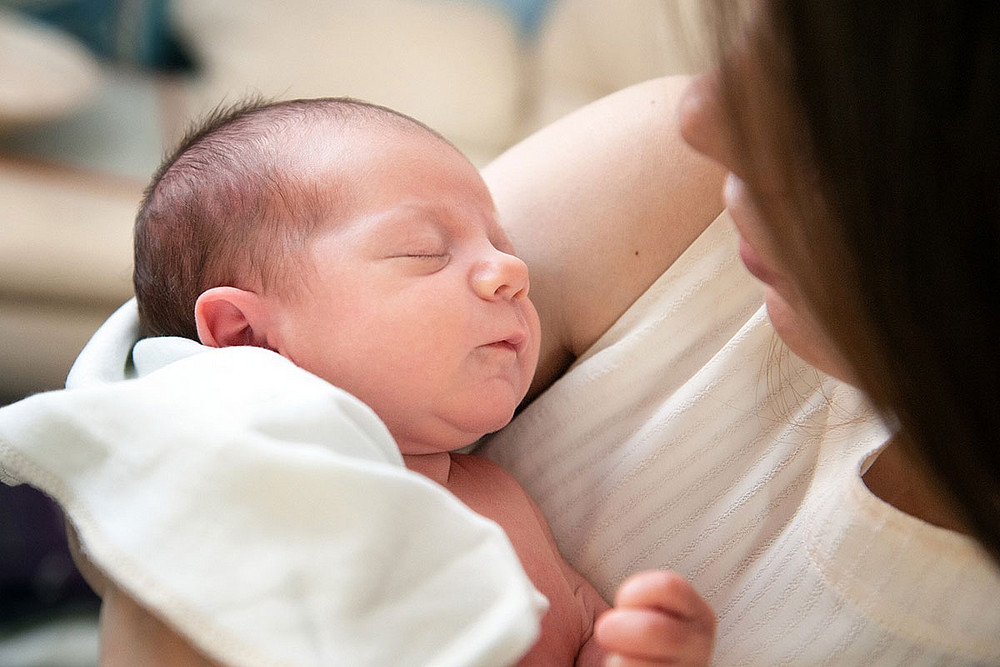
Newborn in the mother's arms. Photo: pixabay

One goal of the "HIGH Horizons" research project is to develop measures to protect pregnant women, mothers and children in health care facilities from dangerous heat. Photo: pixabay

EU project researches the effects of heat on the health of mothers, newborns and children

Heat is among the greatest climate risks we can expect to face in the coming decades. Groups particularly vulnerable to high temperatures include pregnant women and those who have recently given birth, infants and children. Previous studies have shown that extreme heat during pregnancy significantly increases the risk of stillbirth and the likelihood of preterm birth. The EU project "HIGH Horizons – Heat Indicators for Global Health", which has just started, is investigating for Europe and sub-Saharan Africa how heat affects the health of the aforementioned groups and how they can be protected. One of the ten project partners is the University of Graz.

Living space, nutritional situation, health care – these and many other factors play a role in the extent to which extreme temperatures endanger mothers, newborns and children. Social scientist Ilona M. Otto from the Wegener Center at the University of Graz and her team are identifying relevant environmental, health and socio-economic factors. From the analysis of data, the researchers investigate the consequences of heat stress and what these mean for society. "Based on our results, we will propose indicators to monitor the impact of climate change on the population, with the aim of enabling cost-effective solutions to adapt and mitigate the risk," Ilona M. Otto summarises.

These solutions will be developed locally in each case, in cooperation with local stakeholders and communities, and will include early warning systems for pregnant women and health workers, adaptation strategies to reduce heat in health facilities, and options to reduce carbon emissions in these institutions.

>> more information about the “HIGH Horizons” project


created by Gudrun Pichler

Related news

World literature from Austria: Anne-Kathrin Reulecke on Ingeborg Bachmann

On 25 June, Ingeborg Bachmann would have turned 100. To this day, she remains one of the most important German-language authors. Anne-Kathrin Reulecke, Professor of Modern German Literature at the Institute of German Studies, has conducted extensive research into the writer, who died in 1973. The academic explains why Bachmann continues to be influential and what makes her work so special. In addition to her literary analysis, Anne-Kathrin Reulecke shares some reading recommendations.

What matters in the end: moral theologian takes stock of assisted suicide

Since 1 January 2022, assisted suicide has been legal in Austria under certain conditions. This was made possible by a ruling of the Constitutional Court, which overturned the blanket ban on assisting in suicide. Four years on, it is clear that: “Although the legal framework is in place, many pressing questions remain unanswered when it comes to its practical implementation,” says Johann Platzer, a moral theologian at the University of Graz.

Noise is the signal: new simulation method enables secure communication

Researchers from Graz, Vienna and Munich have developed a new simulation method that makes it possible to calculate quantum light using classical software – a step towards secure quantum communication.

Massacre and Memory: University of Graz addresses the wounds of history

A conference on 12 and 13 June 2026 at the Jesuit Refectory will focus on trauma in Eastern and South-Eastern Europe.

Begin of page section:
Additional information:

University of Graz
Universitaetsplatz 3
8010 Graz
Austria
  • Contact
  • Web Editors
  • Moodle
  • UNIGRAZonline
  • Imprint
  • Data Protection Declaration
  • Accessibility Declaration
Weatherstation
Uni Graz

End of this page section. Go to overview of page sections

End of this page section. Go to overview of page sections

Begin of page section:

End of this page section. Go to overview of page sections