



Begin of page section:
Page sections:

  • Go to contents (Accesskey 1)
  • Go to position marker (Accesskey 2)
  • Go to main navigation (Accesskey 3)
  • Go to sub navigation (Accesskey 4)
  • Go to additional information (Accesskey 5)
  • Go to page settings (user/language) (Accesskey 8)
  • Go to search (Accesskey 9)

End of this page section. Go to overview of page sections

Begin of page section:
Page settings:

English en
Deutsch de
Search
Login

End of this page section. Go to overview of page sections

Begin of page section:
Search:

Search for details about Uni Graz
Close

End of this page section. Go to overview of page sections


Search

Begin of page section:
Main navigation:

Page navigation:

  • University

    University
    • About the University
    • Organisation
    • Faculties
    • Library
    • Working at University of Graz
    • Campus
    Developing solutions for the world of tomorrow - that is our mission. Our students and our researchers take on the great challenges of society and carry the knowledge out.
  • Research Profile

    Research Profile
    • Our Expertise
    • Research Questions
    • Research Portal
    • Promoting Research
    • Research Transfer
    • Ethics in Research
    • Commission for Scientific Integrity
    Scientific excellence and the courage to break new ground. Research at the University of Graz creates the foundations for making the future worth living.
  • Studies

    Studies
    • Prospective Students
    • Students
    • Registration for Study Programme (Winter semester 2026/27)
  • Community

    Community
    • International
    • Location
    • Research and Business
    • Alumni
    The University of Graz is a hub for international research and brings together scientists and business experts. Moreover, it fosters the exchange and cooperation in study and teaching.
Topics
  • Sustainable University
  • Researchers answer
  • Work for us
Close menu

End of this page section. Go to overview of page sections

Begin of page section:
You are here:

University of Graz News Geehrte Geistesblitze

End of this page section. Go to overview of page sections

Tuesday, 28 March 2017

Geehrte Geistesblitze
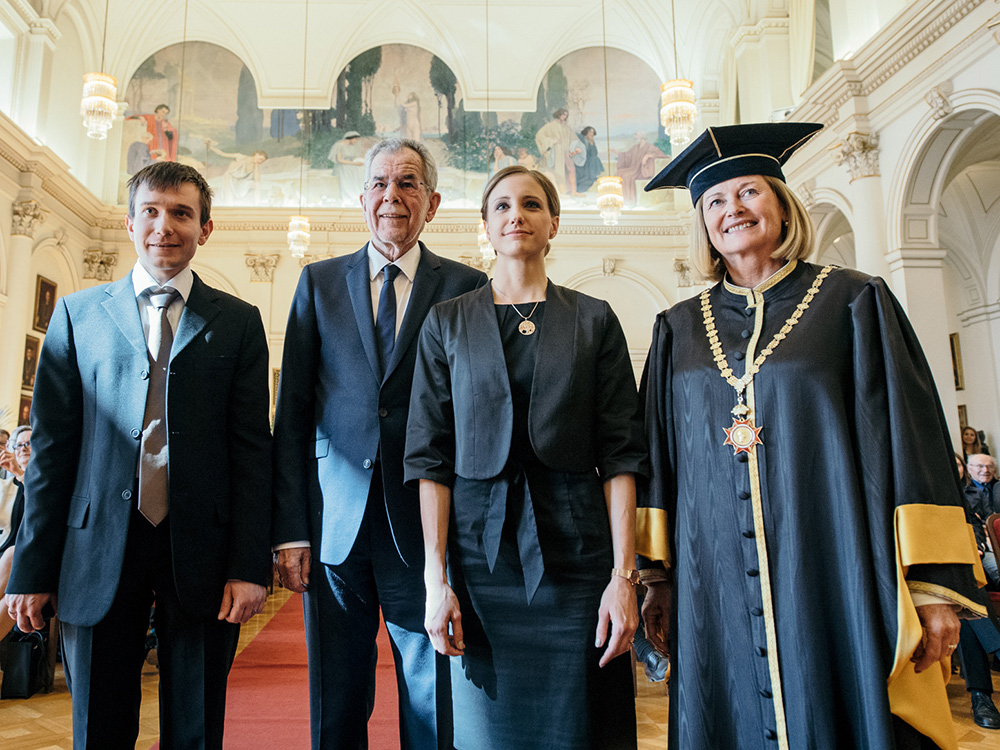
Ehrenvolle Premiere: Daniel Kraft (l.) und Martha Gschwandtner wurden unter den Auspizien von Bundespräsident Alexander Van der Bellen promoviert. Rektorin Christa Neuper (r.) sprach von einem "Freudentag auch für die Uni". Fotos: Uni Graz/Kernasenko
Ehrenvolle Premiere: Daniel Kraft (l.) und Martha Gschwandtner wurden unter den Auspizien von Bundespräsident Alexander Van der Bellen promoviert. Rektorin Christa Neuper (r.) sprach von einem "Freudentag auch für die Uni". Fotos: Uni Graz/Kernasenko

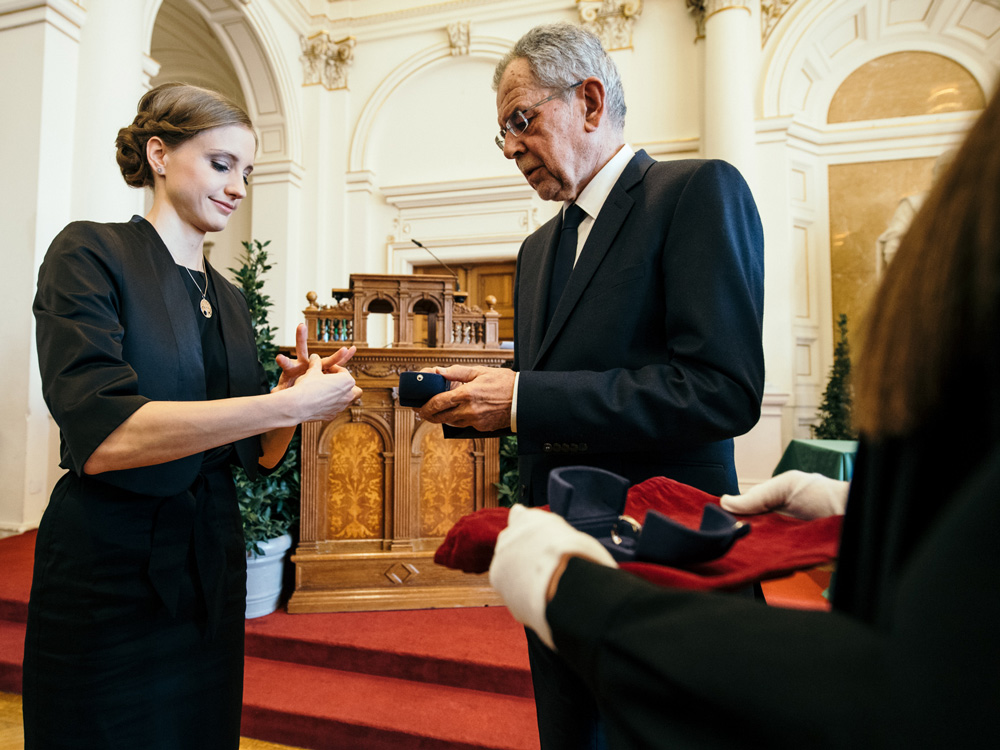
Pharmazeutin Martha Gschwandtner darf sich nun mit dem Ehrenring der Republik Österreich schmücken.

Pharmazeutin Martha Gschwandtner darf sich nun mit dem Ehrenring der Republik Österreich schmücken.

Auch Mathematiker Daniel Kraft nahm das besondere Schmuckstück von Bundespräsident Van der Bellen entgegen.
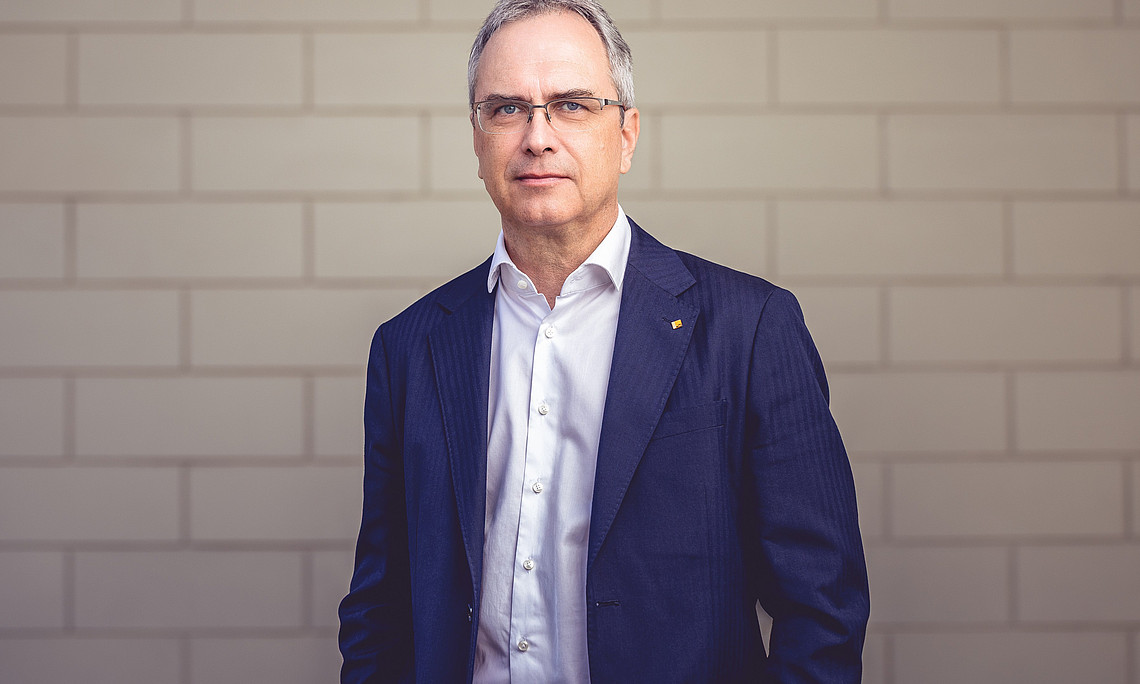
Auch Mathematiker Daniel Kraft nahm das besondere Schmuckstück von Bundespräsident Van der Bellen entgegen.

Martha Gschwandtner und Daniel Kraft promovierten an der Uni Graz sub auspiciis

Sie schafften einen Notendurchschnitt unter 1,5 ab der Oberstufe, bestanden sämtliche Abschlussprüfungen von der Reifeprüfung bis zum Rigorosum mit Auszeichnung und verfassten eine hervorragende Dissertation: Zur Krönung ihrer Leistungen wurden die Pharmazeutin Martha Gschwandtner und der Mathematiker Daniel Kraft heute Dienstag, dem 28. März 2017, in feierlichem Rahmen in der Aula der Karl-Franzens-Universität Graz von Bundespräsident Alexander Van der Bellen „sub auspiciis“ promoviert. Van der Bellen, der diese Würdigung erstmals in seiner Funktion als Staatsoberhaupt vornahm, überreichte den beiden JungakademikerInnen einen Ehrenring mit dem Wappen der Republik Österreich. Insgesamt haben mit heutigem Datum seit dem Jahr 1953 182 KandidatInnen an der Uni Graz „unter den Augen“ des Bundespräsidenten promoviert.

„Diese außergewöhnlichen Leistungen von Martha Gschwandtner und Daniel Kraft sind sehr gute Beispiele für Exzellenz in der Lehre sowie Spitzenforschung – beides zählt zu den Kernaufgaben unserer Universität. Dass heute gleich zwei AbsolventInnen der Uni Graz sub auspiciis abschließen, freut mich als Rektorin ganz besonders“, gratulierte Christa Neuper. Bundespräsident Van der Bellen lobte den Mut der NachwuchswissenschafterInnen, sich auf neues Terrain zu wagen, und betonte: „Fast das wichtigste in der Forschung ist, eine unbefangene Neugier zu bewahren.“

Krebsforscherin und Zahlenakrobat

Martha Gschwandtner, geboren 1988 in Bad Ischl, studierte an der Uni Graz Pharmazeutische Wissenschaften. Im Jahre 2012 schloss das Doktoratsstudium der Naturwissenschaften an. „Developing Protein Mutant Libraries for Functional Studies and Biopharmaceutical Design“ lautet der Titel ihrer Dissertation, betreut von Univ.-Prof. Dr. Andreas Kungl. Darin beschäftigt sie sich mit dem Design, der Herstellung und der funktionellen Charakterisierung von entzündungs- und metastasenhemmenden Proteinen, welche potenzielle Biopharmazeutika gegen chronische Entzündungen und Krebs darstellen. Martha Gschwandtner ist Autorin und Co-Autorin mehrerer wissenschaftlicher Publikationen in einschlägigen Fachmagazinen und sammelte auf nationalen und internationalen Fachkongressen Vortragserfahrung. Zurzeit ist die Oberösterreicherin in München bei der MorphoSys AG, einem Unternehmen, das innovative biopharmazeutische Medikamente entwickelt, als Wissenschafterin tätig. Der Fokus ihrer Arbeit liegt auf der Onkologie und dem Ziel, das Leben schwerkranker PatientInnen zu verbessern.

Daniel Kraft, ebenfalls Jahrgang 1988, absolvierte in Rekordzeit die Bachelorstudien Mathematik und Physik sowie die Masterstudien Numerische Mathematik und Modellierung und Theoretische Physik an der Karl-Franzens-Universität Graz. Von 2012 bis 2015 belegte er das Doktoratsstudium der Mathematik. Seine Dissertation mit dem Titel „A Level-Set Framework for Shape Optimisation” wurde von Ao.Univ.-Prof. Dr. Wolfgang Ring betreut. Kraft beschäftigt sich darin mit der mathematischen Beschreibung von Formen. Damit lässt sich zum Beispiel die optimale Gestalt eines Werkstücks bestimmen oder ein Objekt in einem Bild erkennen.
Der Mathematiker wurde bereits während des Studiums mehrfach ausgezeichnet und publizierte in hochrangigen Journalen. Seit Jänner 2016 ist er Software-Entwickler bei Google in Zürich. Er arbeitet daran, die Ergebnisse von Suchanfragen zu verbessern, sodass Resultate etwa zu „Restaurants“ in der Nähe der BenutzerInnen zuerst angezeigt werden.

created by Dagmar Eklaude

Related news

Baby health: University of Graz is seeking study participants to investigate early risk factors

Why does the body composition of babies vary so much? Some children gain a significant amount of fat mass within a few weeks, whilst others show hardly any change over the same period. “At the same time, initial observations suggest that fat distribution in all babies may follow a similar pattern, regardless of their total body fat,” explains Marco Höfler from the Institute of Movement Sciences, Sport and Health at the University of Graz. He is coordinating the research project ‘Small Bodies – Big Questions’, for which participants are currently still being sought: pregnant women and babies up to four weeks old.

In hot water: New Report reveals record losses in glaciers, permafrost and snow cover

Climate change is driving up temperatures not only in summer. Winters are also getting warmer – with dramatic consequences for glaciers, permafrost, snow cover and the freezing of lakes. The recently published cryosphere report provides specific figures for Austria. “Our monitoring shows a clear trend with record losses of ice and snow,” says project leader Wolfgang Schöner from the University of Graz.

Theologian at the University of Graz: What the excommunication of the Society of St Pius X

Following the schism involving the Society of St Pius X, there is a need for discussion. Bernd Hillebrand from the University of Graz explains why the Vatican took this step, what role anti-democratic tendencies play, and why the Society’s sacraments are no longer recognised as valid under canon law for Catholics with immediate effect.

“HeinrichBiCool”: University of Graz demonstrates the effects of green facades and roofs

The University of Graz has launched a pioneering project at the University Centre for Theology. Its name, “HeinrichBiCool”, says it all: a comprehensive system of green facades and roof will cool the building at Heinrichstraße 80 during the summer. At the same time, this will create a new habitat for plants and animals, helping to increase biodiversity. The accompanying monitoring programme will provide detailed data on the impact of the measures on indoor climate, energy consumption and biodiversity. The findings will lay a scientifically sound foundation for further projects aimed at making cities sustainable, climate-resilient and liveable. The partners in this project, funded by the Austrian Research Promotion Agency (FFG), are AEE INTEC – Institute for Sustainable Technologies, Technisches Büro Siegfried Stark, the landscape architecture and urban planning firm “studio boden”, and Ökoteam Graz.

Begin of page section:
Additional information:

University of Graz
Universitaetsplatz 3
8010 Graz
Austria
  • Contact
  • Web Editors
  • Moodle
  • UNIGRAZonline
  • Imprint
  • Data Protection Declaration
  • Accessibility Declaration
Weatherstation
Uni Graz

End of this page section. Go to overview of page sections

End of this page section. Go to overview of page sections

Begin of page section:

End of this page section. Go to overview of page sections


