Begin of page section:
Page sections:

  • Go to contents (Accesskey 1)
  • Go to position marker (Accesskey 2)
  • Go to main navigation (Accesskey 3)
  • Go to sub navigation (Accesskey 4)
  • Go to additional information (Accesskey 5)
  • Go to page settings (user/language) (Accesskey 8)
  • Go to search (Accesskey 9)

End of this page section. Go to overview of page sections

Begin of page section:
Page settings:

English en
Deutsch de
Search
Login

End of this page section. Go to overview of page sections

Begin of page section:
Search:

Search for details about Uni Graz
Close

End of this page section. Go to overview of page sections


Search

Begin of page section:
Main navigation:

Page navigation:

  • University

    University
    • About the University
    • Organisation
    • Faculties
    • Library
    • Working at University of Graz
    • Campus
    Developing solutions for the world of tomorrow - that is our mission. Our students and our researchers take on the great challenges of society and carry the knowledge out.
  • Research Profile

    Research Profile
    • Our Expertise
    • Research Questions
    • Research Portal
    • Promoting Research
    • Research Transfer
    • Ethics in Research
    • Commission for Scientific Integrity
    Scientific excellence and the courage to break new ground. Research at the University of Graz creates the foundations for making the future worth living.
  • Studies

    Studies
    • Prospective Students
    • Students
  • Community

    Community
    • International
    • Location
    • Research and Business
    • Alumni
    The University of Graz is a hub for international research and brings together scientists and business experts. Moreover, it fosters the exchange and cooperation in study and teaching.
Topics
  • Sustainable University
  • Researchers answer
  • Work for us
Close menu

End of this page section. Go to overview of page sections

Begin of page section:
You are here:

University of Graz News Gebirge im Wandel

End of this page section. Go to overview of page sections

Monday, 20 February 2023

Gebirge im Wandel

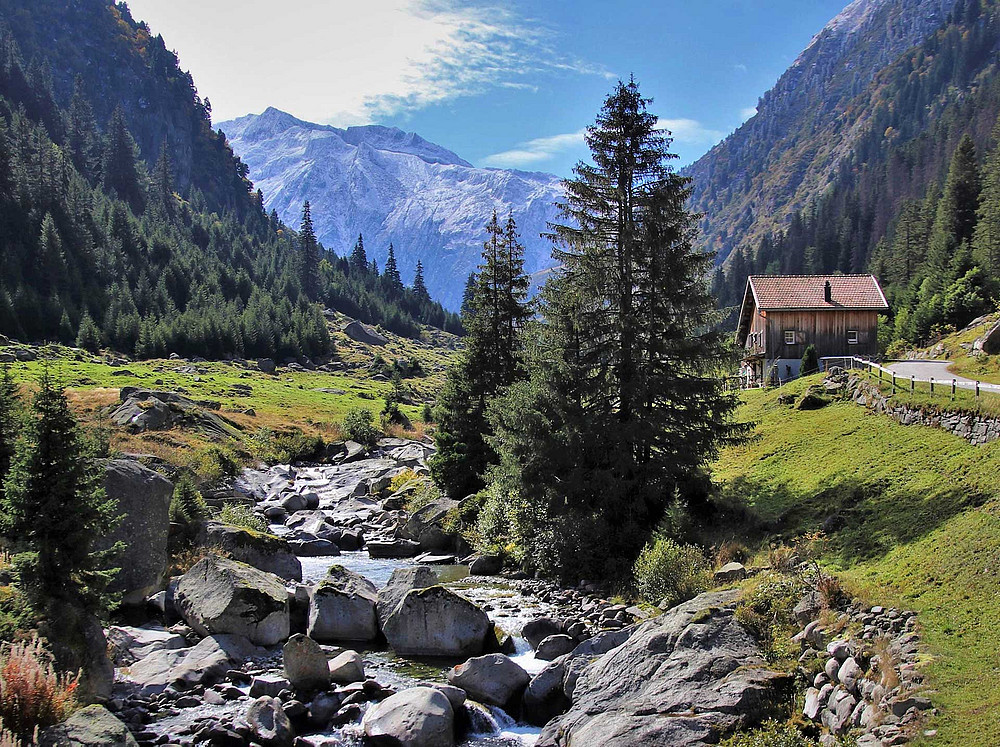
Tal mit einem Gebirgsbach mit großen Steinen im Bachbett, einige Nadelbäume am Ufer, im Hintergrund rechts ein Haus an einer Straße, weiter hinten an den Hängen Nadelwald, felsige Berge ganz hinten

Welche Auswirkungen der Klimawandel auf Quellabflüsse in den Alpen hat und wie sich Erdrutsche im Gebirge für die Umweltbildung nutzen lassen, untersuchen zwei von der ÖAW geförderte Forschungsprojekte an der Uni Graz. Foto: pixabay

Zwei Forschungsprojekte der Uni Graz werden von der Österreichischen Akademie der Wissenschaften gefördert

Rasant schmelzende Gletscher oder häufigere Erdrutsche und Felsstürze durch tauenden Permafrost – in Gebirgsregionen wirkt sich der Klimawandel besonders stark aus. Im Profilbereich Climate Change Graz erforschen Wissenschaftler:innen die Folgen klimatischer Veränderungen und Möglichkeiten, sich dagegen zu rüsten. Zwei Projekte aus den Erdwissenschaften und der Geographie werden nun von der Österreichischen Akademie der Wissenschaften (ÖAW) im Rahmen des Programms Earth System Sciences gefördert.

Wie Quellabflüsse durch den Klimawandel beeinflusst werden, untersuchen Forschende unter der Leitung von Gerfried Winkler im Projekt "Qualitative and quantitative impact of climate change on alpine spring waters and their microbial biodiversity – an eco-hydrogeological approach“. Die Wissenschaftler:innen erheben dabei unter anderem die mikrobielle Artenvielfalt alpiner Quellwässer und erarbeiten einen Vorschlag für eine integrative öko-hydrogeologische Klassifizierung.

Im Projekt “Moving mountains – landslides as geosystem services in Austrian geoparks” unter der Leitung von Martin Mergili wird die Rolle von Erdrutschen als Geosystemdienstleistungen erforscht, sprich, wie sich solche Ereignisse für die Gesellschaft nutzen lassen. Ein besonderer Schwerpunkt liegt dabei auf der Umweltbildung in den drei österreichischen UNESCO Global Geoparks „Steirische Eisenwurzen“, „Karawanken/Karavanke“ und „Erz der Alpen“.
created by Gudrun Pichler

Related news

World literature from Austria: Anne-Kathrin Reulecke on Ingeborg Bachmann

On 25 June, Ingeborg Bachmann would have turned 100. To this day, she remains one of the most important German-language authors. Anne-Kathrin Reulecke, Professor of Modern German Literature at the Institute of German Studies, has conducted extensive research into the writer, who died in 1973. The academic explains why Bachmann continues to be influential and what makes her work so special. In addition to her literary analysis, Anne-Kathrin Reulecke shares some reading recommendations.

What matters in the end: moral theologian takes stock of assisted suicide

Since 1 January 2022, assisted suicide has been legal in Austria under certain conditions. This was made possible by a ruling of the Constitutional Court, which overturned the blanket ban on assisting in suicide. Four years on, it is clear that: “Although the legal framework is in place, many pressing questions remain unanswered when it comes to its practical implementation,” says Johann Platzer, a moral theologian at the University of Graz.

Noise is the signal: new simulation method enables secure communication

Researchers from Graz, Vienna and Munich have developed a new simulation method that makes it possible to calculate quantum light using classical software – a step towards secure quantum communication.

Massacre and Memory: University of Graz addresses the wounds of history

A conference on 12 and 13 June 2026 at the Jesuit Refectory will focus on trauma in Eastern and South-Eastern Europe.

Begin of page section:
Additional information:

University of Graz
Universitaetsplatz 3
8010 Graz
Austria
  • Contact
  • Web Editors
  • Moodle
  • UNIGRAZonline
  • Imprint
  • Data Protection Declaration
  • Accessibility Declaration
Weatherstation
Uni Graz

End of this page section. Go to overview of page sections

End of this page section. Go to overview of page sections

Begin of page section:

End of this page section. Go to overview of page sections