



Begin of page section:
Page sections:

  • Go to contents (Accesskey 1)
  • Go to position marker (Accesskey 2)
  • Go to main navigation (Accesskey 3)
  • Go to sub navigation (Accesskey 4)
  • Go to additional information (Accesskey 5)
  • Go to page settings (user/language) (Accesskey 8)
  • Go to search (Accesskey 9)

End of this page section. Go to overview of page sections

Begin of page section:
Page settings:

English en
Deutsch de
Search
Login

End of this page section. Go to overview of page sections

Begin of page section:
Search:

Search for details about Uni Graz
Close

End of this page section. Go to overview of page sections


Search

Begin of page section:
Main navigation:

Page navigation:

  • University

    University
    • About the University
    • Organisation
    • Faculties
    • Library
    • Working at University of Graz
    • Campus
    Developing solutions for the world of tomorrow - that is our mission. Our students and our researchers take on the great challenges of society and carry the knowledge out.
  • Research Profile

    Research Profile
    • Our Expertise
    • Research Questions
    • Research Portal
    • Promoting Research
    • Research Transfer
    • Ethics in Research
    • Commission for Scientific Integrity
    Scientific excellence and the courage to break new ground. Research at the University of Graz creates the foundations for making the future worth living.
  • Studies

    Studies
    • Prospective Students
    • Students
    • Welcome Weeks for First Year Students
  • Community

    Community
    • International
    • Location
    • Research and Business
    • Alumni
    The University of Graz is a hub for international research and brings together scientists and business experts. Moreover, it fosters the exchange and cooperation in study and teaching.
Topics
  • Sustainable University
  • Researchers answer
  • Work for us
Close menu

End of this page section. Go to overview of page sections

Begin of page section:
You are here:

University of Graz News Forschung für die Schule

End of this page section. Go to overview of page sections

Wednesday, 19 October 2016

Forschung für die Schule

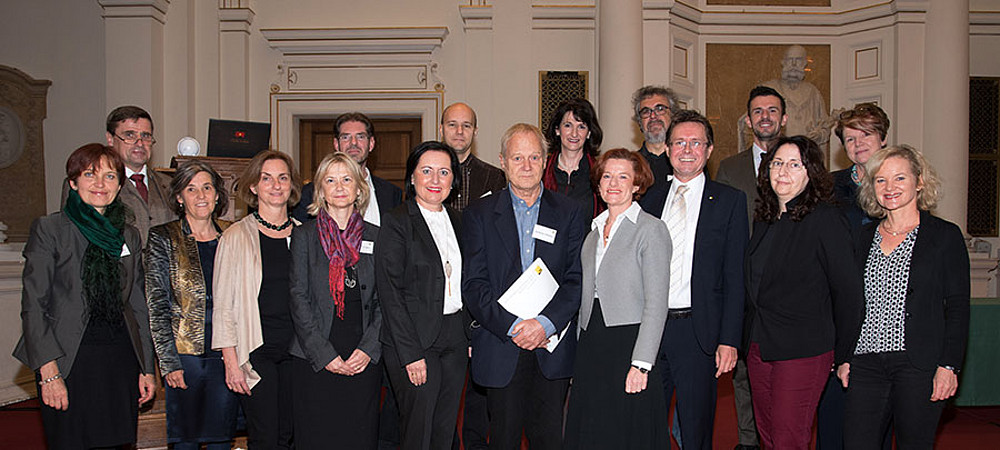
Margit Delefant, Bernhard Weninger, Josefine Jaritz, Inge Ledun-Kahlig, Klaudia Singer, Harald Dier, Martin Möderl (alle Praxis Netzwerk Fachdidaktik PNF), Landesschulratspräsidentin Elisabeth Meixner, Andreas Helmke, PH-Steiermark-Vizerektorin Regina Weitlaner, PH-Steiermark-Rektorin Elgrid Messner, Gerhard Rath (PNF), Vizerektor Martin Polaschek, Stephan Schicker (PNF), Angela Weilguny vom Bundesministerium für Bildung, Erika Rottensteiner (PH Stmk) und Sabine Schmölzer-Eibinger (FDZ GEWI).

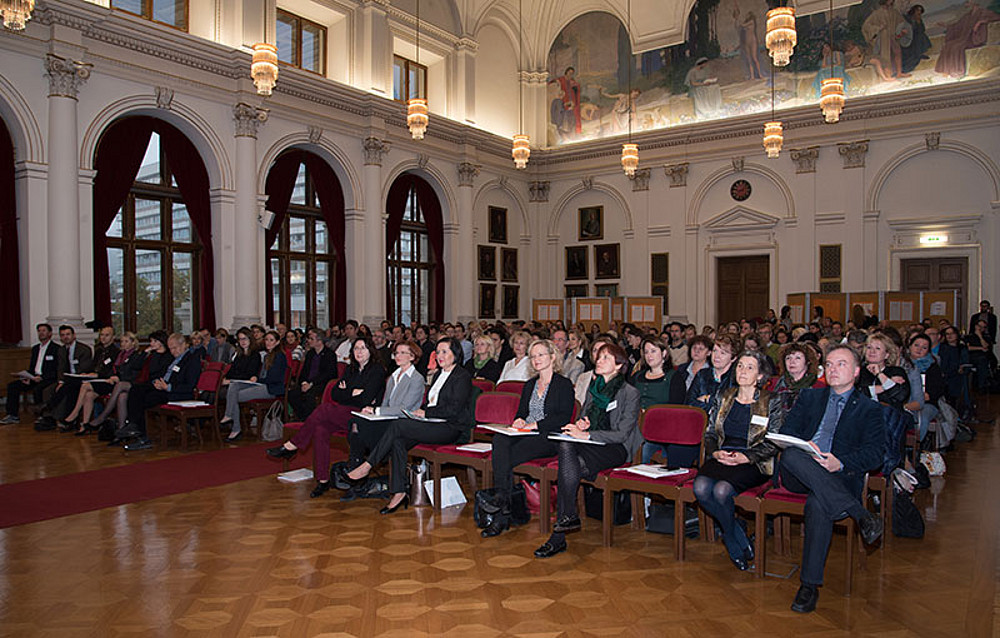
Gut gefüllte Aula beim Tag der Fachdidaktik. Alle Fotos: Uni Graz/Kastrun.

Gut gefüllte Aula beim Tag der Fachdidaktik. Alle Fotos: Uni Graz/Kastrun.

Die Viktor-Obendrauf-Preisträger Gabriel Hofer-Ranz und Florian Knopper (v.l.). Greta Korper war bei der Preisverleihung aus dienstlichen Gründen verhindert.

Die Viktor-Obendrauf-Preisträger Gabriel Hofer-Ranz und Florian Knopper (v.l.). Greta Korper war bei der Preisverleihung aus dienstlichen Gründen verhindert.

Wissenschaft und Praxis trafen sich beim Tag der Fachdidaktik an der Uni Graz

Im Projekt PädagogInnenbildung NEU hat die Karl-Franzens-Universität Graz starke Impulse gesetzt. In Kooperation mit den Pädagogischen Hochschulen wird auch weiterhin auf mehreren Ebenen intensiv an der Professionalisierung der Ausbildung von LehrerInnen gearbeitet. Eine zentrale Rolle kommt der Uni Graz dabei in der Forschung zu. Hier sind WissenschafterInnen verschiedener Disziplinen VorreiterInnen auf ihrem Gebiet. „Eine besondere Stärke ist die große Forschungsbandbreite, wobei gleichzeitig auch gemeinschaftlich an zentralen Fragestellungen gearbeitet wird“, unterstreicht Vizerektor Martin Polaschek. Gebündelt werden die Forschungsergebnisse unter anderem im Forschungsnetzwerk Fachdidaktik.


Am 18. Oktober 2016 luden das Praxis Netzwerk Fachdidaktik und das Zentrum für PädagogInnenbildung an der Universität Graz in Kooperation mit der Pädagogischen Hochschule Steiermark zum 2. Tag der Fachdidaktik. Ziel der Veranstaltung in der Aula der Karl-Franzens-Universität Graz war der Austausch von ExpertInnen aus Wissenschaft und Praxis zum Thema „Unterrichtsqualität und Professionalisierung von LehrerInnen in der PädagogInnenbildung NEU“.
Vizerektor Martin Polaschek begrüßte die Teilnehmenden und strich dabei vor allem die große Bedeutung der aktuellen Forschungsergebnisse auf diesem Gebiet für die kommenden Generationen hervor.

Für den Hauptvortrag konnte Dr. Andreas Helmke, Professor für Entwicklungspsychologie und Pädagogische Psychologie an der Universität Koblenz-Landau, gewonnen werden. Er zählt zu den renommiertesten Unterrichtsforschern auf dem Gebiet der LehrerInnen-Professionalisierung und zum lernwirksamen Unterricht. Anschließend widmeten sich die TeilnehmerInnen in Workshops aktuellen Themen, darunter Sprache und Literalität, Inklusive Pädagogik, Medien und Digitale Kommunikation sowie Global Citizenship Education.


Ausgezeichnete JungforscherInnen
Die Stärkung des wissenschaftlichen Nachwuchses in allen Bereichen des Lehramts ist der Uni Graz ein großes Anliegen. So wurden 2013 das österreichweit erste Doktoratsstudium für Fachdidaktik und das im deutschsprachigen Raum einzigartige Habilitationsforum für Fachdidaktik und Unterrichtsforschung eingerichtet.


Die besten fachdidaktischen Diplom-/Masterarbeiten und Dissertationen zeichnet die Uni Graz jedes Jahr mit dem Viktor-Obendrauf-Preis aus. Aus 15 eingereichten Diplomarbeiten wählte die Jury, bestehend aus Vizerektor Martin Polaschek, den StudiendekanInnen der sechs Fakultäten und zwei VertreterInnen der ÖH, die folgenden drei PreisträgerInnen aus, die mit jeweils 1.000 Euro prämiert wurden:


Mag.phil. Mag. rer.nat. Gabriel Hofer-Ranz: Die Verzeitlichung des Zeitlosen. Eine Untersuchung des didaktischen Potentials der Einbindung von Elementen aus der Geschichte der Mathematik in den Mathematikunterricht
Mag.phil. Florian Knopper: Geschichtsunterricht in der Einwanderungsgesellschaft. Eine empirische Analyse unter Jugendlichen in Graz
Mag.phil. Greta Korper, BA: Reading in the Constructivist Classroom: An Empirical Study on Strategies Facilitating Reading Comprehension and Retention

created by Gudrun Pichler

Related news

Jurassic Sounds: Biologist reconstructs insect songs from 165 million years ago

It was apparently not just the roars of the dinosaurs that made up the soundscape of the animal world during the Jurassic period. Crickets and grasshoppers communicated through a variety of songs and high-pitched sounds, as Thorin Jonsson from the Institute of Biology at the University of Graz discovered together with colleagues from the universities of Lincoln, Bristol (UK), Beijing (China) and Tempe (USA). The findings on what are so far the oldest traces of sound on Earth have just been published in the journal PNAS.

EU funding boosts international exchange between universities

The University of Graz is further expanding its international study opportunities through the European university alliance Arqus and is taking the lead in two key projects. In future, students will benefit from even more joint degree programmes and from simplified recognition of academic achievements through the Joint European Degree Label.

Rescue and risks: Researchers have surveyed public perceptions of AI

The use of artificial intelligence has had to be made transparent since 2 August 2026. The EU’s AI Act, which has been in force since then, also sets out how risky an application is and which security measures apply as a result. However, the assessment of risks by the legislation differs in some cases significantly from the perceptions of the Austrian public. This is the finding of a representative study carried out by data scientist Stefan Thalmann from the University of Graz and his team.

The Healing Sea: Researchers discover new approaches to treating chronic inflammation in sponges

Chronic inflammation plays a key role in many diseases, ranging from metabolic disorders and cardiovascular diseases to tissue damage following injuries or infections. “Normally, the body is able to resolve inflammation on its own. If this process becomes unbalanced, immune cells remain permanently active and continue to drive negative changes in the tissue,” explains Andreas Koeberle, a pharmacist at the University of Graz.

Begin of page section:
Additional information:

University of Graz
Universitaetsplatz 3
8010 Graz
Austria
  • Contact
  • Web Editors
  • Moodle
  • UNIGRAZonline
  • Imprint
  • Data Protection Declaration
  • Accessibility Declaration
Weatherstation
Uni Graz

End of this page section. Go to overview of page sections

End of this page section. Go to overview of page sections

Begin of page section:

End of this page section. Go to overview of page sections