Begin of page section:
Page sections:

  • Go to contents (Accesskey 1)
  • Go to position marker (Accesskey 2)
  • Go to main navigation (Accesskey 3)
  • Go to sub navigation (Accesskey 4)
  • Go to additional information (Accesskey 5)
  • Go to page settings (user/language) (Accesskey 8)
  • Go to search (Accesskey 9)

End of this page section. Go to overview of page sections

Begin of page section:
Page settings:

English en
Deutsch de
Search
Login

End of this page section. Go to overview of page sections

Begin of page section:
Search:

Search for details about Uni Graz
Close

End of this page section. Go to overview of page sections


Search

Begin of page section:
Main navigation:

Page navigation:

  • University

    University
    • About the University
    • Organisation
    • Faculties
    • Library
    • Working at University of Graz
    • Campus
    Developing solutions for the world of tomorrow - that is our mission. Our students and our researchers take on the great challenges of society and carry the knowledge out.
  • Research Profile

    Research Profile
    • Our Expertise
    • Research Questions
    • Research Portal
    • Promoting Research
    • Research Transfer
    • Ethics in Research
    Scientific excellence and the courage to break new ground. Research at the University of Graz creates the foundations for making the future worth living.
  • Studies

    Studies
    • Prospective Students
    • Students
  • Community

    Community
    • International
    • Location
    • Research and Business
    • Alumni
    The University of Graz is a hub for international research and brings together scientists and business experts. Moreover, it fosters the exchange and cooperation in study and teaching.
  • Spotlight
Topics
  • Our digital Advent calendar
  • Sustainable University
  • Researchers answer
  • Work for us
Close menu

End of this page section. Go to overview of page sections

Begin of page section:
You are here:

University of Graz News "Forsch gegen Armut"

End of this page section. Go to overview of page sections

Friday, 02 November 2018

"Forsch gegen Armut"

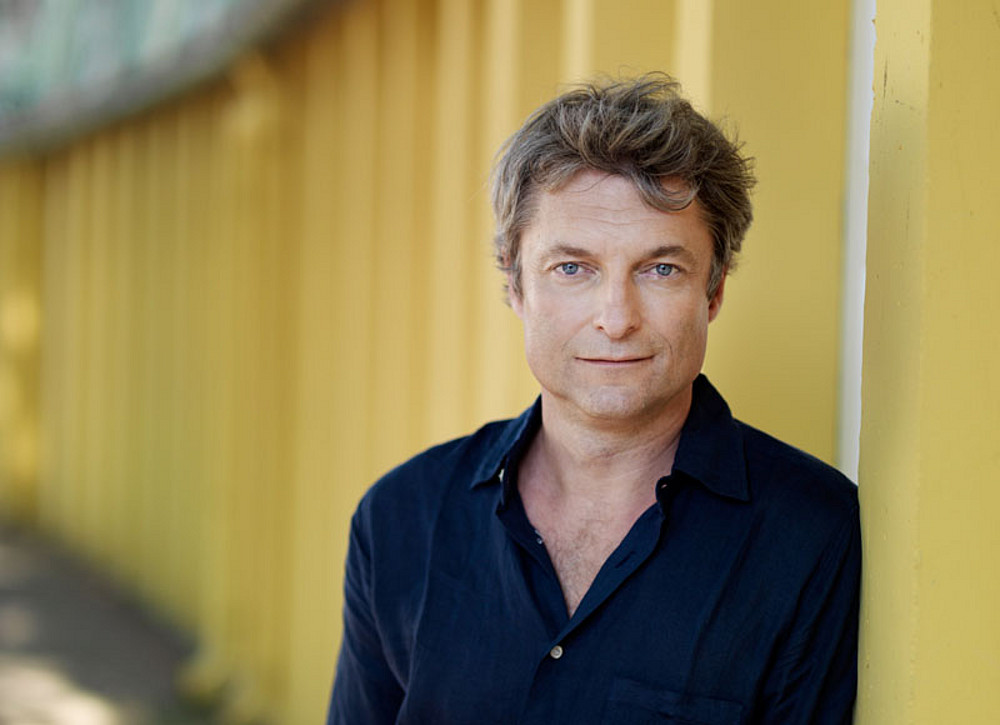
Der Schauspieler Alfred Dorfer ist auch promovierter Germanist. Foto: Peter Rigaud ©Peter Rigaud Photography GmbH

Der Schauspieler Alfred Dorfer ist auch promovierter Germanist. Foto: Peter Rigaud

Alfred Dorfer hält regelmäßig Gastlehrveranstaltungen an der Universität Graz.

Forschung hat für viele etwas Unheimliches, vielleicht auch aufgrund ihrer Heimlichkeit. Nicht allzu viel dringt meist an die Öffentlichkeit, man weiß nicht genau, wer was woran forscht und warum. Dieses vermeintlich Clandestine lässt einen Nimbus entstehen von Exklusivität, also beiderseitiger  Ausgeschlossenheit von Forschung und Gesellschaft. Das schafft Vorurteile durch Halbwissen. Forschung wird daher oft nicht mit konkreten Ergebnissen verbunden, eher mit kostenintensiven ziellosen Prozessen. So kann sie zum Spielball populistischer Sparpolitik werden. Aber eben dieser programmatisch verankerte, offene Ausgang ist das eigentliche Wesen von Forschung.

"Selbst wenn nicht jede Forschung zu einem sicht- oder brauchbaren Ergebnis führt,
ist ihre bloße Existenz unverzichtbar und kann nicht genügend gefördert werden.“

Natürlich gibt es Missbrauch, wo nicht ergebnisoffen geforscht wird, sondern blanke Geschäftsinteressen erkenntnisleitend sind und somit Wissenschaft zur Knechtschaft wird. Aber prinzipiell wäre dieser Nebel der Diffusität durch Recherche leicht zu durchdringen. Zwölf Milliarden wurden zuletzt für Forschung und Entwicklung in Österreich investiert. Das ist immerhin das Fünffache der Verteidigungsausgaben. Die universitäre Forschung macht da zwar nicht den Löwenanteil aus, zumal der von Unternehmen getragen wird. Doch immerhin können die 22 öffentlichen Unis des Landes auf 1 181 forschungsdurchführende Einheiten verweisen. Wobei die Universität Graz diesbezüglich Großartiges leistet. Doch Zahlen sind nicht alles, nicht einmal in der Wissenschaft. Entscheidend ist dieser dynamisierte Motor des Geisteslebens, der unbemerkt brummt und ständig neuen Treibstoff braucht. Und zwei große Errungenschaften des Menschen vereint. Wissenschaft und Kunst. Kunst? Ja, denn ohne Intuition oder Inspiration wäre Forschung undenkbar. Erst im zweiten Schritt sozusagen tritt die große Qualität der Logik und der dadurch geschaffenen Struktur zutage. Sie bedingen einander, stehen in keinem hierarchischen Verhältnis, eher in einem chronologischen. Nicht einmal das wirklich, da in diesem Prozess kaum Linearität anzutreffen ist. Eher eine ständige Verschränkung, wie sie unserm Verstand eben entspricht. Selbst wenn nicht jede Forschung zu einem sicht- oder brauchbaren Ergebnis führt, ist ihre bloße Existenz unverzichtbar und kann nicht genügend gefördert werden.

„Forschung darf nicht dem reinen Utilitarismus unterstellt werden.
Alles andere wäre ein weiterer Schritt in Richtung Armut.“

Das betrifft nicht nur die finanziellen Zuwendungen, sondern auch nichtmaterielle Werte wie Respekt und bedingungslose Hochachtung. Forschung darf, wie Bildung, nicht dem reinen Utilitarismus unterstellt werden. Alles andere wäre ein weiterer Schritt in Richtung Armut. Und die gehört genauso kompromisslos bekämpft wie ihr soziales Pendant. 

created by Redaktion UNIZEIT

Related news

Semester abroad without barriers: University of Graz wins award for promoting inclusion

The University of Graz has been awarded the Internationalization Award for its new inclusion initiative. Students with fewer opportunities now also receive financial support for their semester abroad outside Europe.

Fair distribution: Researchers determine just greenhouse gas budgets for all EU regions

Ten years ago, on 12 December 2015, the Paris Climate Agreement was signed at the UN Climate Conference. In order to limit global warming to well below two degrees, only a certain amount of CO2 may be emitted worldwide. While the focus was originally on national emission targets, more than 200 subnational regions and almost 300 cities have now adopted their own targets. But how many emissions are they fairly entitled to? Researchers at the University of Graz have now developed transparent criteria for fair distribution at the subnational level for the first time and determined corresponding greenhouse gas budgets for all European regions. The paper was published today in the scientific journal Nature Communications.

Chemical Christmas show at the University of Graz: An explosive evening at the Schauspielh

At the beginning of December, the University of Graz transformed the theater into a laboratory: as part of “Chemical Life,” teacher training students staged a chemical Christmas show for Styrian school classes—complete with ethanol rockets, nitrogen snow, and glowing effects. An evening designed to inspire interest in studying chemistry.

Train by train: Koralm railway accelerates exchange between the Universities

Lectures at the University of Klagenfurt in the morning, seminars at the University of Graz in the afternoon: Austria's longest tunnel and a journey time of around 45 minutes make it easy. The Koralm railway increases the speed of networking between the two university locations. The collaboration builds on existing cooperation - for example in the areas of teacher training, Slavic studies and as employers, the universities are well coordinated.

Begin of page section:
Additional information:

University of Graz
Universitaetsplatz 3
8010 Graz
Austria
  • Contact
  • Web Editors
  • Moodle
  • UNIGRAZonline
  • Imprint
  • Data Protection Declaration
  • Accessibility Declaration
Weatherstation
Uni Graz

End of this page section. Go to overview of page sections

End of this page section. Go to overview of page sections

Begin of page section:

End of this page section. Go to overview of page sections