Begin of page section:
Page sections:

  • Go to contents (Accesskey 1)
  • Go to position marker (Accesskey 2)
  • Go to main navigation (Accesskey 3)
  • Go to sub navigation (Accesskey 4)
  • Go to additional information (Accesskey 5)
  • Go to page settings (user/language) (Accesskey 8)
  • Go to search (Accesskey 9)

End of this page section. Go to overview of page sections

Begin of page section:
Page settings:

English en
Deutsch de
Search
Login

End of this page section. Go to overview of page sections

Begin of page section:
Search:

Search for details about Uni Graz
Close

End of this page section. Go to overview of page sections


Search

Begin of page section:
Main navigation:

Page navigation:

  • University

    University
    • About the University
    • Organisation
    • Faculties
    • Library
    • Working at University of Graz
    • Campus
    Developing solutions for the world of tomorrow - that is our mission. Our students and our researchers take on the great challenges of society and carry the knowledge out.
  • Research Profile

    Research Profile
    • Our Expertise
    • Research Questions
    • Research Portal
    • Promoting Research
    • Research Transfer
    • Ethics in Research
    Scientific excellence and the courage to break new ground. Research at the University of Graz creates the foundations for making the future worth living.
  • Studies

    Studies
    • Prospective Students
    • Students
  • Community

    Community
    • International
    • Location
    • Research and Business
    • Alumni
    The University of Graz is a hub for international research and brings together scientists and business experts. Moreover, it fosters the exchange and cooperation in study and teaching.
  • Spotlight
Topics
  • Sustainable University
  • Researchers answer
  • Work for us
Close menu

End of this page section. Go to overview of page sections

Begin of page section:
You are here:

University of Graz News Fleißige Forschung

End of this page section. Go to overview of page sections

Tuesday, 03 September 2013

Fleißige Forschung
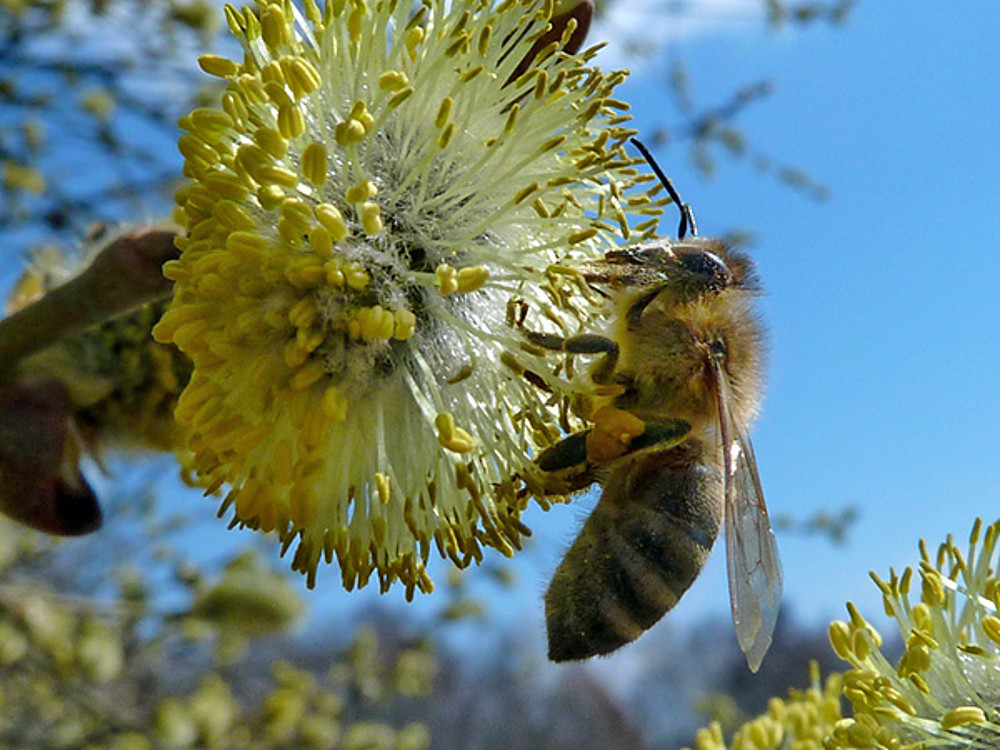
Erfolgreiche Bienenforschung an der Naturwissenschaftlichen Fakultät
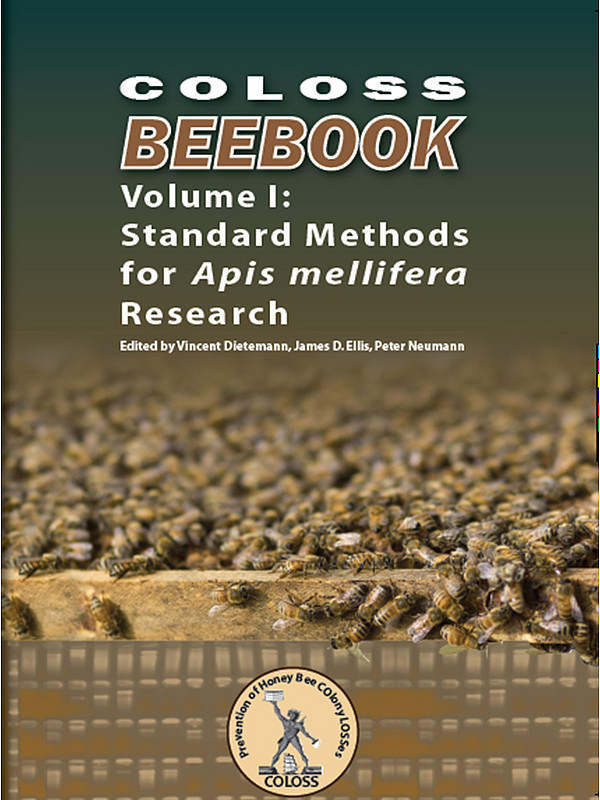
Erfolgreiche Bienenforschung an der Naturwissenschaftlichen Fakultät

ZoologInnen der Uni Graz sind in COLOSS Beebook stark vertreten

ZoologInnen der Uni Graz sind in COLOSS Beebook stark vertreten

ZoologInnen der Uni Graz in internationaler Publikation zu Honigbienenforschung prominent präsent

Es handelt sich um DAS Buch der Bienen – the COLOSS Beebook, das eine bislang einzigartige Sammlung von Methoden der Honigbienenforschung enthält und Anfang September 2013 in zwei Bänden weltweit erschienen ist. Die BienenforscherInnen der Karl-Franzens-Universität sind in dieser brandaktuellen Publikation – das auf dem besten Weg ist, ein Standardwerk zu werden – überaus stark vertreten. „Insgesamt elf WissenschafterInnen zeichnen als AutorInnen bzw. Co-AutorInnen von sechs der 32 Artikel verantwortlich“, freut sich Univ.-Prof. Dr. Karl Crailsheim, Bienenforscher und Dekan der Naturwissenschaftlichen Fakultät.
Die AutorInnen: Robert Brodschneider, Karl Crailsheim, Sybille Hahshold, Marlene Karrer, Gerald Radspieler, Ulrike Riessberger-Gallé, Thomas Schmickl, Anton Stabentheiner, Martina Szopek, Ronald Thenius und Jutta Vollmann.

Mit dieser geballten Präsenz untermauern die WissenschafterInnen der Uni Graz ihre bedeutende Rolle im Bereich der Bienenforschung. Die ZoologInnen sorgten heuer bereits mehrmals für Schlagzeilen: Sie untersuchen seit einigen Jahren die Winterverluste von Bienenvölkern in Österreich und liefern mit den Erkenntnissen wichtige Grundlagen für den Bestand der Insekten.
Weiters haben die ForscherInnen gegen eine der tödlichsten Bienenkrankheiten – die Amerikanische Faulbrut – ein höchst wirksames Mittel gefunden und zum Patent angemeldet.
Im Artifical Life Laboratory an der Karl-Franzens-Universität Graz fiel 2013 der Startschuss für eines der bislang größten EU-Forschungsprojekte an der Uni Graz. Ziel von „Animal and robot Societies Self-organise and Integrate by Social Interaction“ – kurz ASSISI – ist es, eine Kommunikation zwischen Tieren und Robotern möglich zu machen. Dieser völlig neue Ansatz die Sprache der Tiere zu verstehen, erfolgt auf der Basis evolutionärer Algorithmen.


created by Andreas Schweiger

Related news

Diversity buddies at the University of Graz: Support on equal terms

The University of Graz is strengthening its commitment to equal opportunities with its new Diversity Buddies. University members can find easily accessible contact persons here for questions relating to equality and diversity. All employees can get involved and take action.

When parents find it difficult to have a say

In her dissertation, translation scholar Marie Tschurtschenthaler examines how communication between compulsory schools and parents whose first language is not German works – and what role professional language mediation plays in this. Initial insights show that it is not just about language, but also about resources, responsibilities and the institutional framework.

AI in schools: Maria Bertel drafts legal guidelines for teachers

The legal expert and her team analysed the legal situation regarding the use of artificial intelligence in education as part of an EU project and answered open questions from practice.

Cosmetics in the environment: University of Graz proves danger to ants

Titanium dioxide, which is found in cosmetics, for example, is increasingly entering the environment in the form of nanoparticles. This could also put insects at risk. If ants ingest the substance in combination with the pesticide glyphosate, it disturbs the development of their offspring. Scientists at the University of Graz are drawing attention to the negative consequences of this toxic cocktail.

Begin of page section:
Additional information:

University of Graz
Universitaetsplatz 3
8010 Graz
Austria
  • Contact
  • Web Editors
  • Moodle
  • UNIGRAZonline
  • Imprint
  • Data Protection Declaration
  • Accessibility Declaration
Weatherstation
Uni Graz

End of this page section. Go to overview of page sections

End of this page section. Go to overview of page sections

Begin of page section:

End of this page section. Go to overview of page sections