Begin of page section:
Page sections:

  • Go to contents (Accesskey 1)
  • Go to position marker (Accesskey 2)
  • Go to main navigation (Accesskey 3)
  • Go to sub navigation (Accesskey 4)
  • Go to additional information (Accesskey 5)
  • Go to page settings (user/language) (Accesskey 8)
  • Go to search (Accesskey 9)

End of this page section. Go to overview of page sections

Begin of page section:
Page settings:

English en
Deutsch de
Search
Login

End of this page section. Go to overview of page sections

Begin of page section:
Search:

Search for details about Uni Graz
Close

End of this page section. Go to overview of page sections


Search

Begin of page section:
Main navigation:

Page navigation:

  • University

    University
    • About the University
    • Organisation
    • Faculties
    • Library
    • Working at University of Graz
    • Campus
    Developing solutions for the world of tomorrow - that is our mission. Our students and our researchers take on the great challenges of society and carry the knowledge out.
  • Research Profile

    Research Profile
    • Our Expertise
    • Research Questions
    • Research Portal
    • Promoting Research
    • Research Transfer
    • Ethics in Research
    • Commission for Scientific Integrity
    Scientific excellence and the courage to break new ground. Research at the University of Graz creates the foundations for making the future worth living.
  • Studies

    Studies
    • Prospective Students
    • Students
  • Community

    Community
    • International
    • Location
    • Research and Business
    • Alumni
    The University of Graz is a hub for international research and brings together scientists and business experts. Moreover, it fosters the exchange and cooperation in study and teaching.
Topics
  • Sustainable University
  • Researchers answer
  • Work for us
Close menu

End of this page section. Go to overview of page sections

Begin of page section:
You are here:

University of Graz News Finanzierung von Forschung

End of this page section. Go to overview of page sections

Friday, 10 July 2015

Finanzierung von Forschung

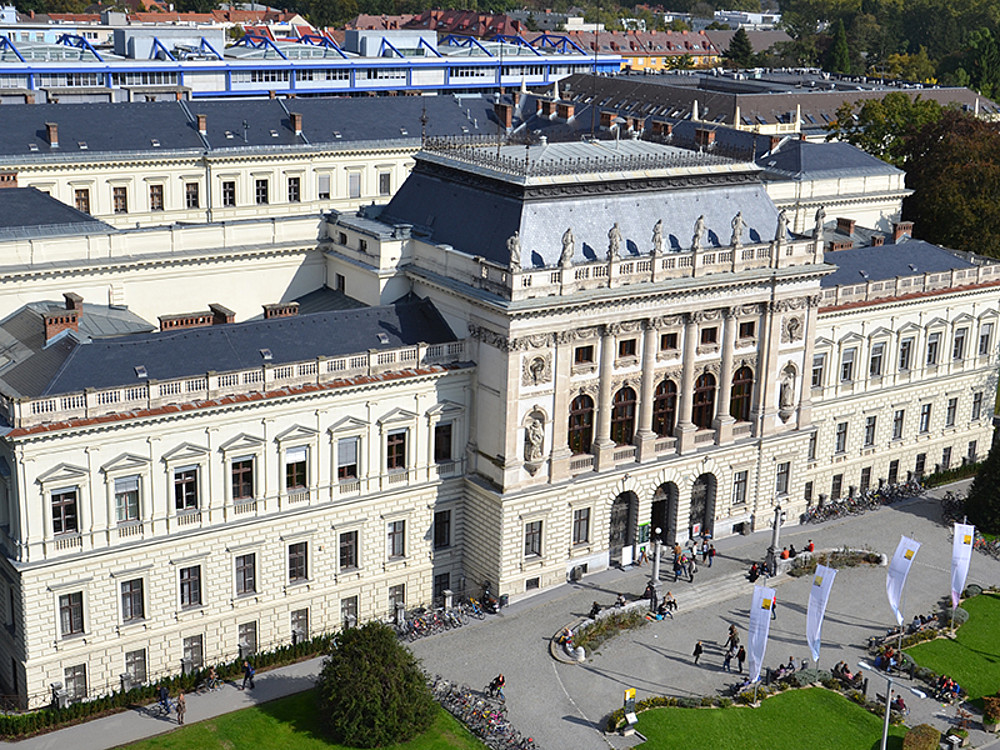
Hauptgebäude

Senat der Uni Graz ist über Situation des FWF besorgt

Der Senat der Karl-Franzens-Universität Graz hat in seiner letzten Sitzung am 24. Juni 2015 die gegenwärtige und künftige Situation des Wissenschaftsfonds FWF eingehend diskutiert und eine Stellungnahme dazu beschlossen. Das Rektorat hat sich dieser Stellungnahme vollinhaltlich angeschlossen.
Die Stellungnahme wurde an Vizekanzler Reinhold Mitterlehner und an Bundesminister Hans Jörg Schelling übermittelt.


Stellungnahme des Senats der Karl-Franzens-Universität Graz zur gegenwärtigen und künftigen Situation des FWF

Der Senat der Karl-Franzens-Universität Graz nimmt mit großer Besorgnis die seit 2008 kontinuierlich sinkenden Bewilligungsquoten des FWF zur Kenntnis. Der FWF ist die einzige außeruniversitäre Institution Österreichs, die in nennenswertem Umfang Grundlagenforschung fördert. 80% der bewilligten Gelder kommen unmittelbar dem wissenschaftlichen Nachwuchs zugute. Vom FWF geförderte Prae- und Postdocs sind ein integraler Bestandteil universitärer Forschungspolitik. Bereits derzeit kann nur noch eines von vier beantragten Projekten gefördert und pro beantragtem Euro können nur 20 Cent bewilligt werden. Diese Situation ist mit der Innovation-Leader-Strategie der österreichischen Bundesregierung unvereinbar. Und sie verhält sich auch konträr zur herausragenden Qualität FWF geförderter Forschung, die von internationalen ExpertInnen mehrfach attestiert wurde.
Die Stagnation des Budgets bei steigenden Personal- und Sachkosten sowie steigende Antragszahlen, wie sie sich derzeit für die Jahre ab 2016 abzeichnen, bedeuten de facto das Aus für das derzeitige Qualitätssicherungsverfahren durch internationale Peers, d.h. für eine nach transparenten und objektiven Kriterien erfolgende Vergabe von Finanzmitteln für Forschung und Entwicklung. Auf längere Sicht werden die Folgen für den Innovationsstandort Österreich dramatisch sein. Schon jetzt investiert Österreich, verglichen mit der Schweiz, nur (ca.) ein Viertel des Geldes (Ausgaben pro EinwohnerIn) in die Grundlagenforschung. Es wird eine Generation hochmotivierter und leistungsfähiger NachwuchswissenschafterInnen und damit seine Zukunftsfähigkeit verlieren. Denn nur wer schon heute Antworten auf die Fragen von morgen sucht, wie es die Grundlagenforschung tut, wird sich in einer von immer größerer gesellschaftlicher und ökonomischer Dynamik geprägten Welt behaupten können.

Der Senat appelliert daher nachdrücklich an alle politischen EntscheidungsträgerInnen, allen voran an den Bundesminister für Wissenschaft, Forschung und Wirtschaft, Herrn Dr. Reinhold Mitterlehner, auch in der gegenwärtig budgetär schwierigen Situation, ihrer Verantwortung für die Zukunft dieses Landes und seiner Menschen gerecht zu werden. Finanzieren Sie die Grundlagenforschung in einem Maß, das die internationale Konkurrenzfähigkeit der österreichischen scientific community gewährleistet! Sie können sich sicher sein, dass die Rendite dieser Investition, nicht kurzfristig, aber mittel- und langfristig, eine hohe sein wird. Diese Finanzierung der Grundlagenforschung über den FWF darf aber keinesfalls zu Lasten der Universitätsbudgets erfolgen – das wäre kontraproduktiv.


created by Senat

Related news

Complying with the norm: Why Do Standards Shape Our Lives, Elisabeth Staudegger?

Standards determine whether a sheet of paper fits in a printer or whether a charging plug can power multiple devices. These standards shape our everyday lives. But who actually sets these standards? Where are the weaknesses, and how could science help to improve them? Elisabeth Staudegger, Head of the ‘Law and IT’ Department at the Institute for Legal Foundations at the University of Graz, host the Academic Standards Day on 16 June. Here she relays how sciences can contribute to the topic of standardisation and reveals her personal favourite standard.

More body awareness than a culture war

In Italy, sex education lessons will in future only be permitted with parental consent, and will be banned entirely in nurseries and primary schools. At the same time, Pride Month highlights why knowledge about the body, relationships, boundaries and diversity is important for young people. A study by the University of Graz shows how important knowledge about the body, contraception, relationship skills and protection against violence is

Will Austria win the World Cup? Mathematician reveals calculation method

Michael Fischer uses the football tournament as a practical example for highschool lessons.

Survival strategies: How plants respond to drought

According to Geosphere Austria, this spring was the driest in Austria since records began around 170 years ago. The low rainfall put particular pressure on the agricultural sector. And climate change is set to make the situation even worse in the coming decades. We asked Johannes Liesche, a professor at the Department of Biology at the University of Graz, how plants react to water shortages and how they survive periods of drought.

Begin of page section:
Additional information:

University of Graz
Universitaetsplatz 3
8010 Graz
Austria
  • Contact
  • Web Editors
  • Moodle
  • UNIGRAZonline
  • Imprint
  • Data Protection Declaration
  • Accessibility Declaration
Weatherstation
Uni Graz

End of this page section. Go to overview of page sections

End of this page section. Go to overview of page sections

Begin of page section:

End of this page section. Go to overview of page sections