



Begin of page section:
Page sections:

  • Go to contents (Accesskey 1)
  • Go to position marker (Accesskey 2)
  • Go to main navigation (Accesskey 3)
  • Go to sub navigation (Accesskey 4)
  • Go to additional information (Accesskey 5)
  • Go to page settings (user/language) (Accesskey 8)
  • Go to search (Accesskey 9)

End of this page section. Go to overview of page sections

Begin of page section:
Page settings:

English en
Deutsch de
Search
Login

End of this page section. Go to overview of page sections

Begin of page section:
Search:

Search for details about Uni Graz
Close

End of this page section. Go to overview of page sections


Search

Begin of page section:
Main navigation:

Page navigation:

  • University

    University
    • About the University
    • Organisation
    • Faculties
    • Library
    • Working at University of Graz
    • Campus
    Developing solutions for the world of tomorrow - that is our mission. Our students and our researchers take on the great challenges of society and carry the knowledge out.
  • Research Profile

    Research Profile
    • Our Expertise
    • Research Questions
    • Research Portal
    • Promoting Research
    • Research Transfer
    • Ethics in Research
    • Commission for Scientific Integrity
    Scientific excellence and the courage to break new ground. Research at the University of Graz creates the foundations for making the future worth living.
  • Studies

    Studies
    • Prospective Students
    • Students
    • Welcome Weeks for First Year Students
  • Community

    Community
    • International
    • Location
    • Research and Business
    • Alumni
    The University of Graz is a hub for international research and brings together scientists and business experts. Moreover, it fosters the exchange and cooperation in study and teaching.
Topics
  • Sustainable University
  • Researchers answer
  • Work for us
Close menu

End of this page section. Go to overview of page sections

Begin of page section:
You are here:

University of Graz News Film-Frühling

End of this page section. Go to overview of page sections

Friday, 17 March 2017

Film-Frühling

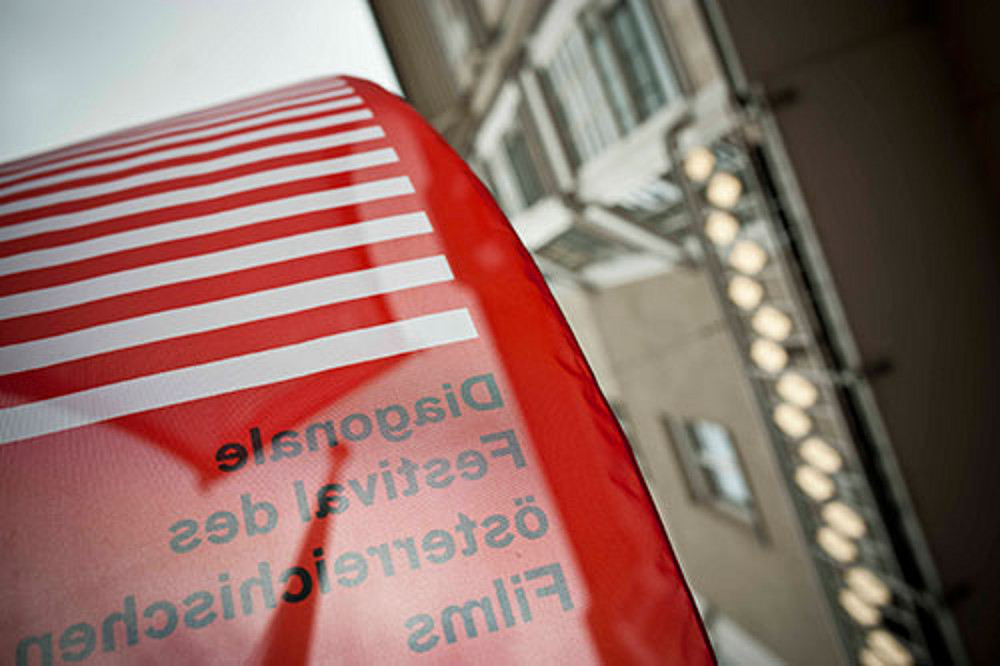
Die Diagonale findet von 28. März bis 2. April 2017 in Graz statt. Foto: Diagonale/Miriam Raneburger

Die Diagonale findet von 28. März bis 2. April 2017 in Graz statt. Foto: Diagonale/Miriam Raneburger

Die Diagonale findet von 28. März bis 2. April 2017 in Graz statt, Tickets gibt es ab 22. März

Wenn es Frühling wird, lädt die Diagonale zum Rendezvous mit dem österreichischen Film nach Graz. Vom 28. März bis 2. April 2017 geht das Filmfestival zum zwanzigsten Mal vor der Kulisse der steirischen Landeshauptstadt über die Bühne und feiert somit ein Jubiläum. Die Intendaten, Sebastian Höglinger und Peter Schernhuber, laden alle Interessierten ein, sich ab 22. März Tickets zu sichern: "Es gibt viel zu entdecken – im Kino, auf der Leinwand und darüber hinaus! Etwa im diesjährigen Dokumentarfilmwettbewerb, in denen der Filmemacher Peter Ily Huemer der Punkband "Chuzpe" ein Denkmal setzt." Ganz im Zeichen des Erinnerns steht auch der Dokumentarfilm "Ein Deutsches Leben": Darin erzählt die Anfang 2017 im Alter von 103 verstorbene ehemalige Sekretärin von Joseph Goebbels über ihren Alltag im engsten Zirkel des nationalsozialistischen Reichspropagandaleiters.

Nach Einflüssen der Popkultur auf den österreichischen Film (und umgekehrt) sucht heuer das Spezialprogramm "1000 Takte Film". Gemeinsam, aber aus unterschiedlichen Blick- und Hörwinkeln, spüren das Österreichische Filmmuseum, das Filmarchiv Austria, das ORF-Archiv und Robert Rotifer popkulturellen Phänomenen und Motiven in Film und Fernsehen nach und fördern dabei so manche Überraschung aus den Archiven zutage. Rotifer liefert den Blick aus der Perspektive der österreichischen Musikszene.

Jubel, Trubel, Festival heißt es in der Ausstellung von Paul Pibernig bei Feinkost Mild, wo sich bereits ab 23. März auf die Diagonale eingestimmt werden darf. Bei der Diagonale’16 sorgte der Fotograf mit seinen analogen Momentaufnahmen für Furore. Ausgewählte Arbeiten erscheinen nun in Form des Fotobands „Stills“ und sind in einer begleitenden Ausstellung zu sehen. „Paul Pibernig bewegt sich mit seiner analogen Kamera im und gegen den Festivalrhythmus, er verweilt, wo andere längst weiterziehen, hält fest, was im Trubel untergeht,“ so Sebastian Höglinger und Peter Schernhuber.

Über die Programmhighlights informiert neben der Website und den Social-Media-Kanälen des Festivals auch heuer wieder ein eigenes WhatsApp-Service.

Tickets gibt es ab 22. März im Kunsthaus Graz, im MANGOLDS  vis-a-vis in der Zinzendorfgasse, auf http://www.diagonale.at/tickets/ und unter 0316/269 555 (jeweils 10–18 Uhr) sowie ab 29. März zusätzlich in den Festivalkinos.

Die Kooperation zwischen Uni Graz und Diagonale geht auch 2017 in eine neue Runde. Neben Verlosungen von Tickets, Katalogen und Preisen über die Newsletter "uni.event" und "student.event" gibt es auch im Webradio eine goody bag zu gewinnen. Einfach am 27. März reinhören und die Ohren spitzen!


created by Gerhild Kastrun

Related news

Jurassic Sounds: Biologist reconstructs insect songs from 165 million years ago

It was apparently not just the roars of the dinosaurs that made up the soundscape of the animal world during the Jurassic period. Crickets and grasshoppers communicated through a variety of songs and high-pitched sounds, as Thorin Jonsson from the Institute of Biology at the University of Graz discovered together with colleagues from the universities of Lincoln, Bristol (UK), Beijing (China) and Tempe (USA). The findings on what are so far the oldest traces of sound on Earth have just been published in the journal PNAS.

EU funding boosts international exchange between universities

The University of Graz is further expanding its international study opportunities through the European university alliance Arqus and is taking the lead in two key projects. In future, students will benefit from even more joint degree programmes and from simplified recognition of academic achievements through the Joint European Degree Label.

Rescue and risks: Researchers have surveyed public perceptions of AI

The use of artificial intelligence has had to be made transparent since 2 August 2026. The EU’s AI Act, which has been in force since then, also sets out how risky an application is and which security measures apply as a result. However, the assessment of risks by the legislation differs in some cases significantly from the perceptions of the Austrian public. This is the finding of a representative study carried out by data scientist Stefan Thalmann from the University of Graz and his team.

The Healing Sea: Researchers discover new approaches to treating chronic inflammation in sponges

Chronic inflammation plays a key role in many diseases, ranging from metabolic disorders and cardiovascular diseases to tissue damage following injuries or infections. “Normally, the body is able to resolve inflammation on its own. If this process becomes unbalanced, immune cells remain permanently active and continue to drive negative changes in the tissue,” explains Andreas Koeberle, a pharmacist at the University of Graz.

Begin of page section:
Additional information:

University of Graz
Universitaetsplatz 3
8010 Graz
Austria
  • Contact
  • Web Editors
  • Moodle
  • UNIGRAZonline
  • Imprint
  • Data Protection Declaration
  • Accessibility Declaration
Weatherstation
Uni Graz

End of this page section. Go to overview of page sections

End of this page section. Go to overview of page sections

Begin of page section:

End of this page section. Go to overview of page sections