Begin of page section:
Page sections:

  • Go to contents (Accesskey 1)
  • Go to position marker (Accesskey 2)
  • Go to main navigation (Accesskey 3)
  • Go to sub navigation (Accesskey 4)
  • Go to additional information (Accesskey 5)
  • Go to page settings (user/language) (Accesskey 8)
  • Go to search (Accesskey 9)

End of this page section. Go to overview of page sections

Begin of page section:
Page settings:

English en
Deutsch de
Search
Login

End of this page section. Go to overview of page sections

Begin of page section:
Search:

Search for details about Uni Graz
Close

End of this page section. Go to overview of page sections


Search

Begin of page section:
Main navigation:

Page navigation:

  • University

    University
    • About the University
    • Organisation
    • Faculties
    • Library
    • Working at University of Graz
    • Campus
    Developing solutions for the world of tomorrow - that is our mission. Our students and our researchers take on the great challenges of society and carry the knowledge out.
  • Research Profile

    Research Profile
    • Our Expertise
    • Research Questions
    • Research Portal
    • Promoting Research
    • Research Transfer
    • Ethics in Research
    • Commission for Scientific Integrity
    Scientific excellence and the courage to break new ground. Research at the University of Graz creates the foundations for making the future worth living.
  • Studies

    Studies
    • Prospective Students
    • Students
  • Community

    Community
    • International
    • Location
    • Research and Business
    • Alumni
    The University of Graz is a hub for international research and brings together scientists and business experts. Moreover, it fosters the exchange and cooperation in study and teaching.
Topics
  • Sustainable University
  • Researchers answer
  • Work for us
Close menu

End of this page section. Go to overview of page sections

Begin of page section:
You are here:

University of Graz News Feuer am Dach

End of this page section. Go to overview of page sections

Friday, 26 November 2021

Feuer am Dach

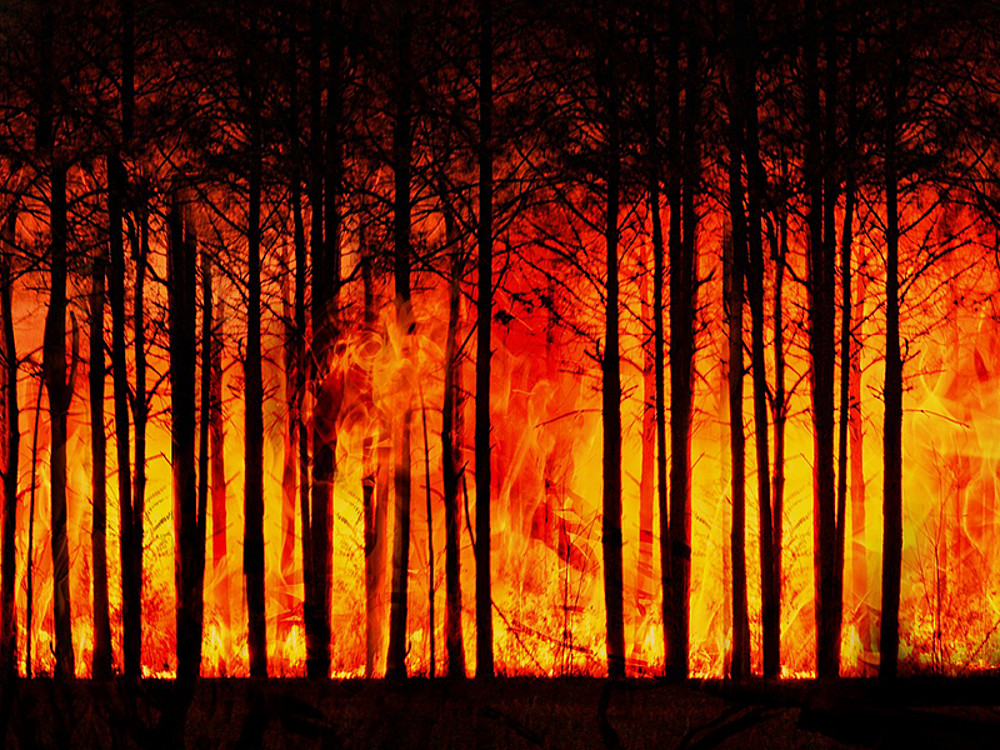
Aerosole von großen Wald- und Buschbränden können bis in die Stratosphäre gelangen und über Monate bis Jahre dort verweilen. Foto: pixabay

Aerosole von großen Wald- und Buschbränden können bis in die Stratosphäre gelangen und über Monate bis Jahre dort verweilen. Foto: pixabay

Große Wald- und Buschbrände heizen die Atmosphäre auf

Knapp zwei Wochen lang stand erst kürzlich der Wald im niederösterreichischen Rax-Gebiet in Flammen. Unvergleichlich größere Feuer wüteten heuer etwa in Kalifornien, Südeuropa und der Türkei, vom Regenwald am Amazonas ganz zu schweigen. Inwieweit Wald- und Buschbrände das Klima beeinflussen, darüber ist bislang nur wenig bekannt. ForscherInnen der Universität Graz konnten nun erstmals starke Auswirkungen auf die atmosphärische Temperaturstruktur belegen. Die neuen Erkenntnisse sind für das globale Klimamonitoring von weitreichender Bedeutung. Denn sie zeigen, dass große Wald- und Buschbrände als Einflussfaktor berücksichtigt werden müssen, wenn man natürliche Ursachen für Klimaschwankungen in der Atmosphäre von menschgemachten unterscheiden will. Die Studie wurde soeben im Wissenschaftsjournal Scientific Reports veröffentlicht.

„Aerosole von großen Wald- und Buschbränden können bis in die Stratosphäre gelangen, über Monate bis Jahre dort verweilen und die Zusammensetzung der Atmosphäre sowie die Temperatur der oberen Luftschichten beeinflussen“, weiß Andrea Steiner, Leiterin des Wegener Center der Universität Graz. Mit ihrem Team hat die Klimaphysikerin Satellitenbeobachtungsdaten im Zusammenhang mit zwei extremen Wald- und Buschbrandereignissen – 2017 in Nordamerika und 2019/20 in Australien – analysiert.

„Als unmittelbare Auswirkung zeigen die Messungen eine starke Erwärmung der unteren Stratosphäre um bis zu zehn Grad Celsius innerhalb der von den Bränden verursachten Aerosolwolken direkt nach ihrer Entstehung“, berichtet Matthias Stocker, Erstautor der aktuellen Studie. Die Temperaturerhöhung in der unteren Stratosphäre dauerte mehrere Monate an und erreichte 1 °C für die nordamerikanischen Waldbrände 2017 und 3,5 °C für die australischen Buschbrände 2019/20. Diese kurzfristige Erwärmung durch die Feuer in Australien ist sogar stärker als jeder Temperaturanstieg in der Stratosphäre infolge von vulkanischer Aktivität seit dem Ausbruch des Pinatubo auf den Philippinen im Jahr 1991.

Bei ihren Analysen stützten sich die ForscherInnen auf Daten aus Radio-Okkultationsmessungen. Diese basieren auf GPS-Signalen, die von Sender- zu Empfängersatelliten geschickt und auf ihrem Weg durch die Atmosphäre von der Temperatur und anderen Faktoren beeinflusst werden. Daraus lassen sich äußerst genaue Daten über diese Klimavariablen in allen Schichten der Atmosphäre ableiten.

Die Forschungen von Andrea Steiner und ihrem Team sind Teil des Profilbildenden Bereichs „Climate Change Graz“ der Universität Graz.

Publikation
Observing the climate impact of large wildfires on stratospheric temperature
Matthias Stocker, Florian Ladstädter, and Andrea K. Steiner
Scientific Reports, doi:10.1038/s41598-021-02335-7
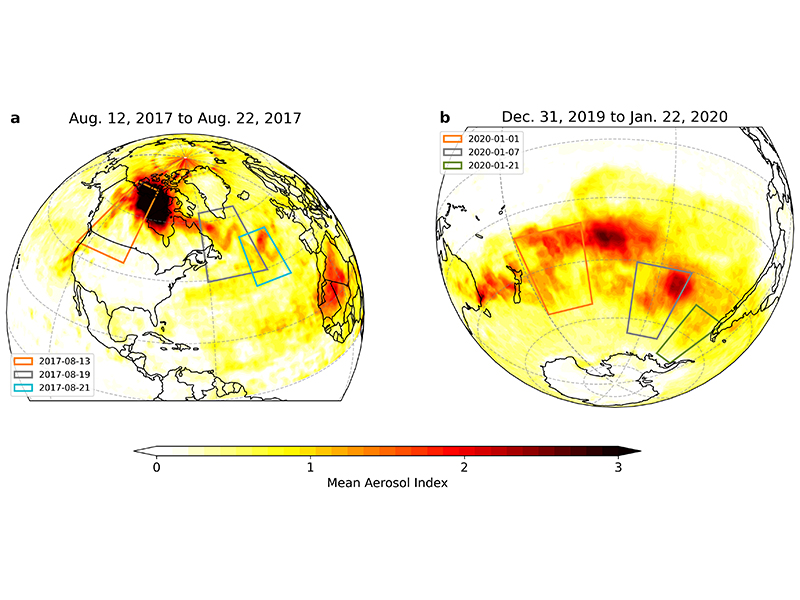
Ausbreitung der Aerosolwolken, verursacht durch die großen Wald- und Buschbrände in Nordamerika 2017 und in Australien 2019/20. Quelle: Stocker et al. 2021
created by Gudrun Pichler

Related news

Complying with the norm: Why Do Standards Shape Our Lives, Elisabeth Staudegger?

Standards determine whether a sheet of paper fits in a printer or whether a charging plug can power multiple devices. These standards shape our everyday lives. But who actually sets these standards? Where are the weaknesses, and how could science help to improve them? Elisabeth Staudegger, Head of the ‘Law and IT’ Department at the Institute for Legal Foundations at the University of Graz, host the Academic Standards Day on 16 June. Here she relays how sciences can contribute to the topic of standardisation and reveals her personal favourite standard.

More body awareness than a culture war

In Italy, sex education lessons will in future only be permitted with parental consent, and will be banned entirely in nurseries and primary schools. At the same time, Pride Month highlights why knowledge about the body, relationships, boundaries and diversity is important for young people. A study by the University of Graz shows how important knowledge about the body, contraception, relationship skills and protection against violence is

Will Austria win the World Cup? Mathematician reveals calculation method

Michael Fischer uses the football tournament as a practical example for highschool lessons.

Survival strategies: How plants respond to drought

According to Geosphere Austria, this spring was the driest in Austria since records began around 170 years ago. The low rainfall put particular pressure on the agricultural sector. And climate change is set to make the situation even worse in the coming decades. We asked Johannes Liesche, a professor at the Department of Biology at the University of Graz, how plants react to water shortages and how they survive periods of drought.

Begin of page section:
Additional information:

University of Graz
Universitaetsplatz 3
8010 Graz
Austria
  • Contact
  • Web Editors
  • Moodle
  • UNIGRAZonline
  • Imprint
  • Data Protection Declaration
  • Accessibility Declaration
Weatherstation
Uni Graz

End of this page section. Go to overview of page sections

End of this page section. Go to overview of page sections

Begin of page section:

End of this page section. Go to overview of page sections