




Begin of page section:
Page sections:

  • Go to contents (Accesskey 1)
  • Go to position marker (Accesskey 2)
  • Go to main navigation (Accesskey 3)
  • Go to sub navigation (Accesskey 4)
  • Go to additional information (Accesskey 5)
  • Go to page settings (user/language) (Accesskey 8)
  • Go to search (Accesskey 9)

End of this page section. Go to overview of page sections

Begin of page section:
Page settings:

English en
Deutsch de
Search
Login

End of this page section. Go to overview of page sections

Begin of page section:
Search:

Search for details about Uni Graz
Close

End of this page section. Go to overview of page sections


Search

Begin of page section:
Main navigation:

Page navigation:

  • University

    University
    • About the University
    • Organisation
    • Faculties
    • Library
    • Working at University of Graz
    • Campus
    Developing solutions for the world of tomorrow - that is our mission. Our students and our researchers take on the great challenges of society and carry the knowledge out.
  • Research Profile

    Research Profile
    • Our Expertise
    • Research Questions
    • Research Portal
    • Promoting Research
    • Research Transfer
    • Ethics in Research
    • Commission for Scientific Integrity
    Scientific excellence and the courage to break new ground. Research at the University of Graz creates the foundations for making the future worth living.
  • Studies

    Studies
    • Prospective Students
    • Students
    • Registration for Study Programme (Winter semester 2026/27)
  • Community

    Community
    • International
    • Location
    • Research and Business
    • Alumni
    The University of Graz is a hub for international research and brings together scientists and business experts. Moreover, it fosters the exchange and cooperation in study and teaching.
Topics
  • Sustainable University
  • Researchers answer
  • Work for us
Close menu

End of this page section. Go to overview of page sections

Begin of page section:
You are here:

University of Graz News Fettzellen als „Heizkraftwerke“

End of this page section. Go to overview of page sections

Tuesday, 10 October 2017

Fettzellen als „Heizkraftwerke“

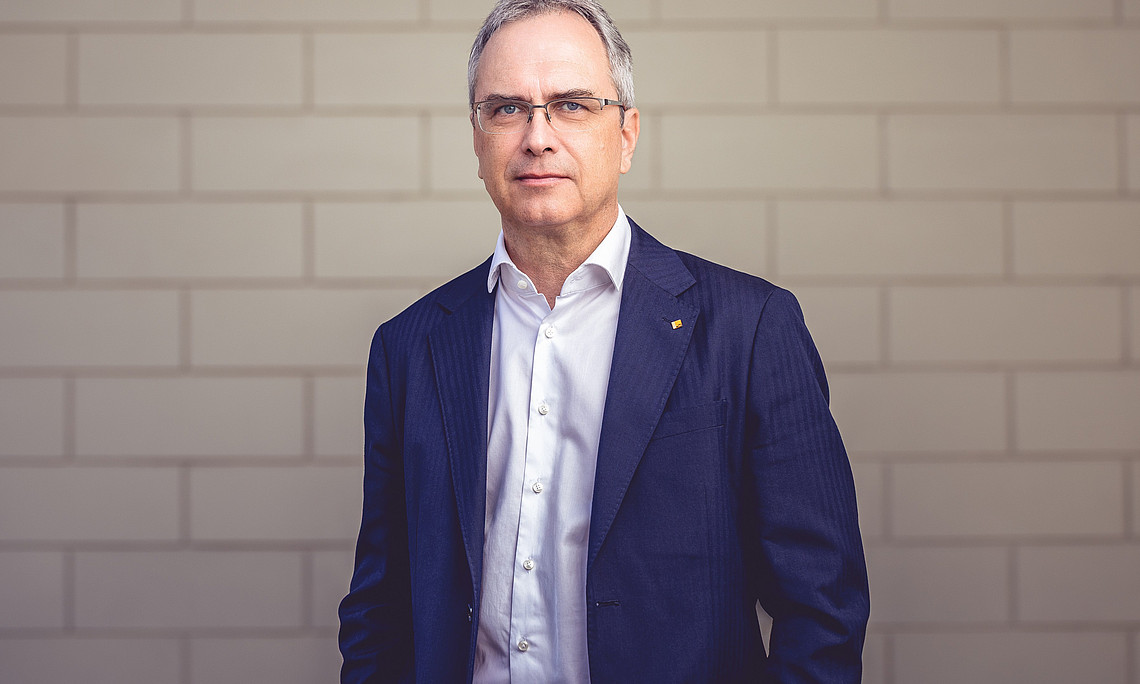
Neue Erkenntnisse von ForscherInnen in BioTechMed-Graz: Sie haben die Energiezufuhr in bestimmten Fettzellen entschlüsselt. Foto: BioTechMed-Graz/Grumet ©Lukas Grumet
©Lukas Grumet

Neue Erkenntnisse von ForscherInnen in BioTechMed-Graz: Sie haben die Energiezufuhr in bestimmten Fettzellen entschlüsselt. Foto: BioTechMed-Graz/Grumet
ForscherInnen von BioTechMed-Graz entschlüsseln Energiezufuhr

Kälte verbrennt Fett: Wovon viele träumen, um schlank zu werden, dem sind ForscherInnen der Karl-Franzens-Universität Graz auf der Spur. Um die Körpertemperatur aufrecht zu erhalten, wirken bestimmte Fettzellen wie „Heizkraftwerke“. Fehlt darin aber ein wichtiges Enzym, wird der Brennstoff aus anderen Zellen gewonnen oder die notwendige Energie muss überhaupt extra zugeführt werden. Die Arbeitsgruppe rund um Univ.-Prof. Dr. Rudolf Zechner vom Institut für Molekulare Biowissenschaften hat im Rahmen eines Projekts der Forschungskooperation BioTechMed-Graz völlig neue Erkenntnisse gewonnen, die kürzlich im renommierten Fachjournal Cell Metabolism online veröffentlicht wurden.

Die WissenschafterInnen widerlegen mit ihrer Publikation die bisherige Annahme, dass der Abbau von Fett durch das fettspaltende Enzym Adipose Triglyceride Lipase (kurz ATGL) in sogenannten braunen Fettzellen entscheidend ist, um ausreichend Brennstoff zu generieren und damit die Körpertemperatur bei Kälte im Bereich von fünf Grad aufrecht erhalten zu können.
Jetzt wurde im Tiermodell nachgewiesen, dass das Fehlen der ATGL in den braunen Fettzellen durch erhöhte Bereitstellung von Energie aus anderen Fettdepots kompensiert wird. „Fehlt die ATGL allerdings auch in diesen, muss Energie zusätzlich über die Nahrung zugeführt werden“, erklärt Dr. Renate Schreiber, die Erstautorin der Studie.
Eine essenzielle Rolle spielt das Enzym im Herzen, um die Verteilung der Wärme im Körper zu gewährleisten. „Fehlt in diesem Organ die ATGL, ist das tödlich“, so Assoz.-Prof. Dr. Simon Sedej von der Medizinischen Universität Graz.

Braune Fettzellen, ursprünglich nur bei Neugeborenen beschrieben, wurden vor einigen Jahren auch bei Erwachsenen als zentrale „Verbrennungsmaschinen“ identifiziert. „Die aktuelle Arbeit leistet einen wichtigen Beitrag zum Verständnis der physiologischen Vorgänge in diesen „Heizkraftwerken“, welche zur Entwicklung von Therapieansätzen in der Behandlung von Fettleibigkeit unumgänglich sind“, schildert Schreiber.

Die Studie der Grazer WissenschafterInnen, die mit KollegInnen von den Universitäten Maastricht (NL) und Pittsburgh (USA) zusammenarbeiteten, wurde von der Foundation Leducq, dem European Research Council (ERC), sowie dem Österreichischen Wissenschaftsfonds FWF finanziert.


Publikation
Cold-induced thermogenesis depends on ATGL-mediated lipolysis in cardiac muscle but not brown adipose tissue
Renate Schreiber, Clemens Diwoky, Gabriele Schoiswohl, Ursula Feiler, Nuttaporn Wongsiriroj, Mahmoud Abdellatif, Dagmar Kolb, Joris Hoeks, Erin E. Kershaw, Simon Sedej, Patrick Schrauwen, Günter Haemmerle, Rudolf Zechner
DOI: 10.1016/j.cmet.2017.09.004

created by Andreas Schweiger

Related news

In hot water: New Report reveals record losses in glaciers, permafrost and snow cover

Climate change is driving up temperatures not only in summer. Winters are also getting warmer – with dramatic consequences for glaciers, permafrost, snow cover and the freezing of lakes. The recently published cryosphere report provides specific figures for Austria. “Our monitoring shows a clear trend with record losses of ice and snow,” says project leader Wolfgang Schöner from the University of Graz.

Theologian at the University of Graz: What the excommunication of the Society of St Pius X

Following the schism involving the Society of St Pius X, there is a need for discussion. Bernd Hillebrand from the University of Graz explains why the Vatican took this step, what role anti-democratic tendencies play, and why the Society’s sacraments are no longer recognised as valid under canon law for Catholics with immediate effect.

“HeinrichBiCool”: University of Graz demonstrates the effects of green facades and roofs

The University of Graz has launched a pioneering project at the University Centre for Theology. Its name, “HeinrichBiCool”, says it all: a comprehensive system of green facades and roof will cool the building at Heinrichstraße 80 during the summer. At the same time, this will create a new habitat for plants and animals, helping to increase biodiversity. The accompanying monitoring programme will provide detailed data on the impact of the measures on indoor climate, energy consumption and biodiversity. The findings will lay a scientifically sound foundation for further projects aimed at making cities sustainable, climate-resilient and liveable. The partners in this project, funded by the Austrian Research Promotion Agency (FFG), are AEE INTEC – Institute for Sustainable Technologies, Technisches Büro Siegfried Stark, the landscape architecture and urban planning firm “studio boden”, and Ökoteam Graz.

When stress melts away in your mouth: nicotine pouches are widespread among Styrian students

Sociologists at the University of Graz, in collaboration with VIVID – the Centre for Addiction Prevention, have carried out a survey involving more than 600 participants. Around a quarter of them use these products. The ability to use them discreetly and flexibly is a key motivation.

Begin of page section:
Additional information:

University of Graz
Universitaetsplatz 3
8010 Graz
Austria
  • Contact
  • Web Editors
  • Moodle
  • UNIGRAZonline
  • Imprint
  • Data Protection Declaration
  • Accessibility Declaration
Weatherstation
Uni Graz

End of this page section. Go to overview of page sections

End of this page section. Go to overview of page sections

Begin of page section:

End of this page section. Go to overview of page sections


