Begin of page section:
Page sections:

  • Go to contents (Accesskey 1)
  • Go to position marker (Accesskey 2)
  • Go to main navigation (Accesskey 3)
  • Go to sub navigation (Accesskey 4)
  • Go to additional information (Accesskey 5)
  • Go to page settings (user/language) (Accesskey 8)
  • Go to search (Accesskey 9)

End of this page section. Go to overview of page sections

Begin of page section:
Page settings:

English en
Deutsch de
Search
Login

End of this page section. Go to overview of page sections

Begin of page section:
Search:

Search for details about Uni Graz
Close

End of this page section. Go to overview of page sections


Search

Begin of page section:
Main navigation:

Page navigation:

  • University

    University
    • About the University
    • Organisation
    • Faculties
    • Library
    • Working at University of Graz
    • Campus
    Developing solutions for the world of tomorrow - that is our mission. Our students and our researchers take on the great challenges of society and carry the knowledge out.
  • Research Profile

    Research Profile
    • Our Expertise
    • Research Questions
    • Research Portal
    • Promoting Research
    • Research Transfer
    • Ethics in Research
    • Commission for Scientific Integrity
    Scientific excellence and the courage to break new ground. Research at the University of Graz creates the foundations for making the future worth living.
  • Studies

    Studies
    • Prospective Students
    • Students
    • Welcome Weeks for First Year Students
  • Community

    Community
    • International
    • Location
    • Research and Business
    • Alumni
    The University of Graz is a hub for international research and brings together scientists and business experts. Moreover, it fosters the exchange and cooperation in study and teaching.
Topics
  • Sustainable University
  • Researchers answer
  • Work for us
Close menu

End of this page section. Go to overview of page sections

Begin of page section:
You are here:

University of Graz News Fette Forschung

End of this page section. Go to overview of page sections

Wednesday, 26 November 2014

Fette Forschung

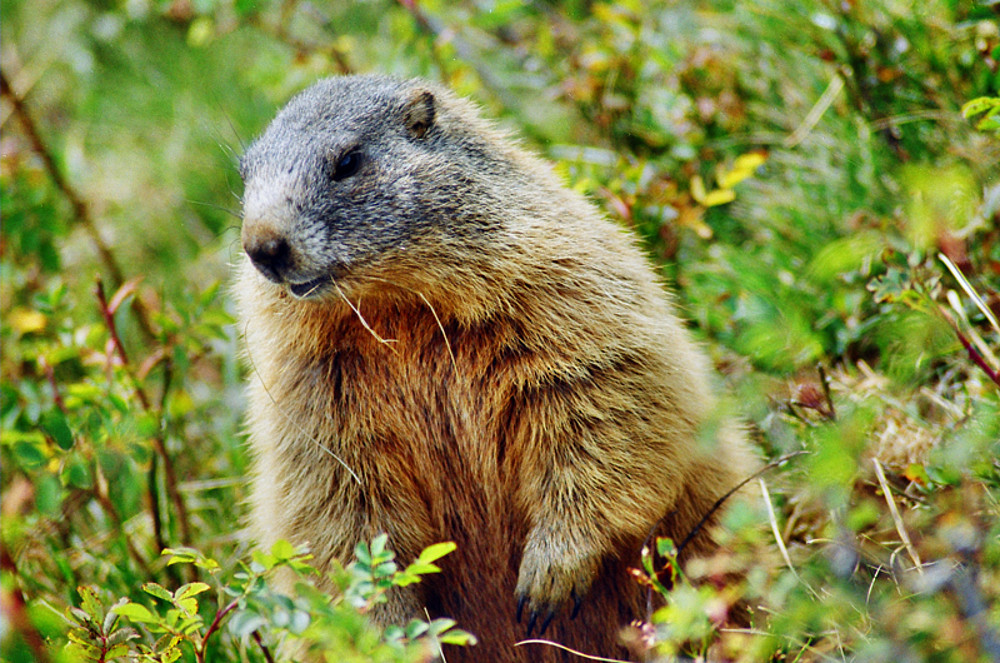
Fettpölster können bei manchen Tierarten schützend sein. Wie der Fettabbbau im menschlichen Körper funktioniert, erforschen WissenschafterInnen der Uni Graz. Foto: Peter Freitag/<a href="http://www.pixelio.de">pixelio.de</a>

Fettpölster können bei manchen Tierarten schützend sein. Wie der Fettabbbau im menschlichen Körper funktioniert, erforschen WissenschafterInnen der Uni Graz. Foto: Peter Freitag/<a href="http://www.pixelio.de">pixelio.de</a>

WissenschafterInnen der Uni Graz blicken hinter die Kulissen des menschlichen Fettabbaus

Im Sommer bejammert, im Winter leicht kaschiert: die kleinen Fettdepots im menschlichen Körper. Besonders im Zeitalter von Adipositas ist die Erforschung des Fettdepot-Abbaus – Lipolyse genannt – von enormer Bedeutung. Bei diesem Prozess spielt das Protein ATGL, kurz für Adipose Triglyceride Lipase, eine wichtige Rolle und wird deshalb auch als Schlüsselenzym der Lipolyse bezeichnet.
Um einen geregelten Ablauf des Fettabbaus im menschlichen Körper sicher zu stellen, gibt es zwei weitere Proteine: CGI-58 (Comparative Gene Identification 58) und G0S2 (G0/G1 Switch Gene 2) wirken einerseits aktivierend andererseits hemmend auf ATGL. Eine ForscherInnengruppe rund um Assoz.-Prof. Dr. Monika Oberer vom Institut für Molekulare Biowissenschaften der Karl-Franzens-Universität Graz ist es nun gelungen, erste Einblicke in den hemmenden Mechanismus des Proteins G0S2 an ATGL zu gewinnen. Die Ergebnisse wurden vor Kurzem im renommierten „Journal of Biological Chemistry“ veröffentlicht. Sie tragen bei, die Regulation von ATGL durch G0S2 besser zu verstehen und neue Therapieansätze bei Störungen des Fettstoffwechsels zu entwickeln. Das Projekt ist Teil des universitären Schwerpunkts Molekulare Enzymologie und Physiologie und wird vom FWF – Fonds zur Förderung wissenschaftlicher Forschung unterstützt.


Oberer und ihrem Team gelang es, in zahlreichen Versuchen das Protein G0S2, welches insgesamt aus 103 Aminosäuren besteht, zu einem 33 Aminosäuren kleinen Reststück zu kürzen. In diesem Zustand weist es noch vollständige biologische Aktivität auf. „Bemerkenswert erschien uns, dass eine künstlich erzeugte Aminosäurekette (Peptid), welche die gleiche Sequenz an 33 Aminosäuren enthielt, genauso in der Lage war, das Enzym ATGL zu hemmen“, erklärt Oberer. Zusätzliche kinetische Experimente zeigten, dass das künstliche Peptid nicht mit den Lipiden, die ATGL spalten, konkurriert. „Die Hemmung ist unabhängig von der Lipidkonzentration und erfolgt in einem physiologisch relevanten Konzentrationsbereich. Dies öffnet erste Wege zu neuen Therapieansätzen, da die Regulierung der ATGL durch das Peptid in physiologischen Konzentrationen möglich ist“, führt die Forscherin aus.

In weiterführenden Forschungen soll nun versucht werden, das Peptid an ein zusätzliches Signal zu koppeln, um bestimmte Gewebe, wie beispielsweise die Fettdepots im Körper, gezielt anzusteuern und somit unerwünschte Reaktionen in anderen Gewebstypen zu vermeiden.


Publikation:
Ines K. Cerk, Barbara Salzburger, Andras Boeszoermenyi, Christoph Heier, Christoph Pillip, Matthias Romauch, Martina Schweiger, Irina Cornaciu, Achim Lass, Robert Zimmermann, Rudolf Zechner, Monika Oberer: A Peptide Derived from G0/G1 Switch Gene 2 Actis an Noncompetitive Inhibitor of Adipose Triglyceride Lipase. The Journal of Biological Chemistry, September 25, 2014 "

Online verfügbar unter: http://www.ncbi.nlm.nih.gov/pubmed/25258314


Rückfragen:
Assoz.-Prof. Dr. Monika Oberer
Institut für Molekulare Biowissenschaften
Karl-Franzens-Universität Graz
Tel.: +43 316 380 5483
E-Mail: m.oberer(at)uni-graz.at 

created by Ines Cerk & Konstantinos Tzivanopoulos

Related news

Jurassic Sounds: Biologist reconstructs insect songs from 165 million years ago

It was apparently not just the roars of the dinosaurs that made up the soundscape of the animal world during the Jurassic period. Crickets and grasshoppers communicated through a variety of songs and high-pitched sounds, as Thorin Jonsson from the Institute of Biology at the University of Graz discovered together with colleagues from the universities of Lincoln, Bristol (UK), Beijing (China) and Tempe (USA). The findings on what are so far the oldest traces of sound on Earth have just been published in the journal PNAS.

EU funding boosts international exchange between universities

The University of Graz is further expanding its international study opportunities through the European university alliance Arqus and is taking the lead in two key projects. In future, students will benefit from even more joint degree programmes and from simplified recognition of academic achievements through the Joint European Degree Label.

Rescue and risks: Researchers have surveyed public perceptions of AI

The use of artificial intelligence has had to be made transparent since 2 August 2026. The EU’s AI Act, which has been in force since then, also sets out how risky an application is and which security measures apply as a result. However, the assessment of risks by the legislation differs in some cases significantly from the perceptions of the Austrian public. This is the finding of a representative study carried out by data scientist Stefan Thalmann from the University of Graz and his team.

The Healing Sea: Researchers discover new approaches to treating chronic inflammation in sponges

Chronic inflammation plays a key role in many diseases, ranging from metabolic disorders and cardiovascular diseases to tissue damage following injuries or infections. “Normally, the body is able to resolve inflammation on its own. If this process becomes unbalanced, immune cells remain permanently active and continue to drive negative changes in the tissue,” explains Andreas Koeberle, a pharmacist at the University of Graz.

Begin of page section:
Additional information:

University of Graz
Universitaetsplatz 3
8010 Graz
Austria
  • Contact
  • Web Editors
  • Moodle
  • UNIGRAZonline
  • Imprint
  • Data Protection Declaration
  • Accessibility Declaration
Weatherstation
Uni Graz

End of this page section. Go to overview of page sections

End of this page section. Go to overview of page sections

Begin of page section:

End of this page section. Go to overview of page sections