




Begin of page section:
Page sections:

  • Go to contents (Accesskey 1)
  • Go to position marker (Accesskey 2)
  • Go to main navigation (Accesskey 3)
  • Go to sub navigation (Accesskey 4)
  • Go to additional information (Accesskey 5)
  • Go to page settings (user/language) (Accesskey 8)
  • Go to search (Accesskey 9)

End of this page section. Go to overview of page sections

Begin of page section:
Page settings:

English en
Deutsch de
Search
Login

End of this page section. Go to overview of page sections

Begin of page section:
Search:

Search for details about Uni Graz
Close

End of this page section. Go to overview of page sections


Search

Begin of page section:
Main navigation:

Page navigation:

  • University

    University
    • About the University
    • Organisation
    • Faculties
    • Library
    • Working at University of Graz
    • Campus
    Developing solutions for the world of tomorrow - that is our mission. Our students and our researchers take on the great challenges of society and carry the knowledge out.
  • Research Profile

    Research Profile
    • Our Expertise
    • Research Questions
    • Research Portal
    • Promoting Research
    • Research Transfer
    • Ethics in Research
    • Commission for Scientific Integrity
    Scientific excellence and the courage to break new ground. Research at the University of Graz creates the foundations for making the future worth living.
  • Studies

    Studies
    • Prospective Students
    • Students
    • Registration for Study Programme (Winter semester 2026/27)
  • Community

    Community
    • International
    • Location
    • Research and Business
    • Alumni
    The University of Graz is a hub for international research and brings together scientists and business experts. Moreover, it fosters the exchange and cooperation in study and teaching.
Topics
  • Sustainable University
  • Researchers answer
  • Work for us
Close menu

End of this page section. Go to overview of page sections

Begin of page section:
You are here:

University of Graz News Fake Facts

End of this page section. Go to overview of page sections

Tuesday, 28 April 2020

Fake Facts

Many people are highly confident about their knowledge on climate change issues, but often they are wrong. Photo: pixabay

Many people are highly confident about their knowledge on climate change issues, but often they are wrong. Photo: pixabay

Study by researchers at the University of Graz reveals overconfidence in climate change knowledge

Is water vapour a greenhouse gas? Definitely not, many people are convinced – and they are wrong about this, as on other questions related to climate change. A study by researchers at the University of Graz shows that there is a significant discrepancy between proven facts and people’s supposed “knowledge”. This is problematic, because “misconceptions jeopardise the acceptance of climate protection measures and foster poor decision-making,” explain the authors of the study, Annina Thaller and Thomas Brudermann from the Institute of Systems Sciences, Innovation and Sustainability Research at the University of Graz. Targeted educational work on climate change issues is necessary, the researchers say.

For their study, which has just been published in the Journal of Environmental Psychology, the researchers analysed the responses given by around 500 Austrians to an online survey. The respondents were a representative sample of men and women aged between 18 and 72 years old, spread across all the federal states of Austria, half of them with the “Matura” school leaving qualification and half without.
“In our survey we asked ten questions on climate change, to be answered with ‘true’ or ‘false’, and asked people to estimate how certain they were of their own answers, on a scale from 50% (guessing) to 100% (absolutely certain/confident),” Brudermann explains.

The results of the survey show that most Austrians evidently overestimate their own knowledge about climate change. For instance, 84 percent of those surveyed think that water vapour is not a greenhouse gas, and were on average around 80 percent certain about this. A similar picture emerged on the question of whether the ozone hole is the main cause of the greenhouse effect. 60 percent replied “true”, which is incorrect, although the survey participants were on average around 81 percent certain about this.
There were only slight differences regarding gender, age and education level. It does seem that overconfidence in people’s own knowledge about climate change increases slightly with age. Men answered more questions correctly, on average, and were slightly more confident than women.

People generally tend to filter the wide range of available information and select the parts that confirm their beliefs. “The combination of incomplete knowledge and overconfidence can become a serious problem when distortions in reality lead to people making the wrong decisions,” Brudermann points out, particularly with reference to climate protection. He cites an example: “Anyone who denies the role of humans in global warming, arguing that there have been repeated natural climate fluctuations in the past, is unlikely to accept countermeasures that involve restrictions in their own lives.”

Publication
"You know nothing, John Doe" – Judgmental overconfidence in lay climate knowledge
Annina Thaller, Thomas Brudermann
Journal of Environmental Psychology 69 (2020) 101427, doi: 10.1016/j.jenvp.2020.101427
>> share-link (active till June 7, 2020)

Education to combat climate change
To counteract these factors, the researchers agree that targeted educational work is needed. At the University of Graz a new course will begin in autumn as a free elective module: interested students can develop a basic scientific understanding of climate change and the principles of communication, as part of a traineeship programme. The aim is to provide students with the scientific and didactic knowledge they need to support schools in climate and sustainability projects. The course is part of the joint project “makingAchange”, which is funded by the Federal Ministry of Education, Science and Research, and led by the Climate Change Center Austria (CCCA) and aims to develop links between schools and the research sector.
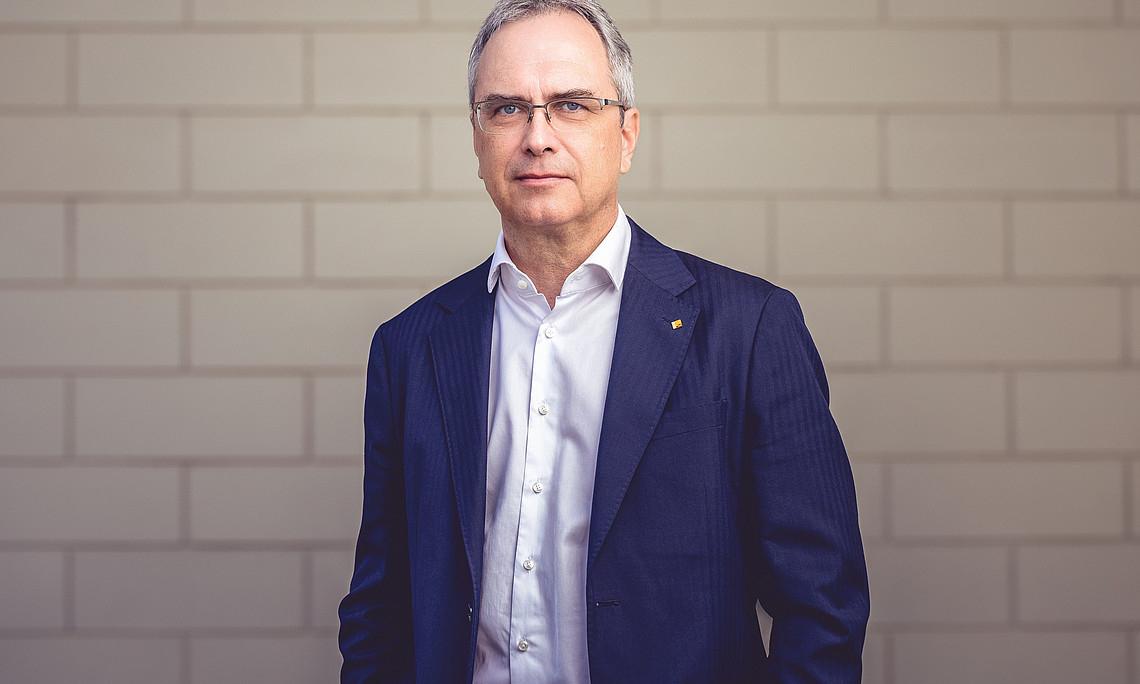

created by Gudrun Pichler

Related news

Complying with the norm: Why Do Standards Shape Our Lives, Elisabeth Staudegger?

Standards determine whether a sheet of paper fits in a printer or whether a charging plug can power multiple devices. These standards shape our everyday lives. But who actually sets these standards? Where are the weaknesses, and how could science help to improve them? Elisabeth Staudegger, Head of the ‘Law and IT’ Department at the Institute for Legal Foundations at the University of Graz, host the Academic Standards Day on 16 June. Here she relays how sciences can contribute to the topic of standardisation and reveals her personal favourite standard.

More body awareness than a culture war

In Italy, sex education lessons will in future only be permitted with parental consent, and will be banned entirely in nurseries and primary schools. At the same time, Pride Month highlights why knowledge about the body, relationships, boundaries and diversity is important for young people. A study by the University of Graz shows how important knowledge about the body, contraception, relationship skills and protection against violence is

Will Austria win the World Cup? Mathematician reveals calculation method

Michael Fischer uses the football tournament as a practical example for highschool lessons.

Survival strategies: How plants respond to drought

According to Geosphere Austria, this spring was the driest in Austria since records began around 170 years ago. The low rainfall put particular pressure on the agricultural sector. And climate change is set to make the situation even worse in the coming decades. We asked Johannes Liesche, a professor at the Department of Biology at the University of Graz, how plants react to water shortages and how they survive periods of drought.

Begin of page section:
Additional information:

University of Graz
Universitaetsplatz 3
8010 Graz
Austria
  • Contact
  • Web Editors
  • Moodle
  • UNIGRAZonline
  • Imprint
  • Data Protection Declaration
  • Accessibility Declaration
Weatherstation
Uni Graz

End of this page section. Go to overview of page sections

End of this page section. Go to overview of page sections

Begin of page section:

End of this page section. Go to overview of page sections

