Begin of page section:
Page sections:

  • Go to contents (Accesskey 1)
  • Go to position marker (Accesskey 2)
  • Go to main navigation (Accesskey 3)
  • Go to sub navigation (Accesskey 4)
  • Go to additional information (Accesskey 5)
  • Go to page settings (user/language) (Accesskey 8)
  • Go to search (Accesskey 9)

End of this page section. Go to overview of page sections

Begin of page section:
Page settings:

English en
Deutsch de
Search
Login

End of this page section. Go to overview of page sections

Begin of page section:
Search:

Search for details about Uni Graz
Close

End of this page section. Go to overview of page sections


Search

Begin of page section:
Main navigation:

Page navigation:

  • University

    University
    • About the University
    • Organisation
    • Faculties
    • Library
    • Working at University of Graz
    • Campus
    Developing solutions for the world of tomorrow - that is our mission. Our students and our researchers take on the great challenges of society and carry the knowledge out.
  • Research Profile

    Research Profile
    • Our Expertise
    • Research Questions
    • Research Portal
    • Promoting Research
    • Research Transfer
    • Ethics in Research
    • Commission for Scientific Integrity
    Scientific excellence and the courage to break new ground. Research at the University of Graz creates the foundations for making the future worth living.
  • Studies

    Studies
    • Prospective Students
    • Students
    • Registration for Study Programme (Winter semester 2026/27)
    • Welcome Weeks for First Year Students
  • Community

    Community
    • International
    • Location
    • Research and Business
    • Alumni
    The University of Graz is a hub for international research and brings together scientists and business experts. Moreover, it fosters the exchange and cooperation in study and teaching.
Topics
  • Sustainable University
  • Researchers answer
  • Work for us
Close menu

End of this page section. Go to overview of page sections

Begin of page section:
You are here:

University of Graz News Fahrzeugindustrie

End of this page section. Go to overview of page sections

Tuesday, 19 August 2014

Fahrzeugindustrie
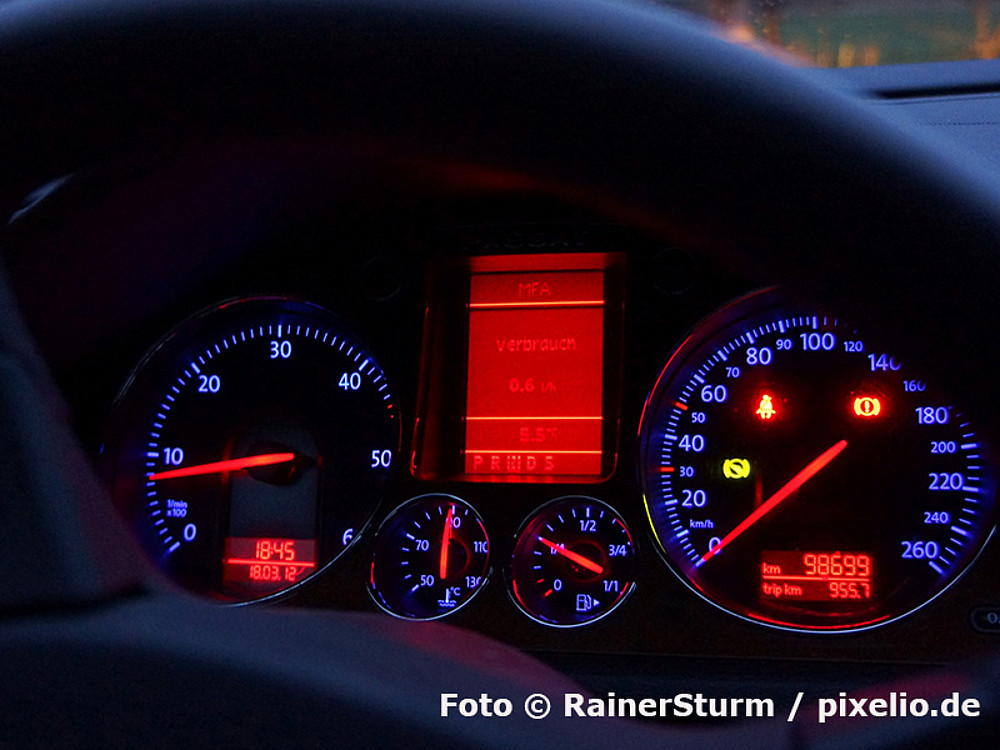
Egal ob Stoßstange oder Cockpit – Kunststoffe im Auto gehören längst zur fixen Ausstattung, Recycling-Material hingegen kaum. Foto: Rainer Sturm/<a href="http://www.pixelio.de">pixelio.de</a>

Egal ob Stoßstange oder Cockpit – Kunststoffe im Auto gehören längst zur fixen Ausstattung, Recycling-Material hingegen kaum. Foto: Rainer Sturm/<a href="http://www.pixelio.de">pixelio.de</a>

Vorrang für Recycling-Kunststoff im Auto: Forschungsprojekt der Uni Graz zeigt Wege auf

Stoßstange, Zierleiste und Cockpit – Kunststoffe im Auto gehören längst zur fixen Ausstattung, Recycling-Material hingegen kaum. Dabei könnte es sowohl bei der Herstellung die Umwelt schonen als auch am Ende des Gebrauchszyklus wertvolle Rohstoffe liefern. Eine Dissertation an der Uni Graz soll Möglichkeiten aufzeigen, wie die Verwendung wiederverwerteter Kunststoffe in der Fahrzeugindustrie erhöht, und damit die Kreislaufwirtschaft angeregt werden kann.
 
„Kunststoffe im Automobilsektor sind ein hoch kontroverses Thema“, weist Schönmayr auf die zwei Seiten der Medaille hin. „Einerseits ermöglicht die Leichtbauweise eine Verringerung des Kohlendioxid-Ausstoßes. Andererseits verursacht die Produktion signifikante Treibhausgasemissionen, schädigt die Umwelt durch die Erdölgewinnung und steigert zudem die Abhängigkeit von politisch instabilen Ländern.“ Vor diesem Hintergrund setzt das Forschungsprojekt an, das David Schönmayr im Rahmen seiner Dissertation derzeit an der Uni Graz durchführt.
Sein Ziel ist es, anwendbare und effiziente Lösungen für die Automotivindustrie sowie die Recycling- und Kunststoffwirtschaft zu entwickeln und die Nachhaltigkeit zu steigern. Schönmayr: „Die Technologie dazu ist bereits vorhanden und wird den hohen Anforderungen und Sicherheitsansprüchen in der Automobilbranche gerecht.“
 
In seiner Arbeit, die er bis zum Herbst abschließen will, wird Schönmayr praktische Vorschläge liefern – etwa wie die Anwendung von recycelten Materialien in einem Serienfahrzeug gesteigert werden kann. Der Doktorand sieht auch eine Chance für den Standort Steiermark, sich als nachhaltiger Automobil-Cluster zu positionieren: „Wir brauchen eine Recycling-Renaissance.“
 
Die transdisziplinäre Dissertation ist im Forschungsschwerpunkt „Umwelt und Globaler Wandel“ der Uni Graz verankert und wird von O.Univ.-Prof. Dr. Friedrich Zimmermann, Institut für Geographie und Raumforschung, sowie Univ.-Prof. Dr. Rupert Baumgartner, Institut für Institut für Systemwissenschaften, Innovations- und Nachhaltigkeitsforschung, betreut.

David Schönmayr wird sein Projekt im Rahmen eines Vortrages des „Forum Alpbach“ morgen, den 20. August 2014, ab 11.30 Uhr im Hotel Alpbacherhof vorstellen.

created by Andreas Schweiger

Related news

Commissioned by NATO: University of Graz tests high-tech textiles

As part of an international project, antimicrobial and fire-resistant fabrics with UV protection are being developed in Zagreb. Pharmacists from the University of Graz are ensuring that these fabrics are skin-friendly.

The Arctic up close: ORF special feature on the University of Graz’s research station in S

Students from the University of Graz are spending two weeks conducting research at the Univerisity of Graz research station at the Sermilik Fjord in Greenland, which has been operational for three years. They are measuring glacial runoff, tracking ice melt in real time and installing weather stations. ORF is following the expedition and will be reporting on the special feature ‘Arctic Adventure’ across its various channels from 20 July.

Medicine for ants: Caffeine prolongs the life of infected insects

Black coffee stimulates us and acts against bacteria. So, can caffeine also be good for insects? Yes, confirm biologists of the University of Graz. When ants suffer from a fungal disease, they consume more caffeine and remain active for longer.

How formulas are making medicine more personalised

When Federica Caforio talks about the heart, it doesn’t sound like an operating theatre, but rather like equations, parameters and simulations. Yet this is precisely where the medical promise of her research lies: one day, clinical data will be used to create a digital twin of the heart – a virtual model that will enable a better understanding of diseases and allow for more personalised treatment plans. She will be presenting her research at the ‘ECMTB 2026’ mathematics conference.

Begin of page section:
Additional information:

University of Graz
Universitaetsplatz 3
8010 Graz
Austria
  • Contact
  • Web Editors
  • Moodle
  • UNIGRAZonline
  • Imprint
  • Data Protection Declaration
  • Accessibility Declaration
Weatherstation
Uni Graz

End of this page section. Go to overview of page sections

End of this page section. Go to overview of page sections

Begin of page section:

End of this page section. Go to overview of page sections