Nach einem herausfordernden Jahr 2020 hat sich Arqus, die Europäische Hochschulallianz, an der die Universität Graz mit sechs weiteren Partnerinnen beteiligt ist, für 2021 viel vorgenommen. In den nächsten Wochen berichten die Menschen, die an der Uni Graz in der Arqus Allianz mitarbeiten, was bisher erreicht wurde und welche Ziele sich die Allianz für dieses Jahr gesteckt hat.
Heute: Action Line 6 (AL6): „Research Support and Early Stage Researcher Development“
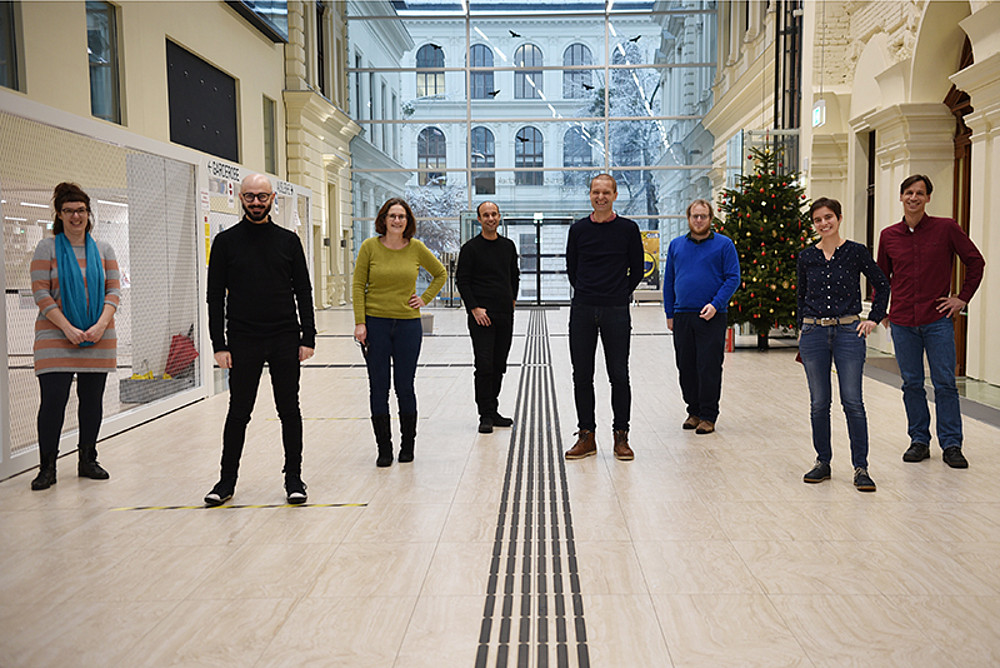
AnsprechpartnerInnen an der Universität Graz: Chair Philipp Weißert (Forschungsmanagement und -service) Johanna Stadlbauer, Gerald Lind (DocService); Hildrun Walter (die 7. fakulät) und Christian Kaier (Publikationsservices).
Jede der sieben Universitäten in der Arqus-Allianz zeichnet sich für eine Action Line hauptverantwortlich. Graz ist bei der AL6 federführend. Diese soll die wissenschaftliche Zusammenarbeit der sieben Institutionen stärken, NachwuchsforscherInnen beim Aufbau einer Karriere unterstützen und gleichzeitig den Stellenwert, den die Bevölkerung Forschung beimisst, erhöhen. Was ist im ersten Arqus-Jahr in diesen drei Bereichen erreicht worden?
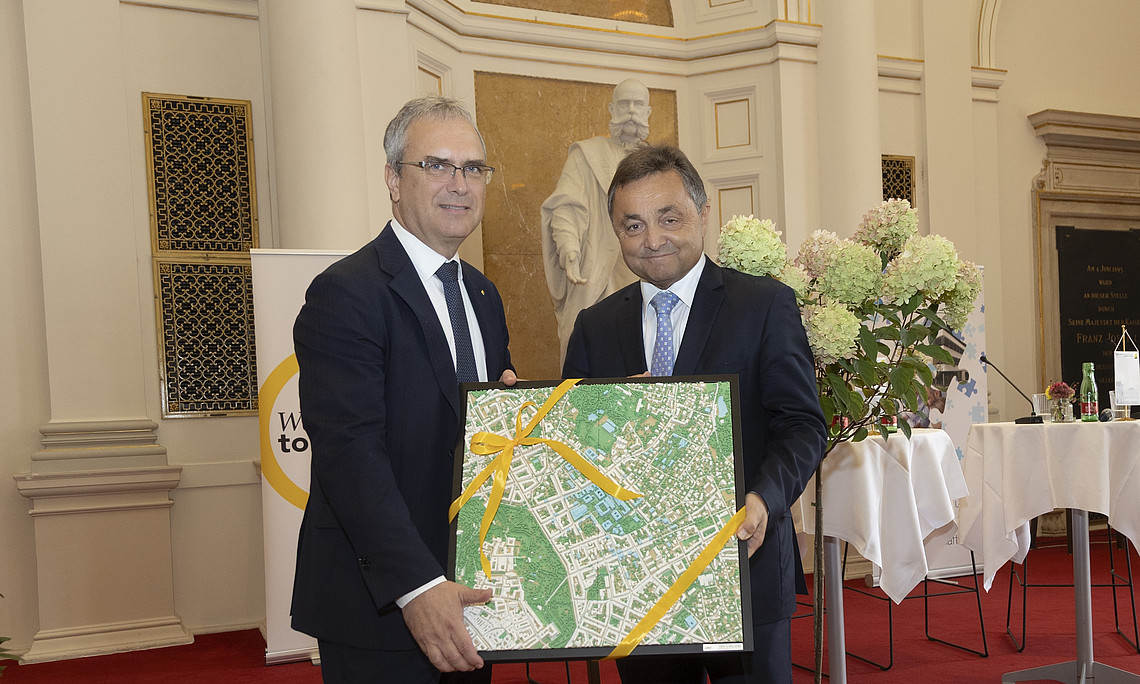
PW: Wir haben eine ClusterMap erstellt, die die strategischen bzw. wissenschaftlichen Ausrichtungen der sieben Arqus-Universitäten inklusive Forschungsschwerpunkten visualisiert. So haben wir einen Überblick über teilweise bereits bestehende Kooperationen gewonnen und auch gesehen, wo sich neue Felder der Zusammenarbeit auftun könnten. Ein besonderer Erfolg war, dass der Antrag für das Projekt „Arqus Research & Innovation“ (kurz, Arqus R. I.), den wir im EU-Rahmenprogramm Horizon 2020 als Allianz eingereicht haben, genehmigt und mit zwei Millionen Euro von der EU gefördert wurde. In Arqus R.I. bearbeiten wir gemeinsam mehrere Themenbereiche, die alle unter den beiden großen Schlagwörtern Artificial Intelligence/Digital Transformation und Green Deal/Climate Change laufen.
GL: Zur Unterstützung der Early Stage Researchers beim Aufbau ihrer wissenschaftlichen Karriere haben wir innerhalb der Allianz zwei Calls ausgeschrieben. Zum einen konnten Doktoratsgruppen eine Förderung beantragen, um in Form von Site Visits und gemeinsamen Aktivitäten nachhaltige Forschungs- und Ausbildungskooperationen zu initiieren. Zum anderen konnten sich ForscherInnen und NachwuchswissenschafterInnen an den Arqus Partneruniversitäten für eine Förderung für kurze bzw. mittel- bis langfristige Forschungsaufenthalte an den Partneruniversitäten bewerben. Das große Interesse an beiden Ausschreibungen schlägt sich auch in der Anzahl der Förderungen nieder. Insgesamt haben wir an der Uni Graz 21 Einzelpersonen und fünf Doktoratsgruppen eine Förderung zusagen können. Es wird heuer einen dritten Call geben, der sich ebenso an alle Disziplinen richten wird. Ziel der Allianz ist es, offene interdisziplinäre und fachübergreifende Ansätze bei der Forschung vorantreiben.
HW: Die Öffnung der Wissenschaften dagegen steckt an manchen der sieben Universitäten noch in den Kinderschuhen. Da war es zunächst wichtig, ein gemeinsames Verständnis für die Definition und Rahmenbedingungen von Open Science zu schaffen. Zunächst wollen wir Forschende und Studierende für das Thema sensibilisieren und ihnen den Mehrwert von guten Open Science Praktiken näherbringen. Außerdem haben wir uns angeschaut, welche Open Science Bereiche für alle Arqus-Partner besonders wichtig sind, und arbeiten jetzt daran, die Umsetzungen an den Universitäten zu vergleichen und konkrete gemeinsame Ziele zu erarbeiten.
Nennt bitte drei Punkte, die ihr in euren individuellen Zuständigkeitsbereichen für 2021 geplant habt.
PW: Erstens: ForscherInnen bei hochkompetitiven Anträgen unterstützen. Zweitens: eine Datenbank für High-level Infrastruktur entwickeln, mit dem Ziel, dass leistungsstarke Labor-Geräte in Zukunft gemeinsam genutzt werden. Drittens: ein Networking-Event für administratives Personal und für research support staff organisieren.
JS: Erstens: Austausch-Plattformen für JungforscherInnen schaffen, geplant sind schon eine Summerschool und eine Karrierewoche für den außeruniversitären Arbeitsmarkt im Oktober. Zweitens: ein Mentoring-Programm auf die Beine stellen, in dem arrivierte WissenschafterInnen und ExpertInnen ihr Know-how mit den PhDs und PostDocs teilen. Drittens: Die positive Grundstimmung innerhalb der Allianz beibehalten!
CK: Erstens: Best Practices austauschen. Zweitens: Am Arqus-Positionspapier zu Open Science und Citizen Science weiterarbeiten. Drittens: Unsere KooperationspartnerInnen in diesem Jahr endlich auch persönlich kennenzulernen.
>> Mehr über Arqus
>> Rückblick: Faces of Arqus#1: Action Line 6 (2019)
Following a challenging 2020, Arqus – the European University Alliance, comprising the University of Graz and six partners – has some ambitious plans for 2021. Over the next few weeks, the people at the University of Graz who are involved in the Arqus alliance will be reporting on what it has achieved so far and what objectives it has set itself for this year.
Today: Action Line 6 (AL6): “Research Support and Early Stage Researcher Development”
Contacts at the University of Graz: Chair Philipp Weißert (Office of Research Management and Service), Johanna Stadlbauer, Gerald Lind (DocService); Hildrun Walter (7th faculty) and Christian Kaier (publication services).
Each of the seven universities in the Arqus alliance has the main responsibility for one Action Line. Graz is in charge of the AL6. This is intended to strengthen scientific cooperation between the seven institutions, support early career researchers in building a career, and at the same time increase the value that the population attaches to research. What has Arqus achieved in these three areas during its first year?
PW: We have created a ClusterMap that visualises the strategic or scientific orientations of the seven Arqus universities, including their various core research areas. In this way, we gained an overview of some of the collaborations that already exist and also saw where new fields of cooperation could open up. A particular success was that the application for the project “Arqus Research & Innovation” (in short, Arqus R.I.) – which we submitted as an alliance as part of the EU Horizon 2020 framework programme – was approved and funded by the EU with two million euros. In Arqus R.I., we are working together on several topics, which all centre around the two big buzzwords Artificial Intelligence/Digital Transformation and Green Deal/Climate Change.
GL: To support Early Stage Researchers in building their scientific careers, we have announced two “calls” within the Arqus alliance. On the one hand, doctoral groups could apply for funding in order to initiate sustainable research and training collaborations in the form of site visits and joint activities. On the other, researchers and early career researchers at the various Arqus partner universities were able to apply for funding for short or medium to long-term research stays at these partner universities. The great interest in both job advertisements is also reflected in the number of funding awards. In total, we were able to promise funding to 21 individuals and five doctoral groups at the University of Graz. There will be a third “call” this year, which will also be targeted at all disciplines. The aim of the alliance is to advance open interdisciplinary and cross-disciplinary approaches to research.
HW: Expanding the reach of the sciences, on the other hand, is still in its infancy at some of the seven universities. First of all, it was important to establish a common understanding of the definition and framework of Open Science. Firstly, we want to raise awareness among researchers and students for this particular topic and make them aware of the added value of good Open Science practices. We also looked at which Open Science areas are particularly important for all Arqus partners and are now working on comparing the implementations at the various universities as well as developing concrete, mutual objectives.
Please share three items with us that you have planned in your individual areas of responsibility for 2021.
PW: Firstly, support researchers when filling out highly competitive applications. Secondly, develop a database for high-level infrastructure, with the aim of sharing powerful laboratory equipment in the future. Thirdly, organise a networking event for both administrative staff and research support staff.
JS: Firstly, create exchange platforms for junior researchers; a summer school and a career week for the non-university job market are already planned for October. Secondly, set up a mentoring programme in which scientists and experts established in their fields share their know-how with PhD and postdoc students. Thirdly, maintain the prevailing positive mood within the alliance!
CK: Firstly, share best practices. Secondly, continue working on the Arqus position paper on Open Science and Citizen Science. Thirdly, finally meet our cooperation partners in person this year!
>> More about Arqus
>> Retrospective: Faces of Arqus#1: Action Line 6 (2019)