Begin of page section:
Page sections:

  • Go to contents (Accesskey 1)
  • Go to position marker (Accesskey 2)
  • Go to main navigation (Accesskey 3)
  • Go to sub navigation (Accesskey 4)
  • Go to additional information (Accesskey 5)
  • Go to page settings (user/language) (Accesskey 8)
  • Go to search (Accesskey 9)

End of this page section. Go to overview of page sections

Begin of page section:
Page settings:

English en
Deutsch de
Search
Login

End of this page section. Go to overview of page sections

Begin of page section:
Search:

Search for details about Uni Graz
Close

End of this page section. Go to overview of page sections


Search

Begin of page section:
Main navigation:

Page navigation:

  • University

    University
    • About the University
    • Organisation
    • Faculties
    • Library
    • Working at University of Graz
    • Campus
    Developing solutions for the world of tomorrow - that is our mission. Our students and our researchers take on the great challenges of society and carry the knowledge out.
  • Research Profile

    Research Profile
    • Our Expertise
    • Research Questions
    • Research Portal
    • Promoting Research
    • Research Transfer
    • Ethics in Research
    Scientific excellence and the courage to break new ground. Research at the University of Graz creates the foundations for making the future worth living.
  • Studies

    Studies
    • Prospective Students
    • Students
  • Community

    Community
    • International
    • Location
    • Research and Business
    • Alumni
    The University of Graz is a hub for international research and brings together scientists and business experts. Moreover, it fosters the exchange and cooperation in study and teaching.
  • Spotlight
Topics
  • Sustainable University
  • Researchers answer
  • Work for us
Close menu

End of this page section. Go to overview of page sections

Begin of page section:
You are here:

University of Graz News Erziehung via SMS

End of this page section. Go to overview of page sections

Tuesday, 27 October 2015

Erziehung via SMS
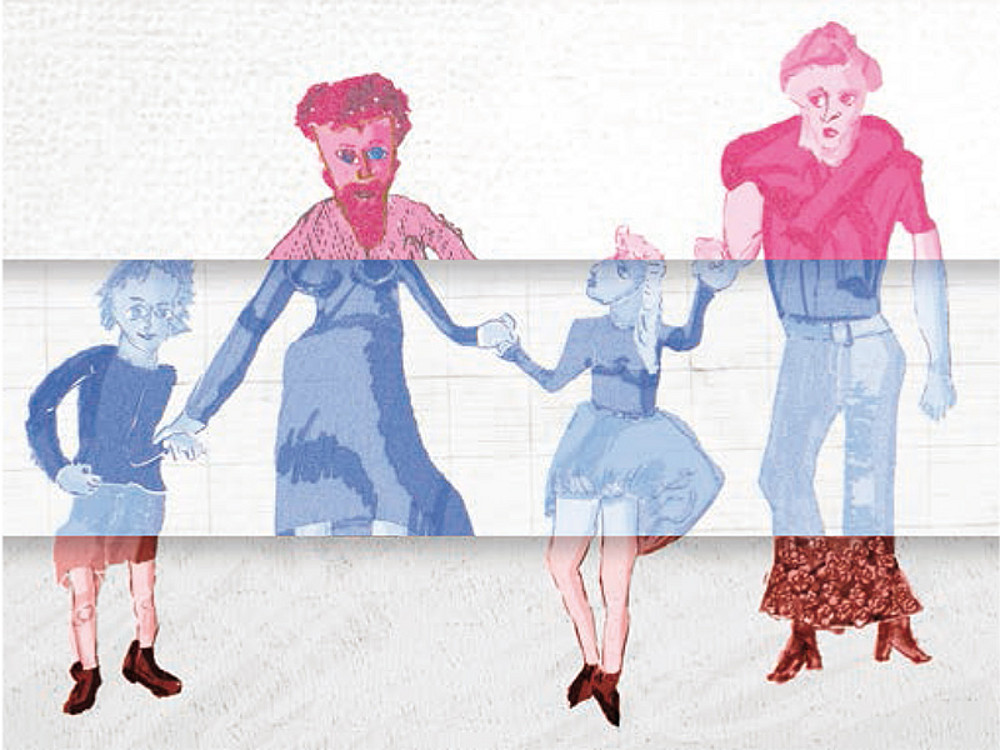
Wie sich Familienstrukturen ändern und welche Auswirkungen das auf Gesellschaft und Staat hat, erforschen WissenschafterInnen der Uni Graz. Illustration: Uni Graz/Klug

Wie sich Familienstrukturen ändern und welche Auswirkungen das auf Gesellschaft und Staat hat, erforschen WissenschafterInnen der Uni Graz. Illustration: Uni Graz/Klug

WissenschafterInnen verschiedener Disziplinen erforschen Auswirkungen der Familie im Wandel

Zwei Väter, zwei Mütter, Halbgeschwister: Patchwork ist längst keine Ausnahme mehr, die Akzeptanz von Regenbogenfamilien steigt. Welche Auswirkungen hat das aber auf die Gesetzgebung? Wer leistet die Sorgearbeit, die traditionellerweise Familienmitglieder übernommen haben? Wo kann und soll der Staat eingreifen? Mit derartigen Fragen befassen sich WissenschafterInnen verschiedener Diszpiplinen an der Karl-Franzens-Universität Graz. Am 28. und 29. Oktober 2015 präsentieren sie im Rahmen des Symposiums „Familie im Wandel“ aktuelle Forschungsergebnisse – von Rechtswissenschaften über historische und kulturelle Hintergründe bis zur Philosophie.
„Viele ForscherInnen untersuchen, wie Staat und Gesellschaft mit den Veränderungen im privaten Bereich umgehen sollen. Ich beschäftige mich unter anderem mit dem Thema, ob Eltern ein Anrecht auf staatliche Unterstützung haben“, beschreibt Organisatorin Sabine Hohl vom Institut für Philosophie der Uni Graz. Dafür spricht etwa, dass die Gesellschaft vom Nachwuchs profitiert. Ein Gegenargument wäre, dass sich Menschen aus freien Stücken für eine Familie entscheiden und daher von der öffentlichen Hand nicht bevorzugt werden sollten.

Globalisierte Verwandtschaft
Der Beitrag von Amerikanistin Sabine Schultermandl befasst sich mit Familienbanden, die dank moderner Kommunikationstechniken neu geknüpft werden: Skype, E-Mail oder Social Media ermöglichen es, mit Verwandten in anderen Ländern wieder enger in Kontakt zu treten und beeinflussen das Verständnis von nationaler und kultureller Zugehörigkeit. Andererseits reduziert die Kommunikation über Mobiltelefon oder Facebook den persönlichen Kontakt zwischen Eltern und Kindern.

Kulturelle Vergleiche
Einen Blick über den gegenwärtigen mitteleuropäischen Tellerrand hinaus ermöglichen auch Karl Kaser und Irmtraud Fischer. Der Historiker führt aus, dass mangels eines öffentlichen sozialen Sicherheitsnetzes in vielen Balkanländern Patriachalismus und Familienstrukturen wachsende Bedeutung gewinnen, wodurch die Gleichberechtigung der Frau ins Hintertreffen gerät. Die Theologin referiert über Familienbilder in der Bibel – die alles andere als heilig sind.

Das internationale Symposium „Die Familie im Wandel“ beginnt am 29. Oktober um 9 Uhr und wird im Rahmen des Forschungsschwerpunkts Heterogenität und Kohäsion organisiert. Bereits zum Auftakt am 28. Oktober hält Dr. Anca Gheaus aus Sheffield um 18.30 Uhr einen Abendvortrag zum Thema biologische Elternschaft und das Recht, Kinder zu erziehen.

Details zum Programm: philosophie-gewi.uni-graz.at

created by Dagmar Eklaude

Related news

Diversity buddies at the University of Graz: Support on equal terms

The University of Graz is strengthening its commitment to equal opportunities with its new Diversity Buddies. University members can find easily accessible contact persons here for questions relating to equality and diversity. All employees can get involved and take action.

When parents find it difficult to have a say

In her dissertation, translation scholar Marie Tschurtschenthaler examines how communication between compulsory schools and parents whose first language is not German works – and what role professional language mediation plays in this. Initial insights show that it is not just about language, but also about resources, responsibilities and the institutional framework.

AI in schools: Maria Bertel drafts legal guidelines for teachers

The legal expert and her team analysed the legal situation regarding the use of artificial intelligence in education as part of an EU project and answered open questions from practice.

Cosmetics in the environment: University of Graz proves danger to ants

Titanium dioxide, which is found in cosmetics, for example, is increasingly entering the environment in the form of nanoparticles. This could also put insects at risk. If ants ingest the substance in combination with the pesticide glyphosate, it disturbs the development of their offspring. Scientists at the University of Graz are drawing attention to the negative consequences of this toxic cocktail.

Begin of page section:
Additional information:

University of Graz
Universitaetsplatz 3
8010 Graz
Austria
  • Contact
  • Web Editors
  • Moodle
  • UNIGRAZonline
  • Imprint
  • Data Protection Declaration
  • Accessibility Declaration
Weatherstation
Uni Graz

End of this page section. Go to overview of page sections

End of this page section. Go to overview of page sections

Begin of page section:

End of this page section. Go to overview of page sections