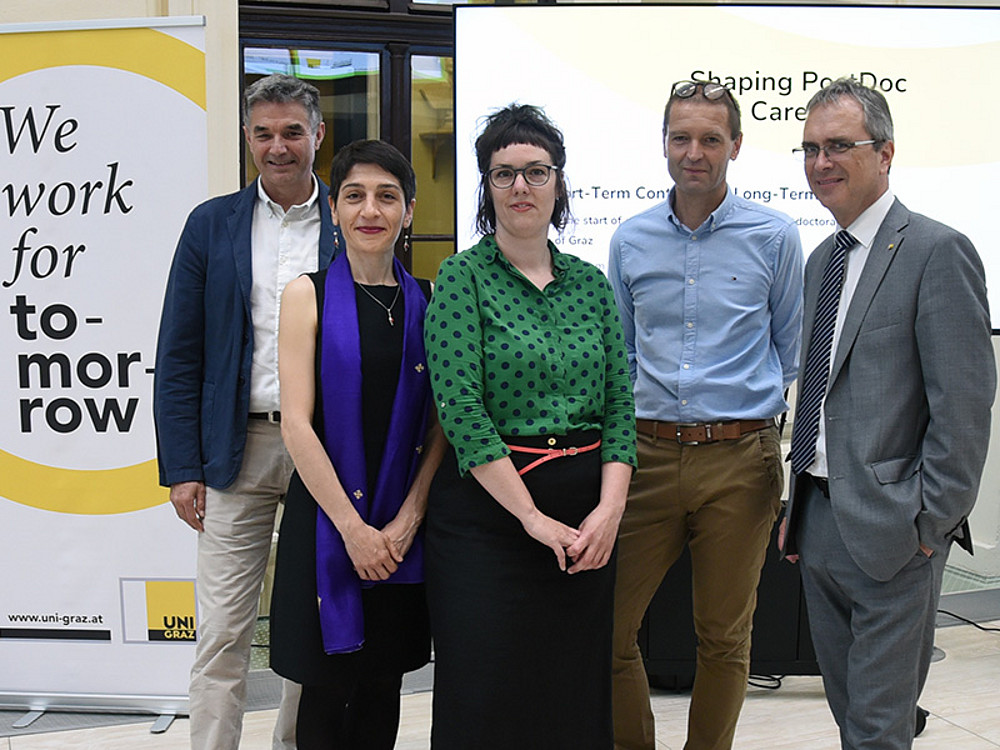
Sie sind hoch motiviert, bringen innovative Ideen ein, tragen wesentlich zu den Publikationsleistungen der Universität bei und treiben die internationale Vernetzung voran: Postdocs, junge ForscherInnen nach dem Doktorat, am Sprungbrett in eine wissenschaftliche Karriere. Um sie künftig besser unterstützen zu können, hat die Universität Graz nach dem Vorbild internationaler Elite-Universitäten eine neue Servicestelle eingerichtet. Am 12. Mai wurde das Postdoc-Büro mit einer Kick-off-Veranstaltung im Foyer der neuen Universitätsbibliothek offiziell eröffnet.
„Postdocs sind wesentliche ForschungsinnovatorInnen, die entscheidende Impulse für wissenschaftliche Entwicklungen setzen können. Ihre Arbeit stärkt das Ansehen unserer Universität national und international.“ Mit diesen Worten eröffnete Peter Riedler, Geschäftsführender Rektor der Uni Graz, die Veranstaltung und begrüßte die rund 80 Gäste. Unter ihnen auch Christof Gattringer, Präsident des Österreichischen Wissenschaftsfonds FWF, der Förderprogramme für die frühe Karrierephase präsentierte. 69 Prozent der derzeit vom FWF unterstützten Forschenden seien unter 36 Jahre alt, so Gattringer.
Rund 350 Postdocs forschen und lehren derzeit an der Uni Graz. Viele der jungen WissenschafterInnen haben zuvor noch nicht im deutschsprachigen Kontext gearbeitet und sind mit den Abläufen an der Universität Graz noch nicht vertraut. Auch die Situation eines befristeten Arbeitsverhältnisses bringt emotional Herausforderungen mit sich, wie Derya Özkaya, Postdoc am Zentrum für Südosteuropastudien, schilderte. Die Politikwissenschafterin rief auf, sich gegenseitig zu unterstützen und daran zu arbeiten, die Bedingungen zu verbessern.
Welche Maßnahmen die Uni Graz dazu setzt und wie sowohl die Forschenden als auch die Universität selbst davon profitieren sollen, erläuterte Joachim Reidl, Vizerektor für Forschung und Nachwuchsförderung. Das Postdoc-Büro unterstützt bei der Entwicklung eines eigenständigen Forschungsprofils, mit Peer-Mentoring, speziellen Weiterbildungsangeboten, persönlichem Coaching, Veranstaltungen, die Postdocs vor den Vorhang holen, Informationen über administrative Abläufe und Fördermöglichkeiten sowie Networking. „Sehr geschätzt werden auch Anreize für Aktivitäten, die Postdocs aus verschiedenen Fachbereichen abseits ihres Forschungsalltags zusammenbringen und damit das Einleben in Graz erleichtern“, weiß Johanna Stadlbauer, Managerin der Servicestelle und Ansprechpartnerin für alle Fragen der Forschenden.
Mit der Einrichtung des Postdoc-Büros ist die Uni Graz die erste Universität in Österreich, die eine solche Servicestelle geschaffen hat. „Damit machen wir die Uni Graz für internationale Talente noch attraktiver. Gleichzeitig werden auch wir als Universität langfristig davon profitieren“, sagt Vizerektor Joachim Reidl. Denn auch wenn Postdocs nur einige Jahre hier forschen, tragen ihre positiven Erfahrungen als Puzzlesteine zum internationalen Renommee der Uni Graz bei.
---------------------------------------------------------
They are highly motivated, contribute innovative ideas, make a significant contribution to the University's publication achievements and drive international networking: postdocs, young researchers after their doctorate, on the springboard to an academic career. In order to be able to support them better in the future, the University of Graz has set up a new service point, following the example of international elite universities. On 12 May, the Postdoc Office was officially opened with a kick-off event in the foyer of the new university library.
"Postdocs are essential research innovators who are able to initiate decisive impulses for scientific developments. They enhance our university’s standing, nationally and internationally." With these words, Peter Riedler, Executive Rector of the University of Graz, opened the event and welcomed the approximately 80 guests. Among them was Christof Gattringer, President of the Austrian Science Fund FWF, who presented funding programmes for the early career phase. 69 percent of the researchers currently supported by the FWF are under 36 years old, Gattringer said.
Around 350 postdocs are currently researching and teaching at the University of Graz. Many of the young scientists have not worked in a German-speaking context before and are not yet familiar with the procedures at the University of Graz. The situation of a temporary employment contract also brings emotional challenges, as Derya Özkaya, postdoc at the Centre for Southeast European Studies, described. The political scientist called for mutual support and work to improve conditions.
Joachim Reidl, Vice Rector for Research and Career Development, explained what measures the University of Graz is taking to achieve this and how both the researchers and the university itself are to benefit. The Postdoc Office provides support in developing an independent research profile, with peer mentoring, special continuing education offers, personal coaching, events that bring postdocs before the curtain, information about administrative procedures and funding opportunities, and networking. "Incentives for activities that bring together postdocs from different disciplines away from their daily research routine and thus make it easier for them to settle in Graz are also very much appreciated," knows Johanna Stadlbauer, manager of the service point and contact person for all questions from the researchers.
With the establishment of the Postdoc Office, the University of Graz is the first university in Austria to create such a service point. "With this, we are making the University of Graz even more attractive for international talents. At the same time, we as a university will also benefit from this in the long term," says Vice Rector Joachim Reidl. Because even if postdocs only do research here for a few years, their positive experiences contribute as puzzle pieces to the international reputation of the University of Graz.