



Begin of page section:
Page sections:

  • Go to contents (Accesskey 1)
  • Go to position marker (Accesskey 2)
  • Go to main navigation (Accesskey 3)
  • Go to sub navigation (Accesskey 4)
  • Go to additional information (Accesskey 5)
  • Go to page settings (user/language) (Accesskey 8)
  • Go to search (Accesskey 9)

End of this page section. Go to overview of page sections

Begin of page section:
Page settings:

English en
Deutsch de
Search
Login

End of this page section. Go to overview of page sections

Begin of page section:
Search:

Search for details about Uni Graz
Close

End of this page section. Go to overview of page sections


Search

Begin of page section:
Main navigation:

Page navigation:

  • University

    University
    • About the University
    • Organisation
    • Faculties
    • Library
    • Working at University of Graz
    • Campus
    Developing solutions for the world of tomorrow - that is our mission. Our students and our researchers take on the great challenges of society and carry the knowledge out.
  • Research Profile

    Research Profile
    • Our Expertise
    • Research Questions
    • Research Portal
    • Promoting Research
    • Research Transfer
    • Ethics in Research
    • Commission for Scientific Integrity
    Scientific excellence and the courage to break new ground. Research at the University of Graz creates the foundations for making the future worth living.
  • Studies

    Studies
    • Prospective Students
    • Students
    • Registration for Study Programme (Winter semester 2026/27)
  • Community

    Community
    • International
    • Location
    • Research and Business
    • Alumni
    The University of Graz is a hub for international research and brings together scientists and business experts. Moreover, it fosters the exchange and cooperation in study and teaching.
Topics
  • Sustainable University
  • Researchers answer
  • Work for us
Close menu

End of this page section. Go to overview of page sections

Begin of page section:
You are here:

University of Graz News Endliche Weiten

End of this page section. Go to overview of page sections

Monday, 24 August 2020

Endliche Weiten

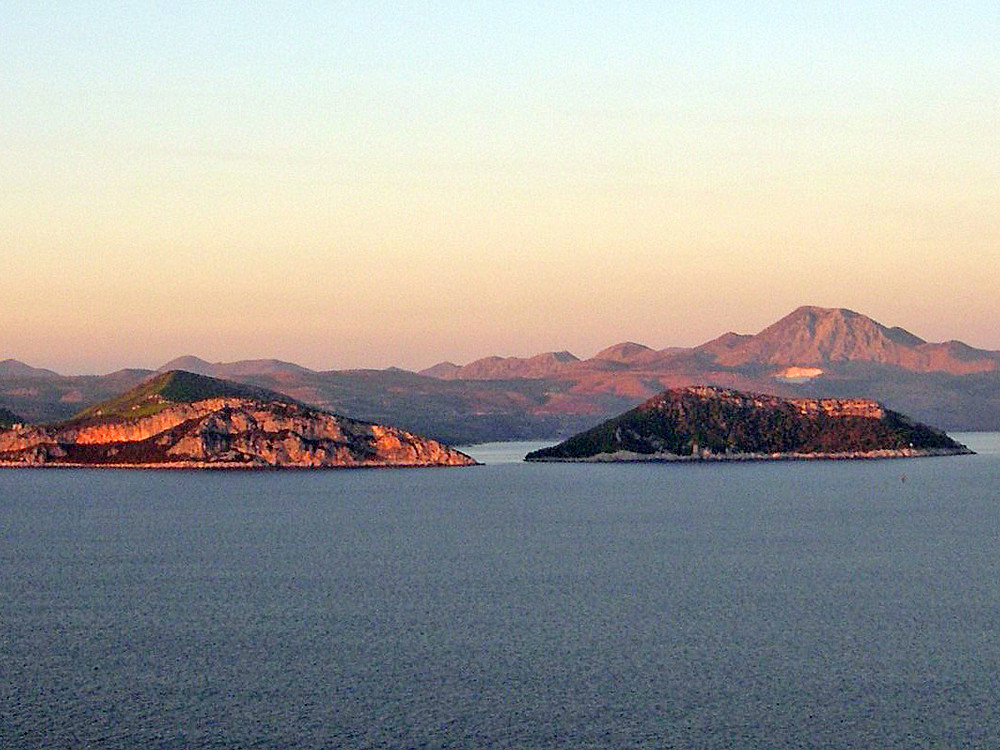
Urlaubsdestination als Forschungsziel: Die Ausbreitung von Fischarten vor der kroatischen Küste haben BiologInnen der Universität Graz analysiert. Foto: Sefc

Urlaubsdestination als Forschungsziel: Die Ausbreitung von Fischarten vor der kroatischen Küste haben BiologInnen der Universität Graz analysiert. Foto: Sefc

BiologInnen der Uni Graz zeigen, wie Meeresströmungen die Ausbreitung von Fischarten beeinflussen

Die aktuellen Reisebeschränkungen machen Destinationen an der Adria für viele zu unerreichbaren Sehnsuchtsorten. Mehr als Urlaubserinnerungen beschäftigen die EvolutionsbiologInnen Kristina Sefc und Stephan Koblmüller ihre Forschungsergebnisse aus der Region. Sie haben in den vergangenen Jahren Populationen einer kleinen, im seichten Felshabitat lebenden Fischart entlang der kroatischen Küste beprobt und durch genetische Analysen ihre Ausbreitungswege rekonstruiert. Die Ergebnisse werden im Journal of Biogeography veröffentlicht.

„Man würde meinen, dass sich Organismen in den Weiten des Meeres ungehindert ausbreiten können. Tatsächlich gibt es aber im Wasser strukturelle Barrieren, vor allem in Form von Strömungen“, beschreibt Sefc. Welche Regionen zusammenhängen und wo die Durchmischung der Populationen beschränkt wird, haben die Grazer BiologInnen in ihrer Studie festgestellt. Viele kleine bodenorientierte Fischarten können nicht sehr weit schwimmen und sind daher außerordentlich standorttreu. Ihre Larven driften aber im Wasser zu neuen Lebensräumen. „Diese Durchmischung ist wichtig für die Erhaltung der genetischen Diversität und der Anpassungsfähigkeit. Sonst werden die Tiere empfindlich für Umweltveränderungen“, erklärt die Biologin. Vor Sibenik treffen jedoch zwei große Meeresströmungen aufeinander, die auch eine genetische Barriere bilden.

Proben und Simulationen

Die Grazer WissenschafterInnen haben an 25 Orten entlang der kroatischen Küste Proben des Spitzkopfschleimfisches entnommen – in so dichten Abständen wie noch nie bei einer marinen Populationsstudie – und herausgefunden, dass jeweils innerhalb der vier großen Adria-Strömungskreise ähnliches Erbgut vorhanden ist, wobei die Trennlinie bei Sibenik besonders scharf ist. Hier scheint es überhaupt keinen Austausch zu geben.

Simulationen haben ebenfalls gezeigt, dass driftende Partikel von den Strömungen geleitet werden, allerdings wäre mehr Durchmischung möglich, als die BiologInnen in den Fischpopulationen nachweisen konnten. „Für die klare genetische Grenze bei Sibenik, die sich auch in einer Studie mit Korallen gezeigt hat, muss es also noch weitere Ursachen geben“, ergänzt Sefc. Es könnte sein, dass die Fische aus der südlicheren Region schlechter an die Lebensbedingungen im Norden angepasst sind und deshalb dort nicht Fuß fassen können. Außerdem spielen eventuell die geografischen Verhältnisse eine Rolle: „In dieser Küstenregion gibt es keine vorgelagerten Inseln, und das Meer wird sofort tief, vielleicht ist das eine zusätzliche Barriere“, meint die Forscherin. Das Team hat auch eine verwandte Fischart, die etwas tiefer im Wasser lebt, untersucht: Diese zeigt keine Auftrennung entlang der Strömungsgrenzen.

Publikation:

Sefc, K. M., Wagner M., Zangl L., Weiß S., Steinwender B., Arminger P., Weinmaier T., Balkic N., Kohler T., Inthal S., Kovačić M., Zogaris S., Hahn C., Koblmüller, S. Phylogeographic structure and population connectivity of a small benthic fish (Tripterygion tripteronotum) in the Adriatic Sea, Journal of Biogeography

https://onlinelibrary.wiley.com/doi/10.1111/jbi.13946

DOI: 10.1111/jbi.13946

created by Dagmar Eklaude

Related news

Complying with the norm: Why Do Standards Shape Our Lives, Elisabeth Staudegger?

Standards determine whether a sheet of paper fits in a printer or whether a charging plug can power multiple devices. These standards shape our everyday lives. But who actually sets these standards? Where are the weaknesses, and how could science help to improve them? Elisabeth Staudegger, Head of the ‘Law and IT’ Department at the Institute for Legal Foundations at the University of Graz, host the Academic Standards Day on 16 June. Here she relays how sciences can contribute to the topic of standardisation and reveals her personal favourite standard.

More body awareness than a culture war

In Italy, sex education lessons will in future only be permitted with parental consent, and will be banned entirely in nurseries and primary schools. At the same time, Pride Month highlights why knowledge about the body, relationships, boundaries and diversity is important for young people. A study by the University of Graz shows how important knowledge about the body, contraception, relationship skills and protection against violence is

Will Austria win the World Cup? Mathematician reveals calculation method

Michael Fischer uses the football tournament as a practical example for highschool lessons.

Survival strategies: How plants respond to drought

According to Geosphere Austria, this spring was the driest in Austria since records began around 170 years ago. The low rainfall put particular pressure on the agricultural sector. And climate change is set to make the situation even worse in the coming decades. We asked Johannes Liesche, a professor at the Department of Biology at the University of Graz, how plants react to water shortages and how they survive periods of drought.

Begin of page section:
Additional information:

University of Graz
Universitaetsplatz 3
8010 Graz
Austria
  • Contact
  • Web Editors
  • Moodle
  • UNIGRAZonline
  • Imprint
  • Data Protection Declaration
  • Accessibility Declaration
Weatherstation
Uni Graz

End of this page section. Go to overview of page sections

End of this page section. Go to overview of page sections

Begin of page section:

End of this page section. Go to overview of page sections


