




Begin of page section:
Page sections:

  • Go to contents (Accesskey 1)
  • Go to position marker (Accesskey 2)
  • Go to main navigation (Accesskey 3)
  • Go to sub navigation (Accesskey 4)
  • Go to additional information (Accesskey 5)
  • Go to page settings (user/language) (Accesskey 8)
  • Go to search (Accesskey 9)

End of this page section. Go to overview of page sections

Begin of page section:
Page settings:

English en
Deutsch de
Search
Login

End of this page section. Go to overview of page sections

Begin of page section:
Search:

Search for details about Uni Graz
Close

End of this page section. Go to overview of page sections


Search

Begin of page section:
Main navigation:

Page navigation:

  • University

    University
    • About the University
    • Organisation
    • Faculties
    • Library
    • Working at University of Graz
    • Campus
    Developing solutions for the world of tomorrow - that is our mission. Our students and our researchers take on the great challenges of society and carry the knowledge out.
  • Research Profile

    Research Profile
    • Our Expertise
    • Research Questions
    • Research Portal
    • Promoting Research
    • Research Transfer
    • Ethics in Research
    • Commission for Scientific Integrity
    Scientific excellence and the courage to break new ground. Research at the University of Graz creates the foundations for making the future worth living.
  • Studies

    Studies
    • Prospective Students
    • Students
    • Registration for Study Programme (Winter semester 2026/27)
    • Study Days 22-26 June 2026
  • Community

    Community
    • International
    • Location
    • Research and Business
    • Alumni
    The University of Graz is a hub for international research and brings together scientists and business experts. Moreover, it fosters the exchange and cooperation in study and teaching.
Topics
  • Sustainable University
  • Researchers answer
  • Work for us
Close menu

End of this page section. Go to overview of page sections

Begin of page section:
You are here:

University of Graz News Einsicht & Einigung

End of this page section. Go to overview of page sections

Wednesday, 04 May 2022

Einsicht & Einigung

Wann wird endlich Frieden? Maximilian Lakitsch erklärt, wie Kriegsparteien ins Reden kommen können

Anstatt miteinander zu reden und Waffen schweigen zu lassen, krachen weiterhin Bomben auf die Ukraine. Erste Gespräche sind ergebnislos im Sand verlaufen. Friedensforscher Maximilian Lakitsch erklärt, welche generellen Faktoren für erfolgreiche Verhandlungen zwischen Kriegsgegnern ausschlaggebend sind:

„Dass sich Parteien überhaupt erst einmal an einen Tisch setzen, hängt vielfach von der Situation am Schlachtfeld ab. Entweder weil jemand unterlegen ist und sich einen strategischen Vorteil verspricht. Oder weil man aus der stärkeren Position heraus mehr fordern kann. Die Friedensforschung unterscheidet drei „Tracks“, um den Dialog zu starten: die Ebene der obersten EntscheidungsträgerInnen von Staaten. Jene der sogenannten Grassroots, damit sind Personen aus der Bevölkerung, aber auch VertreterInnen von religiösen Institutionen oder NGOs gemeint. Und die dritte Option liegt zwischen diesen beiden Ebenen. Dabei handelt es sich oftmals um einflussreiche Personen, die Kontakt zur obersten Ebene haben, selbst aber keine Regierungsverantwortung haben. Dieses Modell erweist sich als besonders effektiv, um im Geheimen Verhandlungen anbahnen. Das könnte für den Ukraine-Krieg eine Vorgangsweise sein. Bewährt hat sie sich zum Beispiel beim Konflikt zwischen Israel und Palästina: In einer sehr angespannten Situation nach der Ersten Intifada konnte eine überraschende Einigung erreicht werden. Egal, bei welchem Track man bei Verhandlungen ansetzt, am wichtigsten ist, dass möglichst viele Menschen hinter einer Lösung stehen.
Bottom-up-Prozesse sind ebenfalls zielführend: So haben etwa in Kolumbien Friedensmaßnahmen auf Initiative einiger kleiner Dörfer begonnen, die regional und dann staatlich ausgeweitet wurden. Es gibt also viele Wege, die zu einem Frieden führen kommen können. Ohne Alternative ist immer: Alle involvierten Parteien – seien sie untereinander noch so verfeindet – müssen miteinander reden.“
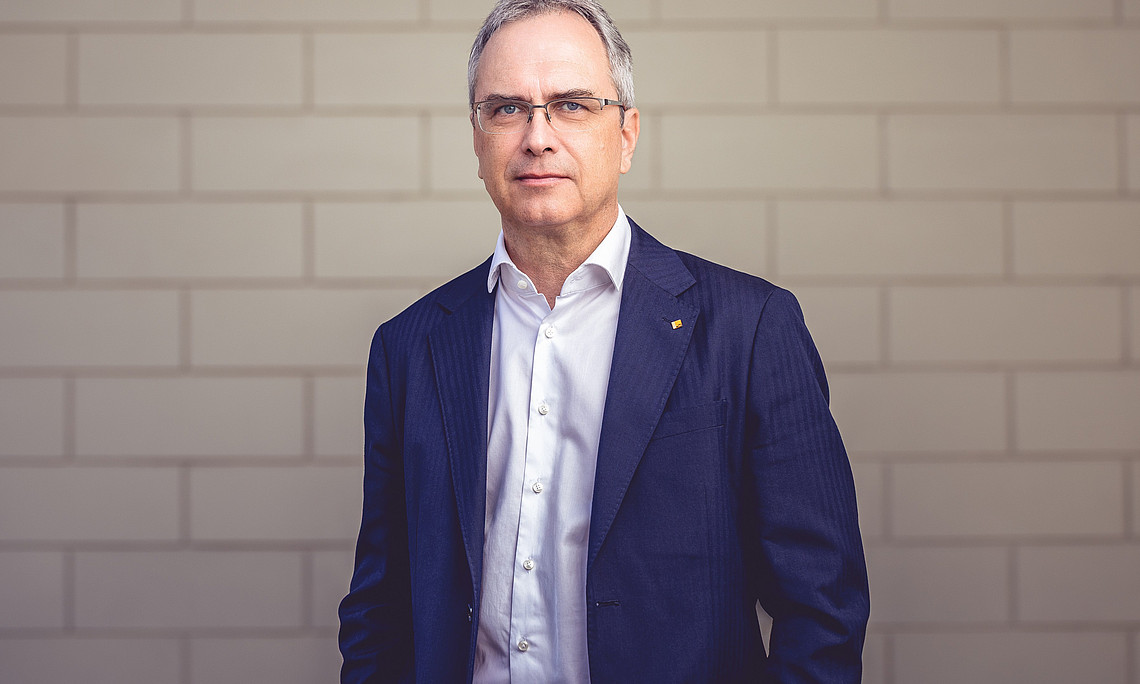

created by Andreas Schweiger

Related news

Full effort in the heat: the Sports Centre was in full swing at the Kleeblattlauf

On 19 June 2026, 2,000 runners and hundreds of supporters made their way to the Rosenhain for a sporting end-of-term event.

Save, invest or guarantee: What Austrians expect from the state

Austria needs to make savings. But where? And what should the Republic actually be spending its money on? The answers are provided by the initial findings of a major study involving the University of Graz. 99 per cent of those surveyed are in favour of the state ensuring healthcare provision. Almost three-quarters would like to see more public funding for education, whilst only around three per cent are in favour of cuts in this sector.

Complying with the norm: Why Do Standards Shape Our Lives, Elisabeth Staudegger?

Standards determine whether a sheet of paper fits in a printer or whether a charging plug can power multiple devices. These standards shape our everyday lives. But who actually sets these standards? Where are the weaknesses, and how could science help to improve them? Elisabeth Staudegger, Head of the ‘Law and IT’ Department at the Institute for Legal Foundations at the University of Graz, host the Academic Standards Day on 16 June. Here she relays how sciences can contribute to the topic of standardisation and reveals her personal favourite standard.

More body awareness than a culture war

In Italy, sex education lessons will in future only be permitted with parental consent, and will be banned entirely in nurseries and primary schools. At the same time, Pride Month highlights why knowledge about the body, relationships, boundaries and diversity is important for young people. A study by the University of Graz shows how important knowledge about the body, contraception, relationship skills and protection against violence is

Begin of page section:
Additional information:

University of Graz
Universitaetsplatz 3
8010 Graz
Austria
  • Contact
  • Web Editors
  • Moodle
  • UNIGRAZonline
  • Imprint
  • Data Protection Declaration
  • Accessibility Declaration
Weatherstation
Uni Graz

End of this page section. Go to overview of page sections

End of this page section. Go to overview of page sections

Begin of page section:

End of this page section. Go to overview of page sections

