Begin of page section:
Page sections:

  • Go to contents (Accesskey 1)
  • Go to position marker (Accesskey 2)
  • Go to main navigation (Accesskey 3)
  • Go to sub navigation (Accesskey 4)
  • Go to additional information (Accesskey 5)
  • Go to page settings (user/language) (Accesskey 8)
  • Go to search (Accesskey 9)

End of this page section. Go to overview of page sections

Begin of page section:
Page settings:

English en
Deutsch de
Search
Login

End of this page section. Go to overview of page sections

Begin of page section:
Search:

Search for details about Uni Graz
Close

End of this page section. Go to overview of page sections


Search

Begin of page section:
Main navigation:

Page navigation:

  • University

    University
    • About the University
    • Organisation
    • Faculties
    • Library
    • Working at University of Graz
    • Campus
    Developing solutions for the world of tomorrow - that is our mission. Our students and our researchers take on the great challenges of society and carry the knowledge out.
  • Research Profile

    Research Profile
    • Our Expertise
    • Research Questions
    • Research Portal
    • Promoting Research
    • Research Transfer
    • Ethics in Research
    Scientific excellence and the courage to break new ground. Research at the University of Graz creates the foundations for making the future worth living.
  • Studies

    Studies
    • Prospective Students
    • Students
  • Community

    Community
    • International
    • Location
    • Research and Business
    • Alumni
    The University of Graz is a hub for international research and brings together scientists and business experts. Moreover, it fosters the exchange and cooperation in study and teaching.
  • Spotlight
Topics
  • Our digital Advent calendar
  • Sustainable University
  • Researchers answer
  • Work for us
Close menu

End of this page section. Go to overview of page sections

Begin of page section:
You are here:

University of Graz News Einsame Klasse

End of this page section. Go to overview of page sections

Monday, 28 June 2021

Einsame Klasse

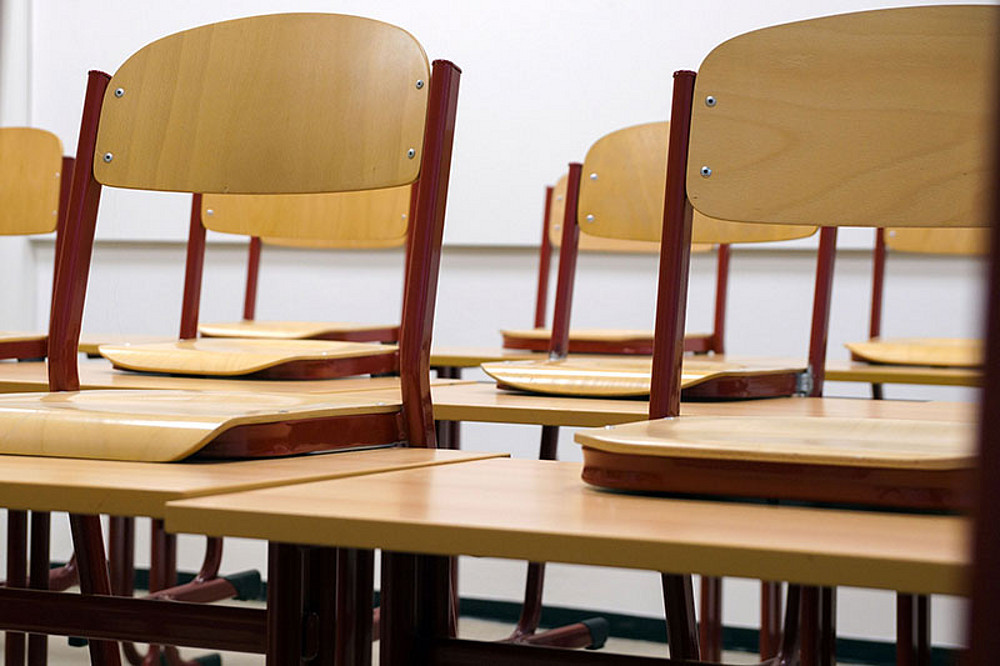
Leere Klassenräume haben die meisten SchülerInnen heuer sehr belastet. Psychologin Manuela Paechter erklärt warum und was man dagegen tun kann. Foto: Pexels

Leere Klassenräume haben die meisten SchülerInnen heuer sehr belastet. Psychologin Manuela Paechter erklärt warum und was man dagegen tun kann. Foto: Pexels

Psychologin der Uni Graz bewertet Lernerfolg im Corona-Jahr

Bald ist Zeugnistag, doch beurteilt werden heuer kaum in der Schule erbrachte Leistungen. Denn besonders die Älteren haben einen wesentlichen Teil des Jahres im Kinder- statt im Klassenzimmer verbracht. Wachsende Frustration, Ängste und Depressionen waren die Folge. Was sie dennoch geschafft haben und woher sie wieder Motivation bekommen können, fasst Bildungspsychologin Manuela Paechter zusammen: „Es gibt durchaus Kinder, die von der Pandemie profitiert haben. Sie haben gelernt, sich zu organisieren und selbstständig Inhalte anzueignen. Die Schere zwischen denen, die gut mitkommen, und solchen, die den Anschluss verloren haben, ist im Laufe der Monate allerdings immer weiter aufgegangen.“
Wo die technische Ausrüstung und der Rückhalt durch die Familie fehlen, wird es schwer. Was nicht bedeutet, dass die Eltern mit den Sprösslingen den Stoff durchgehen sollen: „Anteil nehmen an der Schule und Aktivitäten, die zum Lernen anregen, helfen sehr viel weiter“, präzisiert die Forscherin. Man kann den Nachwuchs zum Beispiel auf der Reise in den Urlaub oder bei Ausflügen Routen erstellen, Fahrzeit und Strecke berechnen lassen oder die Freude am Lesen und Schreiben fördern.
Ist diese Unterstützung nicht möglich, fehlt meist auch das Geld für eine anspruchsvolle Ferienbetreuung. Deshalb sieht Paechter in den vom Bildungsministerium ins Leben gerufenen Sommerschulen eine hervorragende Alternative, die zur fixen Einrichtung werden sollte. Man könne mit spannenden Projekten die Jugendlichen bei dem packen, was sie interessiert – etwa Sportbegeisterte mit dem Thema Fußball. „Ein Abseits richtig und verständlich zu erklären, ist eine große sprachliche und kognitive Leistung“, unterstreicht die Psychologin.

Warum Sozialkontakte und der schulische Rhythmus für Jugendliche so wichtig sind, erklärt Manuela Paechter in der aktuellen Ausgabe der Unizeit.
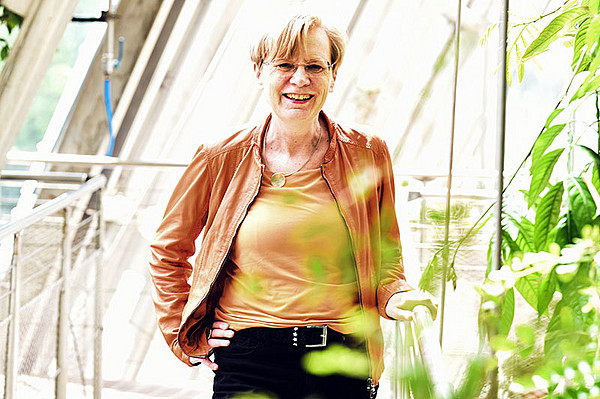
 

"Die Sommerschule sollte zur fixen Einrichtung werden, neben anderen Fördermöglichkeiten", empfiehlt Manuela Paechter. Foto: Uni Graz/Tzivanopoulos
created by Dagmar Eklaude

Related news

Semester abroad without barriers: University of Graz wins award for promoting inclusion

The University of Graz has been awarded the Internationalization Award for its new inclusion initiative. Students with fewer opportunities now also receive financial support for their semester abroad outside Europe.

Fair distribution: Researchers determine just greenhouse gas budgets for all EU regions

Ten years ago, on 12 December 2015, the Paris Climate Agreement was signed at the UN Climate Conference. In order to limit global warming to well below two degrees, only a certain amount of CO2 may be emitted worldwide. While the focus was originally on national emission targets, more than 200 subnational regions and almost 300 cities have now adopted their own targets. But how many emissions are they fairly entitled to? Researchers at the University of Graz have now developed transparent criteria for fair distribution at the subnational level for the first time and determined corresponding greenhouse gas budgets for all European regions. The paper was published today in the scientific journal Nature Communications.

Chemical Christmas show at the University of Graz: An explosive evening at the Schauspielh

At the beginning of December, the University of Graz transformed the theater into a laboratory: as part of “Chemical Life,” teacher training students staged a chemical Christmas show for Styrian school classes—complete with ethanol rockets, nitrogen snow, and glowing effects. An evening designed to inspire interest in studying chemistry.

Train by train: Koralm railway accelerates exchange between the Universities

Lectures at the University of Klagenfurt in the morning, seminars at the University of Graz in the afternoon: Austria's longest tunnel and a journey time of around 45 minutes make it easy. The Koralm railway increases the speed of networking between the two university locations. The collaboration builds on existing cooperation - for example in the areas of teacher training, Slavic studies and as employers, the universities are well coordinated.

Begin of page section:
Additional information:

University of Graz
Universitaetsplatz 3
8010 Graz
Austria
  • Contact
  • Web Editors
  • Moodle
  • UNIGRAZonline
  • Imprint
  • Data Protection Declaration
  • Accessibility Declaration
Weatherstation
Uni Graz

End of this page section. Go to overview of page sections

End of this page section. Go to overview of page sections

Begin of page section:

End of this page section. Go to overview of page sections