Begin of page section:
Page sections:

  • Go to contents (Accesskey 1)
  • Go to position marker (Accesskey 2)
  • Go to main navigation (Accesskey 3)
  • Go to sub navigation (Accesskey 4)
  • Go to additional information (Accesskey 5)
  • Go to page settings (user/language) (Accesskey 8)
  • Go to search (Accesskey 9)

End of this page section. Go to overview of page sections

Begin of page section:
Page settings:

English en
Deutsch de
Search
Login

End of this page section. Go to overview of page sections

Begin of page section:
Search:

Search for details about Uni Graz
Close

End of this page section. Go to overview of page sections


Search

Begin of page section:
Main navigation:

Page navigation:

  • University

    University
    • About the University
    • Organisation
    • Faculties
    • Library
    • Working at University of Graz
    • Campus
    Developing solutions for the world of tomorrow - that is our mission. Our students and our researchers take on the great challenges of society and carry the knowledge out.
  • Research Profile

    Research Profile
    • Our Expertise
    • Research Questions
    • Research Portal
    • Promoting Research
    • Research Transfer
    • Ethics in Research
    Scientific excellence and the courage to break new ground. Research at the University of Graz creates the foundations for making the future worth living.
  • Studies

    Studies
    • Prospective Students
    • Students
  • Community

    Community
    • International
    • Location
    • Research and Business
    • Alumni
    The University of Graz is a hub for international research and brings together scientists and business experts. Moreover, it fosters the exchange and cooperation in study and teaching.
  • Spotlight
Topics
  • Sustainable University
  • Researchers answer
  • Work for us
Close menu

End of this page section. Go to overview of page sections

Begin of page section:
You are here:

University of Graz News Eine „haarige“ Geschichte

End of this page section. Go to overview of page sections

Monday, 04 February 2013

Eine „haarige“ Geschichte
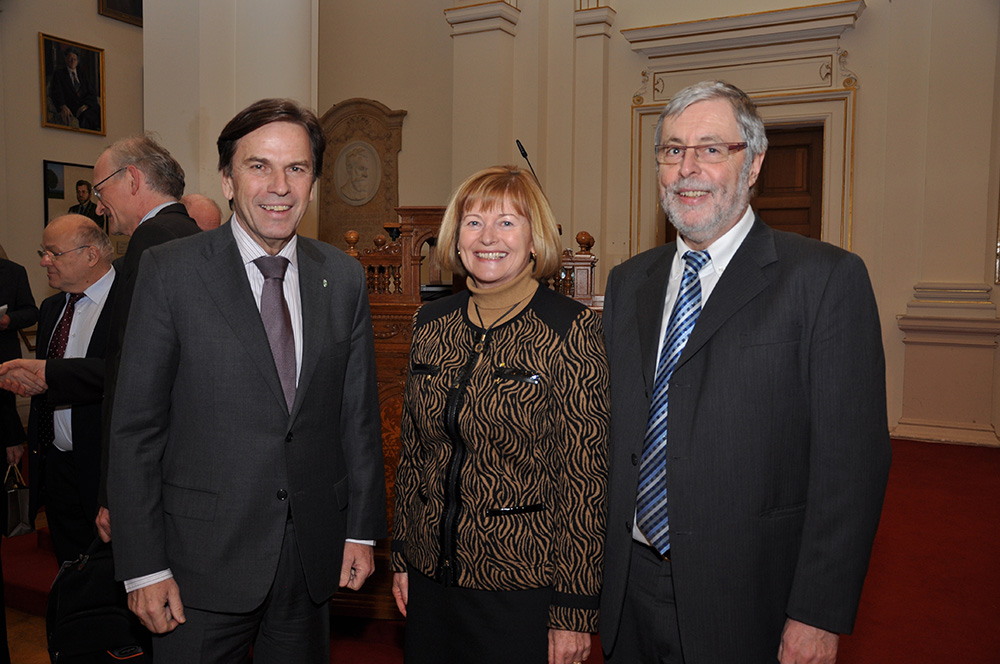
Landeshauptmann Voves, Rektorin Neuper und Dekan Konrad (v. l.)
Landeshauptmann Voves, Rektorin Neuper und Dekan Konrad (v. l.)

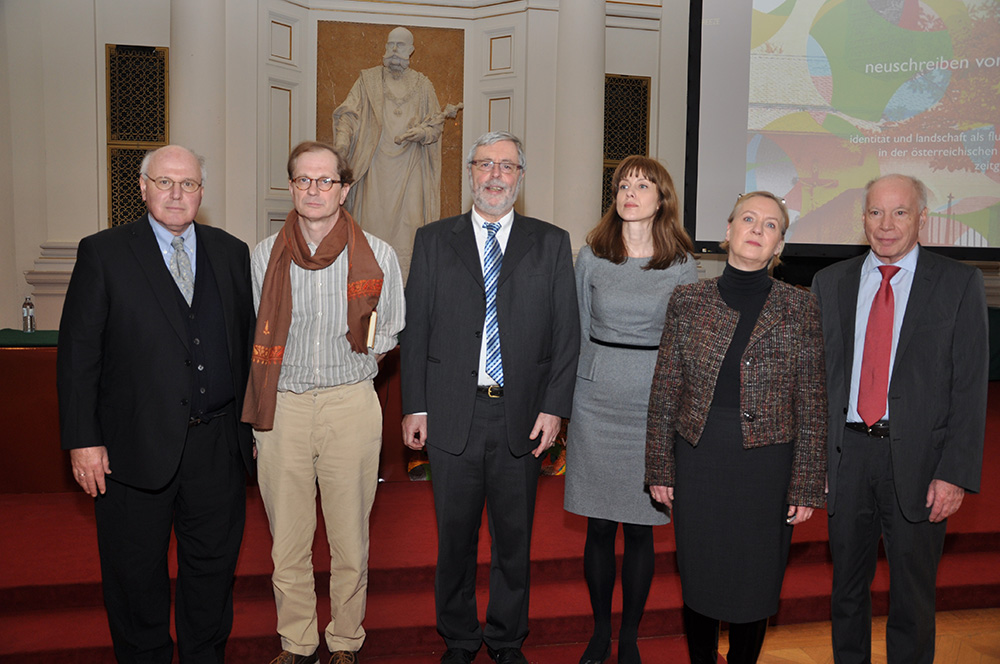
Hoch karätig besetztes Symposium: Laudator Jay Winter, Schriftsteller Josef Winkler, Helmut Konrad, Literaturwissenschafterin Joanna Drynda, Schauspielchefdramaturgin Regina Guhl und Linzer Kunstuni-Rektor Reinhard Kannonier (v. l.)
Hoch karätig besetztes Symposium: Laudator Jay Winter, Schriftsteller Josef Winkler, Helmut Konrad, Literaturwissenschafterin Joanna Drynda, Schauspielchefdramaturgin Regina Guhl und Linzer Kunstuni-Rektor Reinhard Kannonier (v. l.)

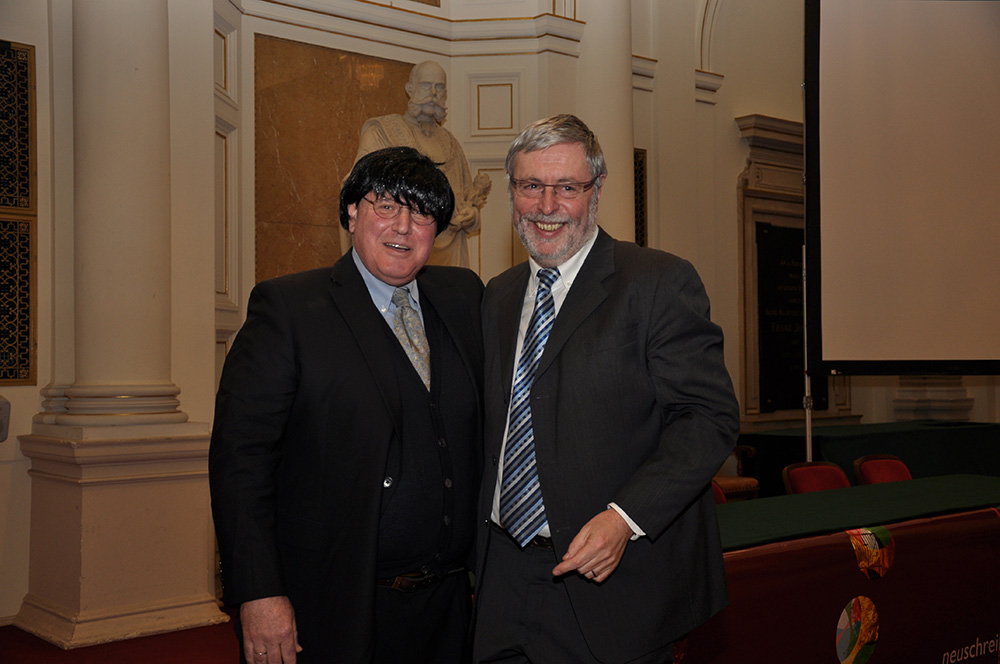
Eine "haarige" Laudatio von Historiker Winter
Eine "haarige" Laudatio von Historiker Winter

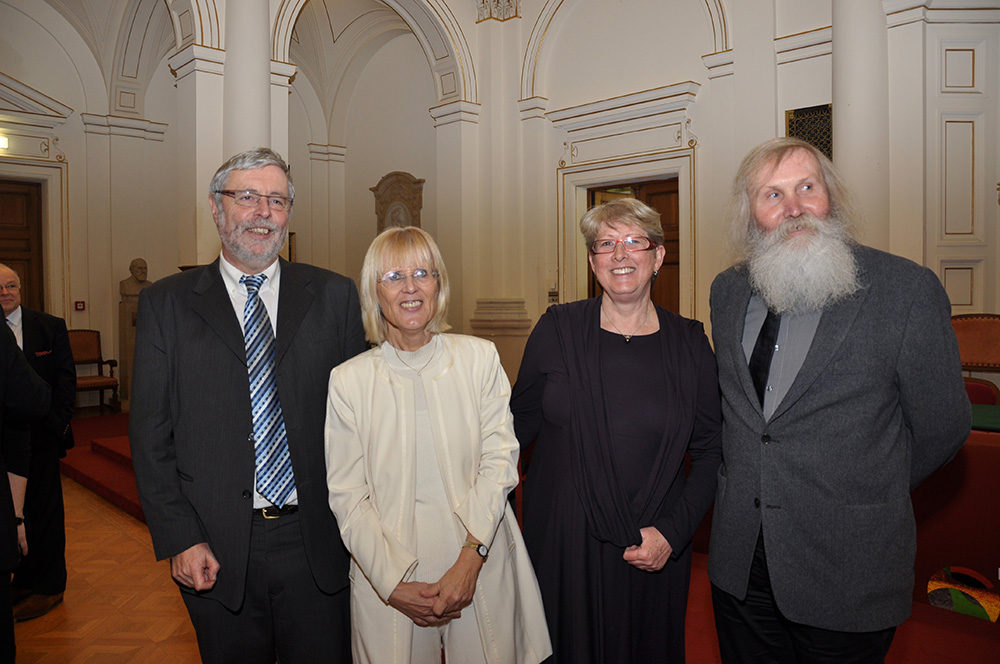
Konrad, Historiker-Kollegin Karin Schmiedlechner-Lienhart, Mirella Konrad und Historiker-Kollege Eduard Staudinger (v .l.)
Konrad, Historiker-Kollegin Karin Schmiedlechner-Lienhart, Mirella Konrad und Historiker-Kollege Eduard Staudinger (v .l.)

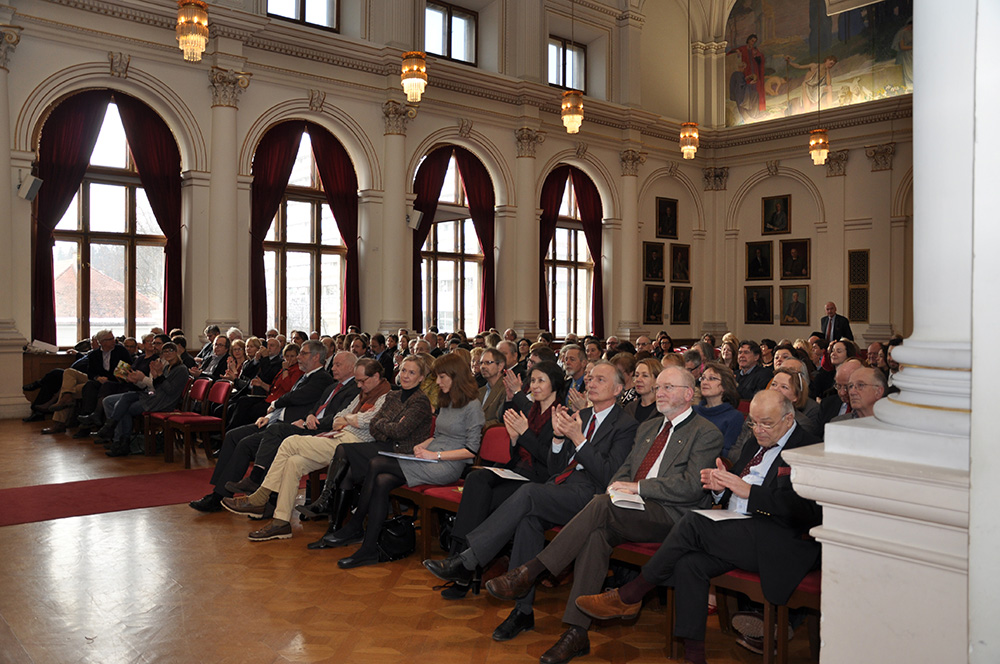
Viele GratulantInnen in der Aula anlässlich des runden Geburtstages

Viele GratulantInnen in der Aula anlässlich des runden Geburtstages

Symposium und Festakt zum 65. Geburtstag von Helmut Konrad

In Kärnten geboren, in den USA geforscht, in Graz Rektor, Dekan und international anerkannter Zeithistoriker: Sowohl Helmut Konrads Biografie als auch sein wissenschaftliches Wirken lieferten die Impulse, sich am 1. Februar 2013 anlässlich seines 65. Geburtstages mit dem Symposium „Neuschreiben von Heimaten“ auseinanderzusetzen. Mit prominenten Vortragenden: Schriftsteller und Büchner-Preisträger Josef Winkler, der aus seinem Buch „Roppongi. Requiem für einen Vater“ las. Joanna Drynda, Literaturwissenschafterin an der Universität Poznań (Polen), sowie Reinhard Kannonier, Historiker und Rektor der Universität für künstlerische und industrielle Gestaltung Linz. Durch das Podiumsgespräch führte Regina Guhl, Chefdramaturgin am Schauspielhaus Graz. Für die musikalische Gestaltung sorgt Bertl Mütter.

Hochkarätig besetzt war nicht nur die wissenschaftliche Veranstaltung. Beim anschließenden Festakt gratulierten unter anderem: Rektorin Christa Neuper, LH Franz Voves, Landesrätin Bettina Vollath, Altbürgermeister Alfred Stingl, Wolfgang Muchitsch und Peter Pakesch (Joanneum Graz), uniko-Generalsekretärin Elisabeth Fiorioli, Honorarkonsul Rudi Roth und viele andere. „Konrad hat als Rektor und Dekan einen wesentlichen Beitrag zur Neupositionierung der Universität geleistet“, würdigte Rektorin Neuper Konrads Verdienste und seine „große internationale Strahlkraft“.

Die pointierte Laudatio hielt Jay Winter, Professor an der Yale University/USA. Im ersten Teil seiner Rede hob Winter, auch Ehrendoktor der Geisteswissenschaftlichen Fakultät der Uni Graz, Konrads Leistungen für die Arbeitergeschichte und die beeindruckende Kommunikationsfähigkeit hervor: „Er hat nie von oben, sondern immer auf Augenhöhe mit Studierenden kommuniziert.“ Und der zweite Teil der Laudatio unter dem Titel „die haarige Geschichte des Helmut Konrad und die Generation von 1968“ sorgte für viele Lacher und begeisterten Applaus in der voll gefüllten Aula.

created by Andreas Schweiger

Related news

Diversity buddies at the University of Graz: Support on equal terms

The University of Graz is strengthening its commitment to equal opportunities with its new Diversity Buddies. University members can find easily accessible contact persons here for questions relating to equality and diversity. All employees can get involved and take action.

When parents find it difficult to have a say

In her dissertation, translation scholar Marie Tschurtschenthaler examines how communication between compulsory schools and parents whose first language is not German works – and what role professional language mediation plays in this. Initial insights show that it is not just about language, but also about resources, responsibilities and the institutional framework.

AI in schools: Maria Bertel drafts legal guidelines for teachers

The legal expert and her team analysed the legal situation regarding the use of artificial intelligence in education as part of an EU project and answered open questions from practice.

Cosmetics in the environment: University of Graz proves danger to ants

Titanium dioxide, which is found in cosmetics, for example, is increasingly entering the environment in the form of nanoparticles. This could also put insects at risk. If ants ingest the substance in combination with the pesticide glyphosate, it disturbs the development of their offspring. Scientists at the University of Graz are drawing attention to the negative consequences of this toxic cocktail.

Begin of page section:
Additional information:

University of Graz
Universitaetsplatz 3
8010 Graz
Austria
  • Contact
  • Web Editors
  • Moodle
  • UNIGRAZonline
  • Imprint
  • Data Protection Declaration
  • Accessibility Declaration
Weatherstation
Uni Graz

End of this page section. Go to overview of page sections

End of this page section. Go to overview of page sections

Begin of page section:

End of this page section. Go to overview of page sections