Begin of page section:
Page sections:

  • Go to contents (Accesskey 1)
  • Go to position marker (Accesskey 2)
  • Go to main navigation (Accesskey 3)
  • Go to sub navigation (Accesskey 4)
  • Go to additional information (Accesskey 5)
  • Go to page settings (user/language) (Accesskey 8)
  • Go to search (Accesskey 9)

End of this page section. Go to overview of page sections

Begin of page section:
Page settings:

English en
Deutsch de
Search
Login

End of this page section. Go to overview of page sections

Begin of page section:
Search:

Search for details about Uni Graz
Close

End of this page section. Go to overview of page sections


Search

Begin of page section:
Main navigation:

Page navigation:

  • University

    University
    • About the University
    • Organisation
    • Faculties
    • Library
    • Working at University of Graz
    • Campus
    Developing solutions for the world of tomorrow - that is our mission. Our students and our researchers take on the great challenges of society and carry the knowledge out.
  • Research Profile

    Research Profile
    • Our Expertise
    • Research Questions
    • Research Portal
    • Promoting Research
    • Research Transfer
    • Ethics in Research
    • Commission for Scientific Integrity
    Scientific excellence and the courage to break new ground. Research at the University of Graz creates the foundations for making the future worth living.
  • Studies

    Studies
    • Prospective Students
    • Students
    • Registration for Study Programme (Winter semester 2026/27)
  • Community

    Community
    • International
    • Location
    • Research and Business
    • Alumni
    The University of Graz is a hub for international research and brings together scientists and business experts. Moreover, it fosters the exchange and cooperation in study and teaching.
Topics
  • Sustainable University
  • Researchers answer
  • Work for us
Close menu

End of this page section. Go to overview of page sections

Begin of page section:
You are here:

University of Graz News Jahr der Jubiläen 

End of this page section. Go to overview of page sections

Monday, 03 December 2018

Jahr der Jubiläen 

Tagung und Fest für Helmut Konrad (Mitte), mit Mirella Konrad und Josef Pesserl. Foto: Uni Graz/Schweiger

Tagung und Fest für Helmut Konrad (Mitte), mit Mirella Konrad und Josef Pesserl. Foto: Uni Graz/Schweiger

Festtagung zu Helmut Konrads 70er: von der Geschichte der Arbeiterbewegung zur globalen Zeitgeschichte

Zeithistorische Jubiläen, darunter 100 Jahre Republik und Ende des Erstes Weltkrieges, standen heuer besonders oft im Mittelpunkt, damit auch einer der anerkanntesten Experten: Helmut Konrad, zwar emeritierter, aber nach wie vor viel beschäftigter Professor für Zeitgeschichte. Und ausgerechnet im großen Gedenkjahr beging Konrad selbst ein Jubiläum. Fast unbemerkt. Bis zum 30. November 2018. Im Rahmen der Veranstaltung „Von der Geschichte der Arbeiterbewegung zur globalen Zeitgeschichte“ im Meerscheinschlössl wurde der 70. Geburtstag des vielfach ausgezeichneten Wissenschafters, mehrfachen Dekans und ehemaligen Rektors der Universität Graz gefeiert. Erst am Tag davor hatte Konrad die höchste Auszeichnung des Landes, das Große Goldene Ehrenzeichen des Landes Steiermark mit dem Stern, erhalten.
„Mit seiner Weitergabe von Haltungen hat er KollegInnen und Studierende beeindruck und geprägt“, betonte Fachkollegin Karin Schmidlechner-Lienhart. „Und wer könnte sein Wirken besser bezeugen als seine DissertantInnen.“ Daher gratulierten im Rahmen der Veranstaltung zahlreiche AbsolventInnen, deren Dissertation Konrad betreut hatte – darunter bei einem Round-Table-Gespräch: Werner Anzenberger, Hiroko Mizuno, Bettina Habsburg-Lothringen, Silke Hammer und Walter Seidl. 
Weitere Glückwünsche überbrachten neben vielen KollegInnen des Instituts für Geschichte Landtagspräsidentin Bettina Vollath, PH-Steiermark-Rektorin Elgrid Messner, uniko-Generalsekretärin Elisabeth Fiorioli und Universalmuseum-Leiter Wolfgang Muchitsch. FestrednerInnen waren Arbeiterkammer-Präsident Josef Pesserl und Historikerin Heidemarie Uhl von der Österreichischen Akademie für Wissenschaften. 

Zur Person: Helmut Konrad, 1948 in Wolfsberg geboren, studierte Geschichte und Germanistik an der Universität Wien. Er habilitierte sich an der Johannes-Kepler-Universität Linz, wo er ab 1981 als außerordentlicher Professor tätig war. 1984 wurde er an die Universität Graz als Professor für allgemeine Zeitgeschichte berufen. Neben zahlreichen Publikationen, umfassender Tätigkeit in Forschung und Lehre bekleidete Konrad viele akademische Ämter. Von 1993 bis 1997 war er Rektor der Universität Graz sowie mehrmals Dekan der Geisteswissenschaftlichen Fakultät. Weitere bildungspolitische Stationen: Zwischen 2000 und 2005 war Konrad Präsident des Österreichischen Akkreditierungsrats, Mitglied im Board der European Association für Quality Assurance in Higher Education (2004–2006) und des deutschen Akkreditierungsrates (1997–2009). Zudem hatte Helmut Konrad gemeinsam mit Rudolf G. Ardelt und Reinhard Kannonier die wissenschaftliche Leitung des Ludwig Boltzmann Institutes für Geschichte der Arbeiterbewegung, später Ludwig Boltzmann Institut für Gesellschafts- und Kulturgeschichte, inne.
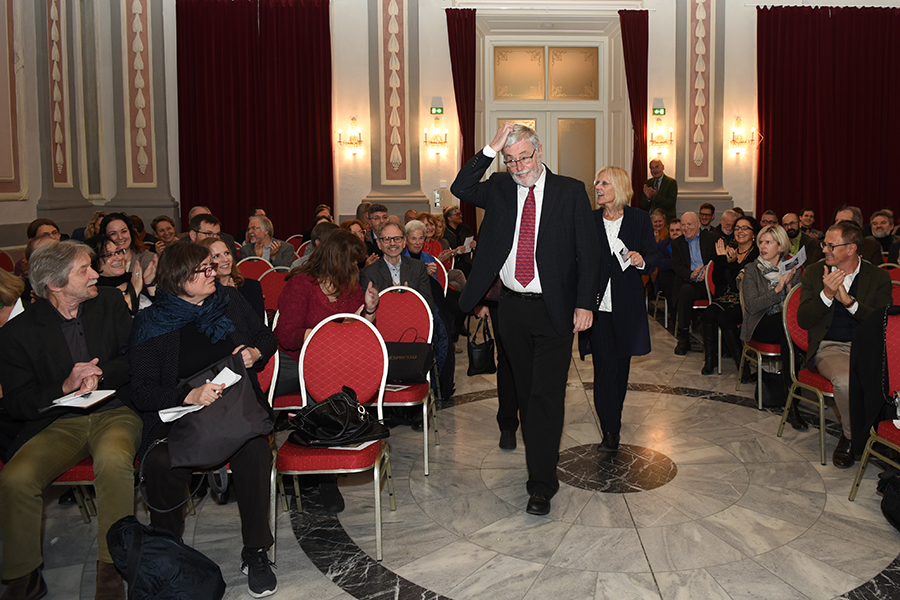
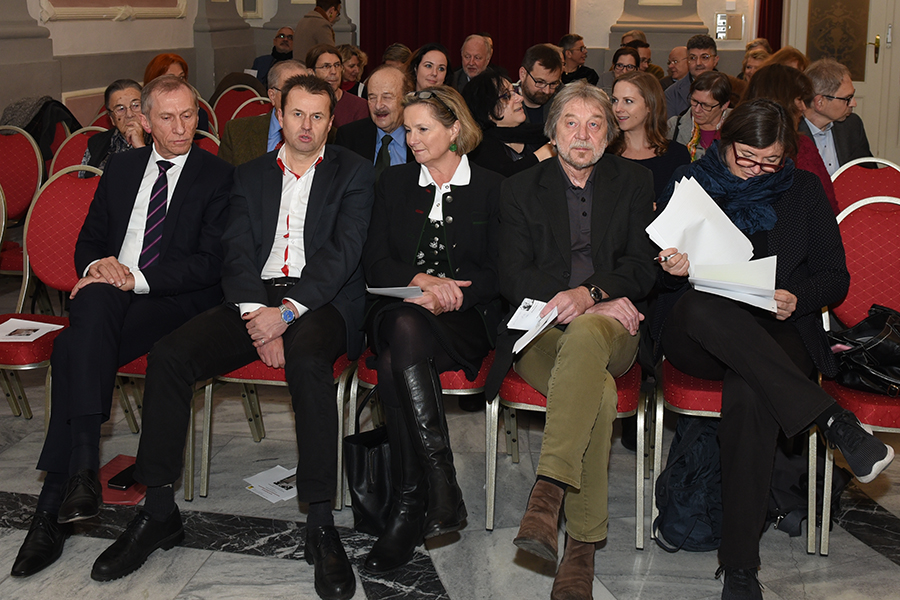
Konrad wurde mit einer Tagung zum 70er überrascht. Fotos: Uni Graz/Schweiger
AK-Präsdient Josef Pesserl, AK-Stabsstellenleiter Werner Anzenberger, Landtagspräsidentin Bettina Vollath, Institutsleiter Karl Kaser, Zeithistorikerin Heidemarie Uhl (v. l.)
created by Andreas Schweiger

Related news

Desert sand, microplastics, cancer cells: David Clases awarded ERC grant for analytical method

Nanoparticles trapped in polar ice can reveal a great deal about the climate 100,000 years ago. Chemist David Clases is developing unique methods to analyse them in detail. He will now adapt these methods for use with larger particles in order to glean even more information about Earth’s history. The method can be used for a wide range of other purposes – for example, in medical diagnostics or the investigation of environmental pollution. Clases has been awarded a Proof-of-Concept Grant by the European Research Council (ERC) for this work.

Staying fit during the holidays: summer sports on the University of Graz campus

The Kleeblattlauf is not the end of the fitness term. Following last year’s successful launch, the University of Graz is once again offering summer sports on campus this year. From 30 June to 16 July 2026, there will be a free exercise programme in the open air. On the shady Südwiese (between the main building and Universitätsplatz 2), anyone interested can get in shape in the afternoons with body workouts, fascia training and yoga.

Getting even hotter: Researchers predict global warming of 1.7 degrees by 2027

While Europe is currently sweltering in the heat, global temperatures are also rising towards concerning record levels. In 2026, Earth’s surface air temperature is expected to reach 1.62 degrees, and in 2027 even 1.71 degrees Celsius above pre-industrial levels. The long-term temperature rise – an average over a 20-year period – is predicted to exceed the 1.5-degree threshold of the Paris Agreement as of 2026 already. For the first time, researchers at the University of Graz have been able to make such a forecast so far in advance. The intensifying El Niño climate event favors forecast skill and thereby facilitates a reliable computation.

Forest fire at Rosenhain: Volunteer fire brigade carried out an evacuation drill at the Jesuit refectory

Thick smoke in the stairwell, flames at the edge of the forest, people missing in the Jesuit refectory at the University of Graz: at Rosenhain, the Graz Volunteer Fire Brigade carried out a drill simulating a scenario that is becoming increasingly realistic given the heat and drought

Begin of page section:
Additional information:

University of Graz
Universitaetsplatz 3
8010 Graz
Austria
  • Contact
  • Web Editors
  • Moodle
  • UNIGRAZonline
  • Imprint
  • Data Protection Declaration
  • Accessibility Declaration
Weatherstation
Uni Graz

End of this page section. Go to overview of page sections

End of this page section. Go to overview of page sections

Begin of page section:

End of this page section. Go to overview of page sections