Begin of page section:
Page sections:

  • Go to contents (Accesskey 1)
  • Go to position marker (Accesskey 2)
  • Go to main navigation (Accesskey 3)
  • Go to sub navigation (Accesskey 4)
  • Go to additional information (Accesskey 5)
  • Go to page settings (user/language) (Accesskey 8)
  • Go to search (Accesskey 9)

End of this page section. Go to overview of page sections

Begin of page section:
Page settings:

English en
Deutsch de
Search
Login

End of this page section. Go to overview of page sections

Begin of page section:
Search:

Search for details about Uni Graz
Close

End of this page section. Go to overview of page sections


Search

Begin of page section:
Main navigation:

Page navigation:

  • University

    University
    • About the University
    • Organisation
    • Faculties
    • Library
    • Working at University of Graz
    • Campus
    Developing solutions for the world of tomorrow - that is our mission. Our students and our researchers take on the great challenges of society and carry the knowledge out.
  • Research Profile

    Research Profile
    • Our Expertise
    • Research Questions
    • Research Portal
    • Promoting Research
    • Research Transfer
    • Ethics in Research
    • Commission for Scientific Integrity
    Scientific excellence and the courage to break new ground. Research at the University of Graz creates the foundations for making the future worth living.
  • Studies

    Studies
    • Prospective Students
    • Students
    • Registration for Study Programme (Winter semester 2026/27)
    • Welcome Weeks for First Year Students
  • Community

    Community
    • International
    • Location
    • Research and Business
    • Alumni
    The University of Graz is a hub for international research and brings together scientists and business experts. Moreover, it fosters the exchange and cooperation in study and teaching.
Topics
  • Sustainable University
  • Researchers answer
  • Work for us
Close menu

End of this page section. Go to overview of page sections

Begin of page section:
You are here:

University of Graz News Eating well: an inclusive look at sustainability and nutrition

End of this page section. Go to overview of page sections

Wednesday, 02 October 2024

Eating well: an inclusive look at sustainability and nutrition

View from above of bowls with various dishes on a wooden table and arms of people taking something for themselves ©AnnaStills - stock.adobe.com
©AnnaStills - stock.adobe.com

What constitutes good food for a person depends on their membership of different social groups, their identity. Photo: AnnaStills - stock.adobe.com

How do I eat sustainably? By buying local, seasonal food, preferably organic, and by eating less meat. This answer emerges from my situated knowledge, and it might work for me. Because it facilitates me to eat dishes that I like, and that I am familiar with. And because, due to my socio-economic privilege, I don't necessarily have to buy the cheapest products. But what do “our” ideas of sustainable eating mean for people with less financial resources? Or for people who have grown up with different food cultures and traditions? Are definitions of sustainability too narrow and exclusive? An innovative course at the University of Graz engages intercultural learning on critical approaches to sustainable eating in theory and practice. The project is funded by the Green Academia Award.

"The topic of food is an excellent way to consider what sustainability means. After all, we interact with our environment every day through food. We buy food, prepare it and share food with others," says Heide Bruckner. The geographer has been researching and teaching about the social and environmental aspects of food systems and agro-food studies for many years. Together with Annette Sprung, a professor of adult education, she has designed an innovative teaching project. Closely linked to teaching theoretical concepts in critical race studies and food, students from the University of Graz and members of African communities living in Graz have the opportunity to approach the topic of sustainable eating through joint activities. These include shopping together at the farmers' market followed by cooking together, or an African food tour--during which students get to know African restaurants and grocery stores in the Graz community. The project is developed in close cooperation with the Chiala Verein.

Annette Sprung teaches and researches ways to make it easier for migrants to participate in society and initiate horizontal dialogue between differently-situated groups of people. She has already implemented several projects in this area. "Food is an issue of social justice and an ideal example of making political, ecological and social aspects of sustainability tangible. At the same time, it lends itself well to intercultural learning," emphasizes Sprung.

How we eat and what constitutes good food for us depends on our diverse and complex set of identities," says Heide Bruckner. One aim of the teaching project is to reflect on the challenges and hurdles that can make it difficult to eat well. "We usually have a very narrow idea of sustainable food - seasonal, regional, organic, vegan - and don't think about the fact that access to such food is not easy for everyone," says Bruckner. "Perhaps some immigrants don't feel comfortable at the farmers' market because they come from a different food culture or don't speak the German language well. They also don't share the same knowledge and experiences as people who have grown up in Austria," explains the researcher. All of this is important to bear in mind in order to avoid discrimination when talking about eating sustainably.

Green Academia Award

The teaching project "Eating our way through intersectional pedagogy. A teaching project in English language to connect intercultural learning and sustainability" by Annette Sprung and Heide Bruckner is one of several projects funded by the Green Academia Award. This prize, which was awarded by the University of Graz for the first time in 2023, honors branches of science that combine sustainable mobility and excellent research performance. It is endowed with a total of 90,000 euros. Educational sciences took first place last year. The prize money is used to support sustainable education, research and socially-relevant projects for staff and students.

The Green Academia Award is a measure taken by the University of Graz on its path to climate neutrality. The award promotes sustainable mobility, especially for international business trips, and at the same time honors special academic achievements by university employees. The Green Academia Award 2024 will be presented on October 10 as part of the University of Graz's Sustainability Day, following the lecture by Science Buster Florian Freistetter.
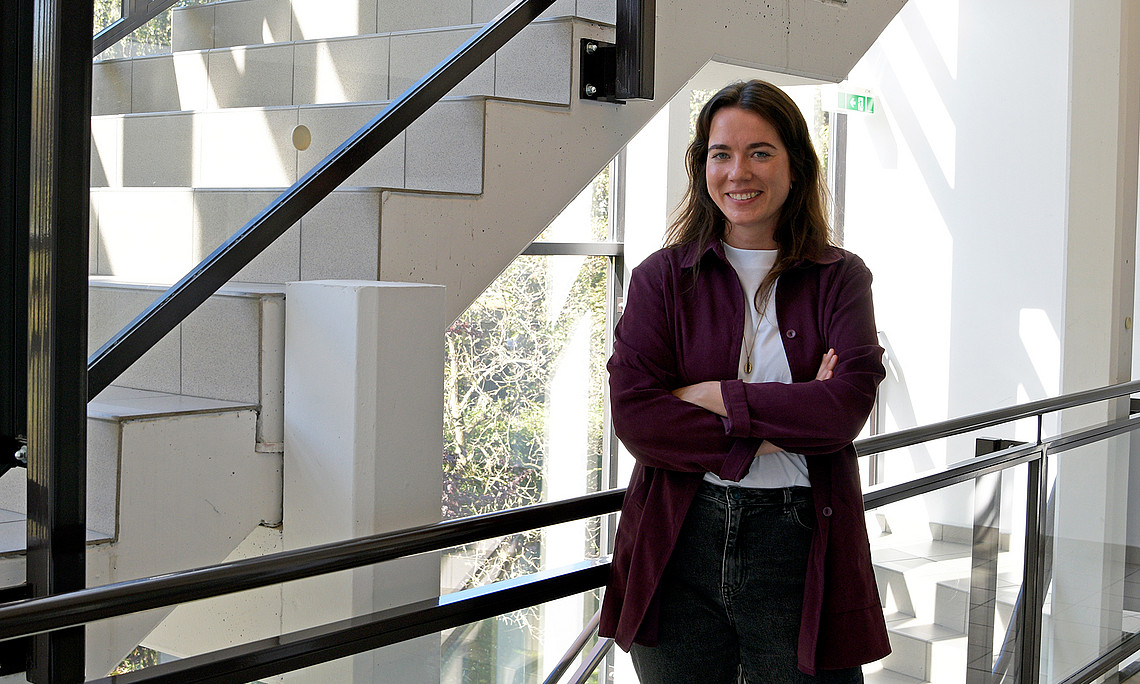

 

created by Gudrun Pichler

Related news

Preserving cultural heritage: Graz researchers make Roman inscriptions legible again

Researchers from the University of Graz and Graz University of Technology are working to save inscriptions carved in stone in Styria during Roman times from disappearing. They have developed a simple and cost-effective method to make inscriptions on tombs and votive altars – which have been weathered or damaged – legible again. They are currently testing the method on Roman stones at several sites across Styria. The aim is to provide other historians with a tool to preserve cultural heritage when expensive research equipment is not available. The method was recently published in the research journal Heritage Science.

When the sun goes dark: Enlightening for science and the people of Graz

When the moon partially passes in front of the sun in Graz on 12 August 2026, the event will once again captivate many people. This includes Manuela Temmer, an astrophysicist at the University of Graz. The scientist confirms that this celestial phenomenon offers significant value for research: “During a solar eclipse, the corona can be observed more clearly than with any instrument.”

Courtly Love and Aubergines: What Medieval Literature Has in Common with Emojis

Plants and fruits were already used as symbols of love in the Middle Ages. German studies scholar Isabella Managò, together with her colleagues Brigitte Spreitzer-Fleck and Julia Zimmermann, explains how this came about and why this figurative language remains familiar to us to this day.

New technology from the University of Graz reveals the hidden properties of tumour cells

It sounds like science fiction, but it could advance cancer research in the future: a team at the University of Graz, led by physicist Jan Enenkel, is developing a new laboratory device using laser technology that can be used to examine individual tumour cells. The idea is reminiscent of the medical tricorder from the Star Trek film series – albeit as a high-precision measurement platform. A spin-off fellowship from the Austrian Research Promotion Agency (FFG) is supporting the development of the technology at the University of Graz with around 500,000 euros.

Begin of page section:
Additional information:

University of Graz
Universitaetsplatz 3
8010 Graz
Austria
  • Contact
  • Web Editors
  • Moodle
  • UNIGRAZonline
  • Imprint
  • Data Protection Declaration
  • Accessibility Declaration
Weatherstation
Uni Graz

End of this page section. Go to overview of page sections

End of this page section. Go to overview of page sections

Begin of page section:

End of this page section. Go to overview of page sections