



Begin of page section:
Page sections:

  • Go to contents (Accesskey 1)
  • Go to position marker (Accesskey 2)
  • Go to main navigation (Accesskey 3)
  • Go to sub navigation (Accesskey 4)
  • Go to additional information (Accesskey 5)
  • Go to page settings (user/language) (Accesskey 8)
  • Go to search (Accesskey 9)

End of this page section. Go to overview of page sections

Begin of page section:
Page settings:

English en
Deutsch de
Search
Login

End of this page section. Go to overview of page sections

Begin of page section:
Search:

Search for details about Uni Graz
Close

End of this page section. Go to overview of page sections


Search

Begin of page section:
Main navigation:

Page navigation:

  • University

    University
    • About the University
    • Organisation
    • Faculties
    • Library
    • Working at University of Graz
    • Campus
    Developing solutions for the world of tomorrow - that is our mission. Our students and our researchers take on the great challenges of society and carry the knowledge out.
  • Research Profile

    Research Profile
    • Our Expertise
    • Research Questions
    • Research Portal
    • Promoting Research
    • Research Transfer
    • Ethics in Research
    • Commission for Scientific Integrity
    Scientific excellence and the courage to break new ground. Research at the University of Graz creates the foundations for making the future worth living.
  • Studies

    Studies
    • Prospective Students
    • Students
    • Welcome Weeks for First Year Students
  • Community

    Community
    • International
    • Location
    • Research and Business
    • Alumni
    The University of Graz is a hub for international research and brings together scientists and business experts. Moreover, it fosters the exchange and cooperation in study and teaching.
Topics
  • Sustainable University
  • Researchers answer
  • Work for us
Close menu

End of this page section. Go to overview of page sections

Begin of page section:
You are here:

University of Graz News Durch die Welt von Instagram, Google & Co

End of this page section. Go to overview of page sections

Friday, 16 March 2018

Durch die Welt von Instagram, Google & Co

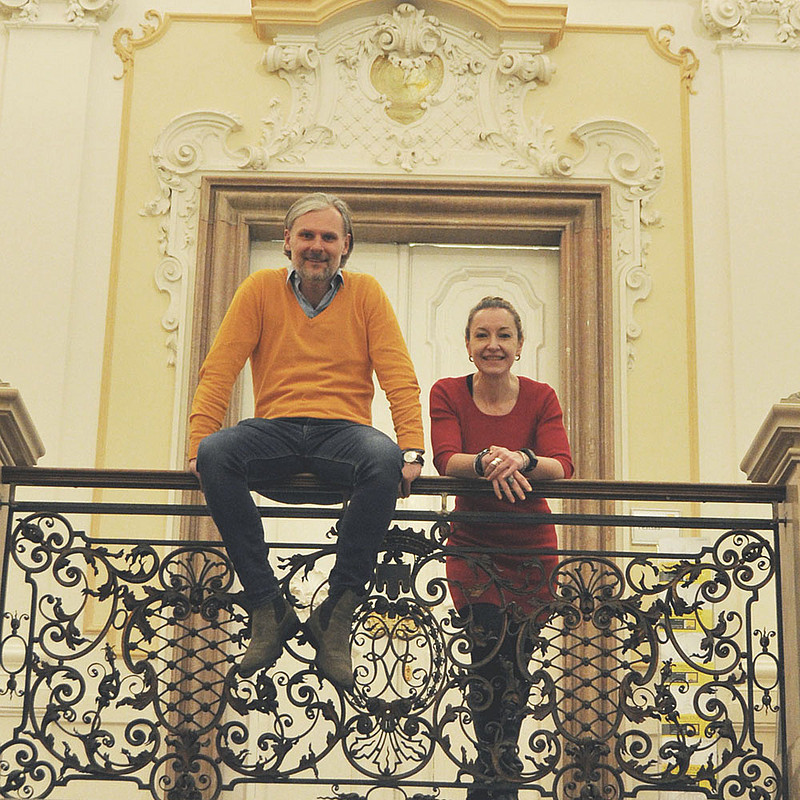
"Science Buster"-Helmut Jungwirth und "Kurier"-Redakteurin Elisabeth Holzer sind die kreativen Köpfe des neuen Kommunikationskollegs. Foto: UNI for LIFE.

"Science Buster"-Helmut Jungwirth und "Kurier"-Redakteurin Elisabeth Holzer sind die kreativen Köpfe des neuen Kommunikationskollegs. Foto: UNI for LIFE.

Neues Kommunikationskolleg der UNI for Life startet im Herbst 2018

Mit dem neuen Kommunikationskolleg rückt UNI for LIFE die universitäre Kompetenz im Medienbereich wieder in den Fokus und übersetzt sie hashtaggetreu ins 21. Jahrhundert. Dr. Helmut Jungwirth, Universitätsprofessor für Wissenschaftskommunikation und Ensemblemitglied der „Science Busters“, und die renommierte Journalistin Dr. Elisabeth Holzer haben als wissenschaftliches Leiterteam das berufsbegleitende Kommunikationskolleg gemeinsam entwickelt und brennen dafür, ab Herbst 2018 anwendbare On- und Offline-Inhalte einer breiten Zielgruppe zweckmäßig zugänglich zu machen.


Medien, wohin man schaut
Das neue Kommunikationskolleg wird ganz klar von einem „Do it yourself“-Gedanken getragen. Soll heißen, dass in einem bislang nicht dagewesenem universitären Rahmen Kommunikation nicht nur gedacht, sondern in all ihren Facetten praktisch gelebt wird. „Denn um nichts Anderes geht es, wenn wir erfolgreich kommunizieren wollen“, konstatiert Elisabeth Holzer, stellvertretende wissenschaftliche Leiterin des Universitätskurses. 2016 erhielt Helmut Jungwirth die erste Professur für Wissenschaftskommunikation in Österreich und gemeinsam mit ihm bündelt Holzer nun das Know-how aus redaktioneller Praxis, Wissenschaft und Forschung in einer universitären Weiterbildung. „Egal, in welchem beruflichen Umfeld man sich heutzutage bewegt, irgendwann kommt man mit großer Wahrscheinlichkeit mit Medien und JournalistInnen in Berührung und dann ist es von Vorteil, wenn man die richtigen Instrumente kennt und diese adäquat einzusetzen weiß“, so Holzer. In Zeiten der Influencer und Instagrammer gehe es aber auch darum, nicht nur als Einzelperson, sondern vor allem auch als Unternehmen medial aufzuzeigen, was man kann. Das nötige Rüstzeug dafür liefert der neue Universitätskurs.


Komm‘ kommunizieren!
Mit Modulen rund um Social Media, Krisenkommunikation, PR, Events und Veranstaltungen setzt das dreisemestrige Kommunikationskolleg auf eine kompakte, kompetente, berufsbegleitende Weiterbildung für Informationsbeauftragte, PressesprecherInnen, KommunikatorInnen, Start-ups, WissenschaftlicherInnen und Studierende, die Zusatzkompetenzen erwerben möchten. Jungwirth: „Jede Form der Kommunikation hat ihre eigene Dramaturgie. Beispiele von erfolgreichen BloggerInnen oder Trumps ausgeklügeltes Kommunikationskonzept zeigen, wieviel Macht in Kommunikation und entsprechenden Kanälen steckt. TeilnehmerInnen lernen, alle Kommunikationsmöglichkeiten, die wir im dritten Jahrtausend zur Verfügung haben, effektiv und für ihre individuellen Bedürfnisse zu nützen.“ Mit Innovationsgeist und hochkarätigen Vortragenden aus der Branche wird im Herbst 2018 gestartet.


Hard Facts: In drei Semestern zum Medienprofi

Dauer: 3 Semester, berufsbegleitend
Umfang: 38 ECTS
Ort: Karl-Franzens-Universität Graz
Kosten: EUR 4.950.- Euro
Abschluss: Zertifizierte/r Kommunikationsmanager/in
Anmeldeschluss: 7. September 2018  
Starttermin: 28. September 2018
created by UNI for LIFE & Gerhild Leljak

Related news

Jurassic Sounds: Biologist reconstructs insect songs from 165 million years ago

It was apparently not just the roars of the dinosaurs that made up the soundscape of the animal world during the Jurassic period. Crickets and grasshoppers communicated through a variety of songs and high-pitched sounds, as Thorin Jonsson from the Institute of Biology at the University of Graz discovered together with colleagues from the universities of Lincoln, Bristol (UK), Beijing (China) and Tempe (USA). The findings on what are so far the oldest traces of sound on Earth have just been published in the journal PNAS.

EU funding boosts international exchange between universities

The University of Graz is further expanding its international study opportunities through the European university alliance Arqus and is taking the lead in two key projects. In future, students will benefit from even more joint degree programmes and from simplified recognition of academic achievements through the Joint European Degree Label.

Rescue and risks: Researchers have surveyed public perceptions of AI

The use of artificial intelligence has had to be made transparent since 2 August 2026. The EU’s AI Act, which has been in force since then, also sets out how risky an application is and which security measures apply as a result. However, the assessment of risks by the legislation differs in some cases significantly from the perceptions of the Austrian public. This is the finding of a representative study carried out by data scientist Stefan Thalmann from the University of Graz and his team.

The Healing Sea: Researchers discover new approaches to treating chronic inflammation in sponges

Chronic inflammation plays a key role in many diseases, ranging from metabolic disorders and cardiovascular diseases to tissue damage following injuries or infections. “Normally, the body is able to resolve inflammation on its own. If this process becomes unbalanced, immune cells remain permanently active and continue to drive negative changes in the tissue,” explains Andreas Koeberle, a pharmacist at the University of Graz.

Begin of page section:
Additional information:

University of Graz
Universitaetsplatz 3
8010 Graz
Austria
  • Contact
  • Web Editors
  • Moodle
  • UNIGRAZonline
  • Imprint
  • Data Protection Declaration
  • Accessibility Declaration
Weatherstation
Uni Graz

End of this page section. Go to overview of page sections

End of this page section. Go to overview of page sections

Begin of page section:

End of this page section. Go to overview of page sections


