Begin of page section:
Page sections:

  • Go to contents (Accesskey 1)
  • Go to position marker (Accesskey 2)
  • Go to main navigation (Accesskey 3)
  • Go to sub navigation (Accesskey 4)
  • Go to additional information (Accesskey 5)
  • Go to page settings (user/language) (Accesskey 8)
  • Go to search (Accesskey 9)

End of this page section. Go to overview of page sections

Begin of page section:
Page settings:

English en
Deutsch de
Search
Login

End of this page section. Go to overview of page sections

Begin of page section:
Search:

Search for details about Uni Graz
Close

End of this page section. Go to overview of page sections


Search

Begin of page section:
Main navigation:

Page navigation:

  • University

    University
    • About the University
    • Organisation
    • Faculties
    • Library
    • Working at University of Graz
    • Campus
    Developing solutions for the world of tomorrow - that is our mission. Our students and our researchers take on the great challenges of society and carry the knowledge out.
  • Research Profile

    Research Profile
    • Our Expertise
    • Research Questions
    • Research Portal
    • Promoting Research
    • Research Transfer
    • Ethics in Research
    • Commission for Scientific Integrity
    Scientific excellence and the courage to break new ground. Research at the University of Graz creates the foundations for making the future worth living.
  • Studies

    Studies
    • Prospective Students
    • Students
    • Registration for Study Programme (Winter semester 2026/27)
    • Welcome Weeks for First Year Students
  • Community

    Community
    • International
    • Location
    • Research and Business
    • Alumni
    The University of Graz is a hub for international research and brings together scientists and business experts. Moreover, it fosters the exchange and cooperation in study and teaching.
Topics
  • Sustainable University
  • Researchers answer
  • Work for us
Close menu

End of this page section. Go to overview of page sections

Begin of page section:
You are here:

University of Graz News Drei Frauen erzählen

End of this page section. Go to overview of page sections

Friday, 28 March 2014

Drei Frauen erzählen
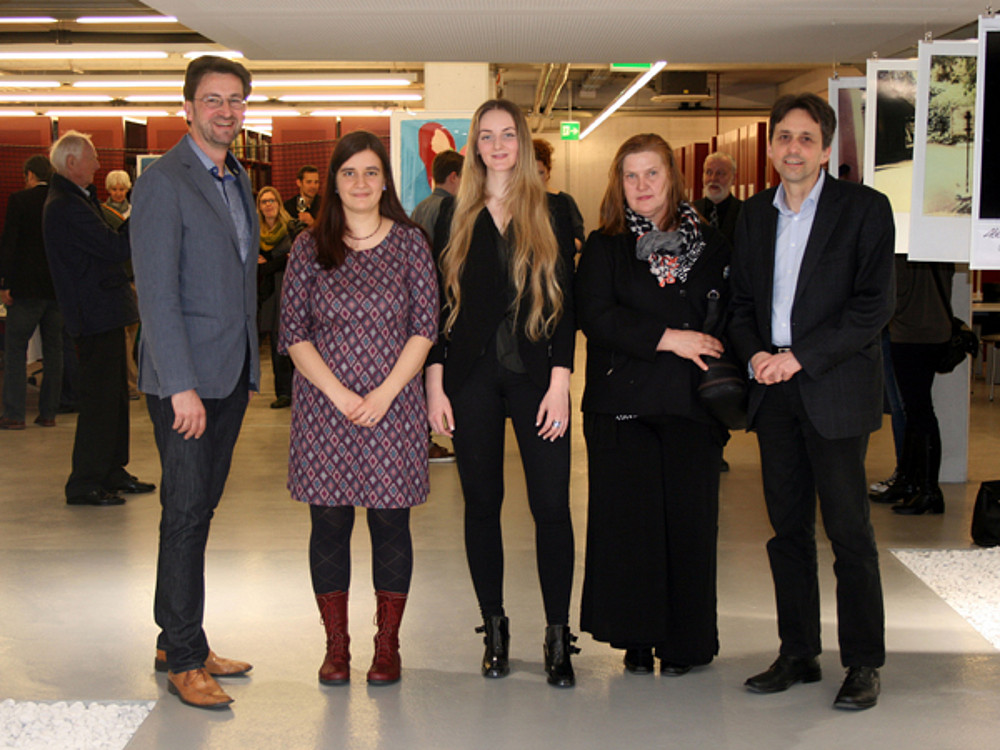
Hans-Walter Ruckenbauer, Kurator der Ausstellung, Simina Badea, Charlotte Pann, Michaela Söll und Reinhold Esterbauer, Dekan der Katholisch-Theologischen Fakultät (v.l.).
Hans-Walter Ruckenbauer, Kurator der Ausstellung, Simina Badea, Charlotte Pann, Michaela Söll und Reinhold Esterbauer, Dekan der Katholisch-Theologischen Fakultät (v.l.).

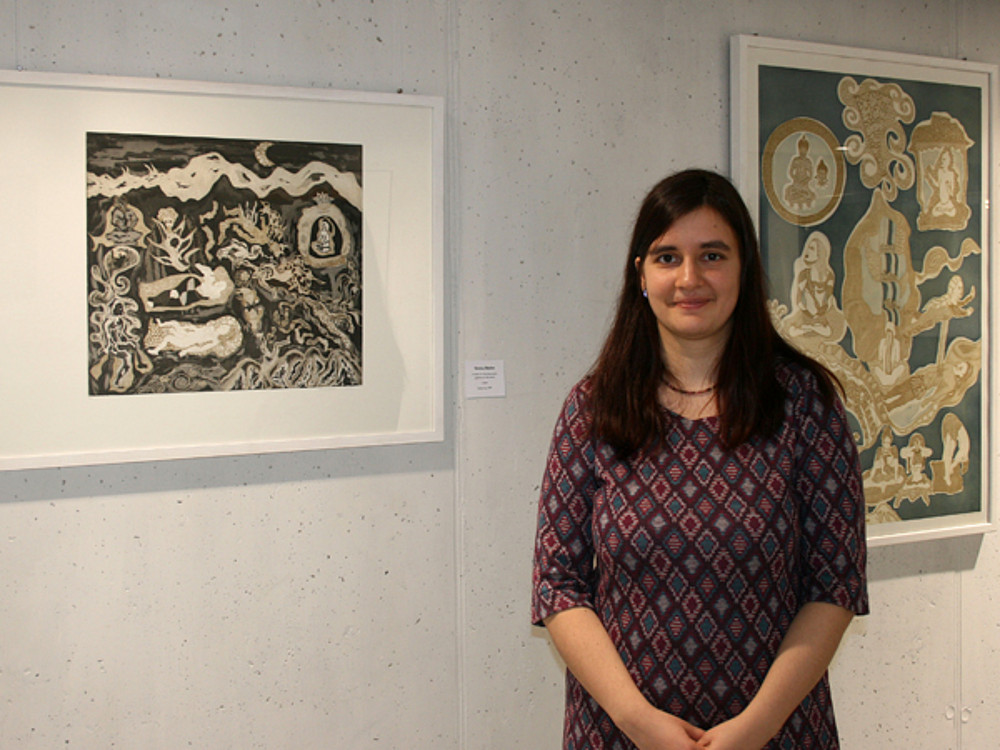
Simina Badea vor STUDY
Simina Badea vor STUDY

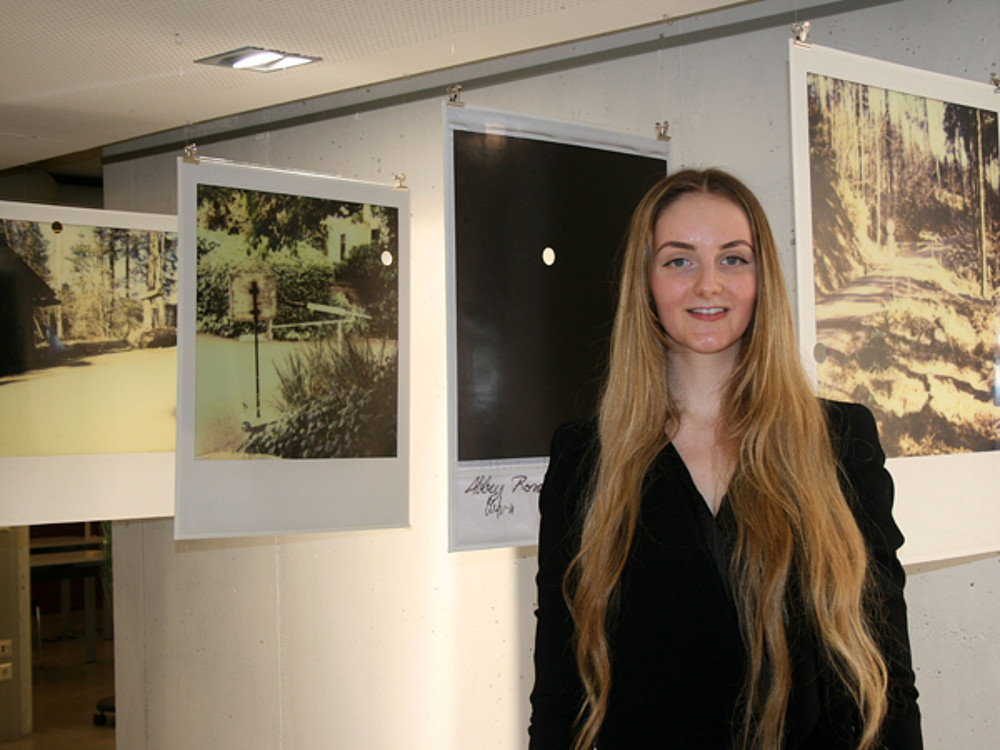
Charlotte Pann vor JUST IN TIME. Klicken Sie auf den Pfeil rechts für weitere Bilder!
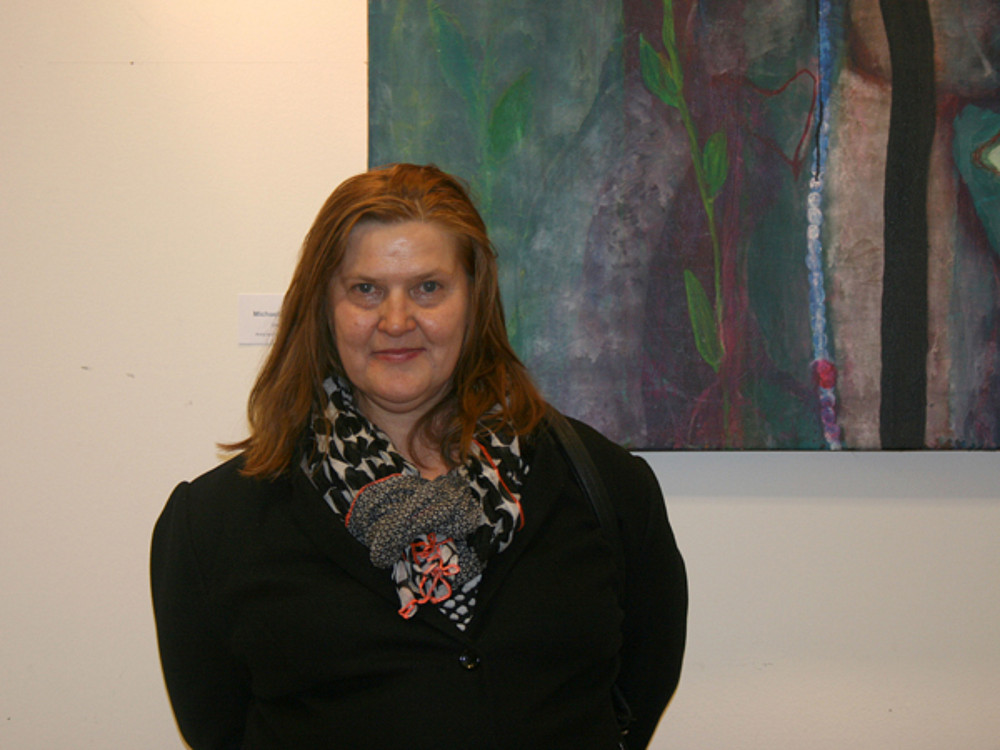
Charlotte Pann vor JUST IN TIME. Klicken Sie auf den Pfeil rechts für weitere Bilder!

Michaela Sölls vor SHE
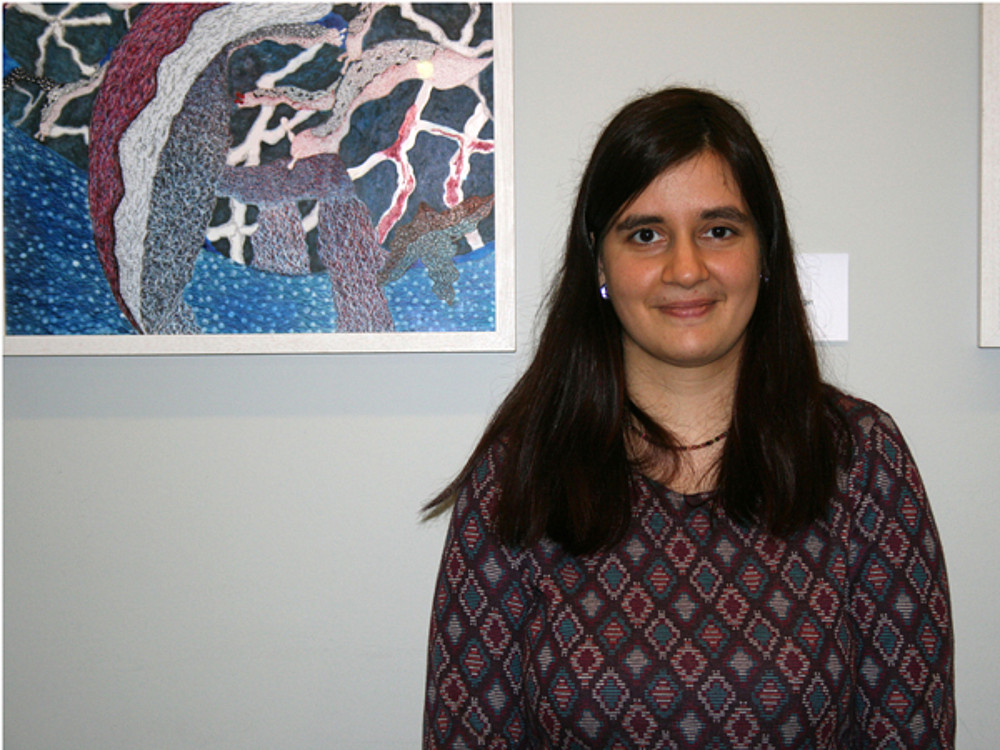
Michaela Sölls vor SHE

Simina Badea vor SCHNECKENLANDSCHAFT
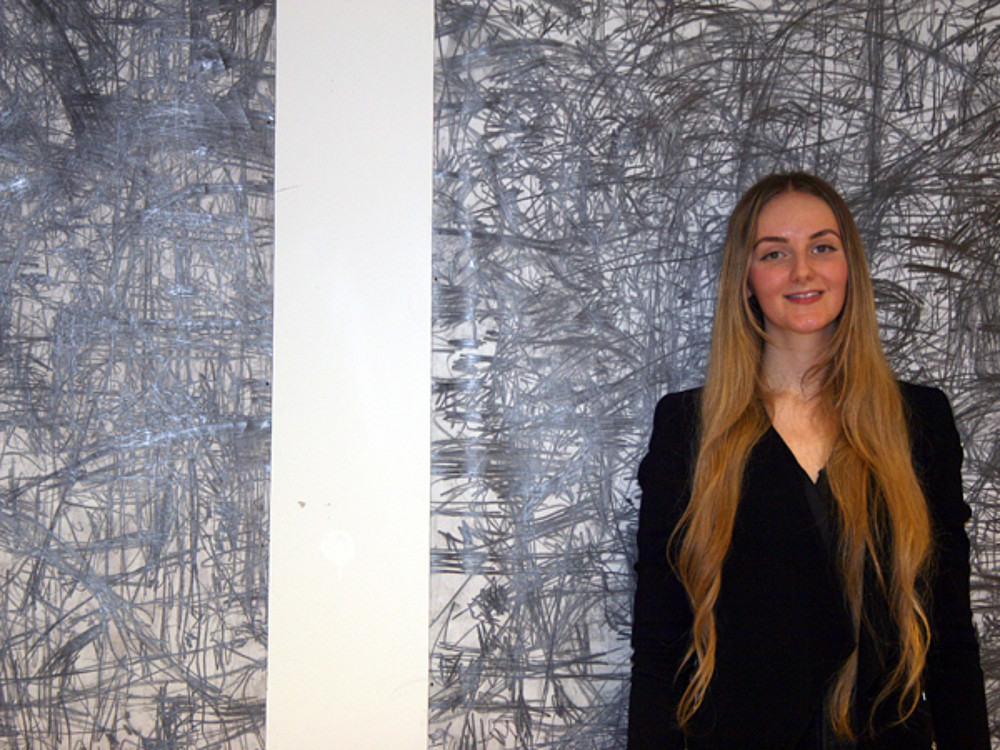
Simina Badea vor SCHNECKENLANDSCHAFT

Charlotte Pann vor KINOZEICHNUNGEN
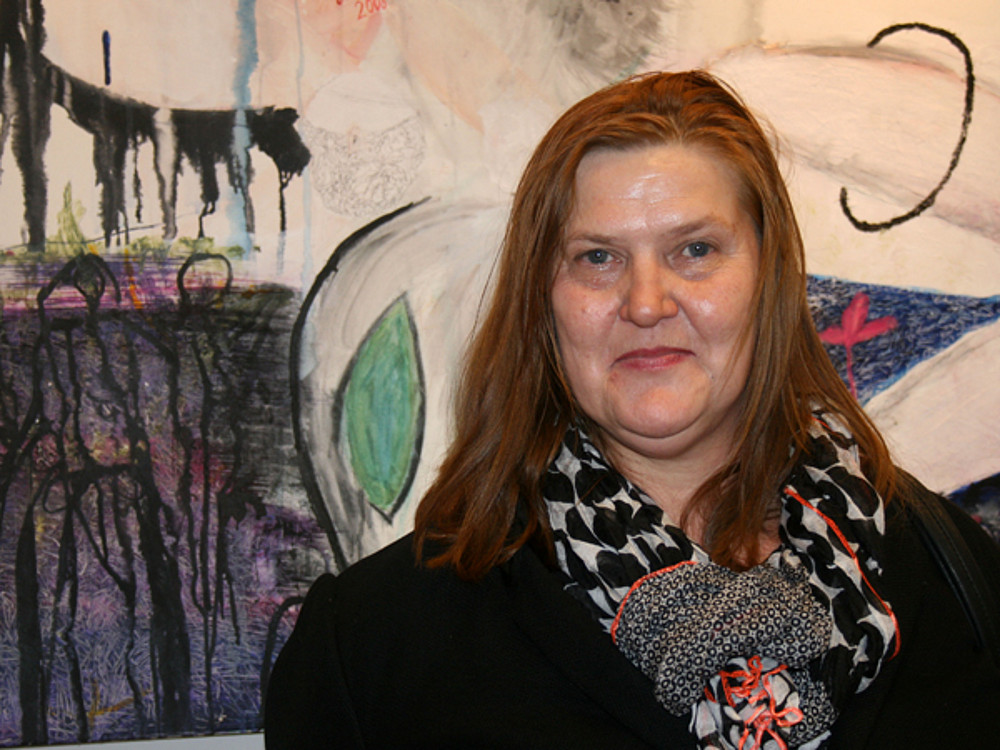
Charlotte Pann vor KINOZEICHNUNGEN

Michaela Sölls vor LOVERS
Michaela Sölls vor LOVERS

Eröffnung der gleichnamigen Ausstellung am UZT

Das Universitätszentrum Theologie (UZT)  in der Heinrichstraße 78 ist bekannt für seine künstlerisch hochwertigen Semesterausstellungen. Die aktuelle Schau mit dem programmatischen Titel "Narrative" wurde von Ass.-Prof. Dr. Hans-Walter Ruckenbauer kuratiert und von Dekan Reinhold Esterbauer eröffnet. Ruckenbauer führt die Werke dreier Künstlerinnen zusammen, deren Arbeiten sich bei aller Diversität der Materialien, Gestaltungsweisen und Inhalte in der Präsenz raumgreifender Erzählstrukturen treffen.

Simina Badea zeigt zwei Zyklen, die von fernöstlichen Bildwelten inspiriert sind: In ihren subtilen Tuschezeichnungen „Das Bildhafte in der TCM“ webt sie phantastische Figuren in jene Elemente ein, die der chinesischen Medizin zufolge den Rhythmus des Lebens bestimmen. Eine Serie von Radierungen transferiert Impulse tibetischer Spiritualität in visuelle Narrationen.

Intermedialität ist ein zentrales Charakteristikum der Arbeiten von Charlotte Pann. Wie aus bewegten Bildern leinwandfüllende Graphitzeichnungen werden, führt ihre Kino-Reihe anschaulich vor Augen. Die Polaroids aus „just in time“ hingegen weiten das Medium Fotographie ins Skulpturale und lassen dadurch Zeitkörper als Dokumente originärer Wirklichkeit entstehen.

Michaela Sölls mal mädchenhaft heitere, dann wieder irritierend schmerzhafte Frauenfiguren erweisen sich trotz ihrer Verletzlichkeit als souveräne Gestalterinnen eigener Welt. Die großformatigen Arbeiten auf Leinwand und Karton erzählen von Begehren und Liebe, Verwandlung und Geheimnis.

Alle Werke sind noch bis 30. Juni 2014 in der Kunstpassage der Fakultätsbibliothek Theologie und den Hörsälen am UZT zu besichtigen. Am 1. Juli 2014 findet um 18:30 Uhr die Präsentation des Katalogs zur Ausstellung im Rahmen einer Finissage vor Ort statt.

created by Hans-Walter Ruckenbauer & Gerhild Kastrun

Related news

Commissioned by NATO: University of Graz tests high-tech textiles

As part of an international project, antimicrobial and fire-resistant fabrics with UV protection are being developed in Zagreb. Pharmacists from the University of Graz are ensuring that these fabrics are skin-friendly.

The Arctic up close: ORF special feature on the University of Graz’s research station in S

Students from the University of Graz are spending two weeks conducting research at the Univerisity of Graz research station at the Sermilik Fjord in Greenland, which has been operational for three years. They are measuring glacial runoff, tracking ice melt in real time and installing weather stations. ORF is following the expedition and will be reporting on the special feature ‘Arctic Adventure’ across its various channels from 20 July.

Medicine for ants: Caffeine prolongs the life of infected insects

Black coffee stimulates us and acts against bacteria. So, can caffeine also be good for insects? Yes, confirm biologists of the University of Graz. When ants suffer from a fungal disease, they consume more caffeine and remain active for longer.

How formulas are making medicine more personalised

When Federica Caforio talks about the heart, it doesn’t sound like an operating theatre, but rather like equations, parameters and simulations. Yet this is precisely where the medical promise of her research lies: one day, clinical data will be used to create a digital twin of the heart – a virtual model that will enable a better understanding of diseases and allow for more personalised treatment plans. She will be presenting her research at the ‘ECMTB 2026’ mathematics conference.

Begin of page section:
Additional information:

University of Graz
Universitaetsplatz 3
8010 Graz
Austria
  • Contact
  • Web Editors
  • Moodle
  • UNIGRAZonline
  • Imprint
  • Data Protection Declaration
  • Accessibility Declaration
Weatherstation
Uni Graz

End of this page section. Go to overview of page sections

End of this page section. Go to overview of page sections

Begin of page section:

End of this page section. Go to overview of page sections