Diversity is important to the University of Graz, whether in learning, research or work. With institutions such as the Working Group for Gender Equality (AKGL), the Coordination Office for Gender Studies and Equality, the AntiBias Circle and LUIS*A on campus, the university is actively committed to equal opportunities. Now the Diversity Buddies are joining the fray.
The long-term goal of this initiative is to establish a decentralised support network for students and staff affected by barriers. Diversity buddies are visible and confidential contact persons for questions about equality and diversity in everyday work and study life and refer people to the many counselling and contact points at the University of Graz and beyond, depending on the situation.
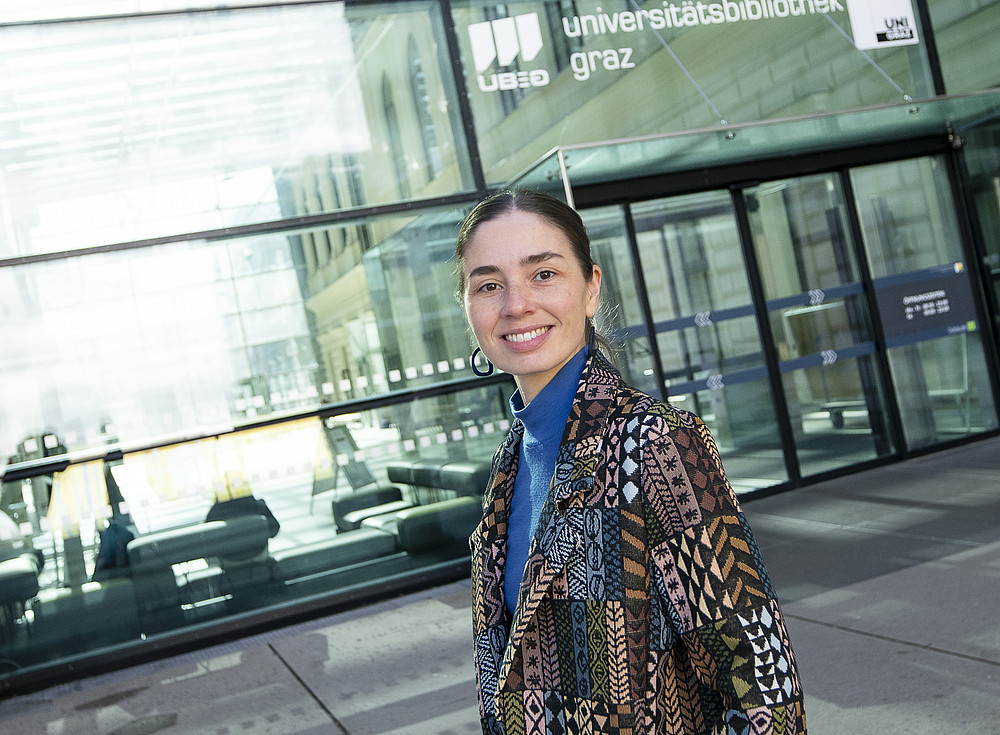
Dozens of employees from a wide variety of departments are already part of this initiative by the AntiBias Circle. One of them is Magdalena Laura Halb, who works in the AKGL office. "When I heard about the initiative, I was immediately enthusiastic," she says. "Sometimes it's just a matter of talking to someone on an equal footing without getting too formal." The Diversity Buddies are a great concept and complement the existing services.
Easy registration
Becoming a Diversity Buddy is very easy. You can register on the website Diversitybuddies –di[uni]versität and find out when the next half-day basic workshop is taking place, where candidates are prepared for their role. In the workshop, you learn how to support other people and meet people from all areas of the university. "It was a very exciting event," recalls Halb. "The members of the group were all very committed. It was also the first time I gained an insight into how often teachers are confronted with diversity issues." The next workshop will take place in mid-April 2026.
Halb was particularly excited to learn that every employee can also attend the regular open meetings of the AntiBias Circle. However, she sees their most important role as being multipliers for gender- and diversity-sensitive skills. "This is where important information about contact points is disseminated to the public and, conversely, anonymised information about current challenges and issues flows back into the system, where it can be addressed accordingly."
One of these contact points could also be the AKGL, i.e. Halb and her colleagues. "We already saw an increase in requests for advice when LUIS*A was launched on campus. And we expect a similar effect from the Diversity Buddies." However, this does not mean that there are suddenly more challenges in the area of diversity at the University of Graz. "They have always been there. But now people are more aware of where they can turn for help," Halb concludes.