




Begin of page section:
Page sections:

  • Go to contents (Accesskey 1)
  • Go to position marker (Accesskey 2)
  • Go to main navigation (Accesskey 3)
  • Go to sub navigation (Accesskey 4)
  • Go to additional information (Accesskey 5)
  • Go to page settings (user/language) (Accesskey 8)
  • Go to search (Accesskey 9)

End of this page section. Go to overview of page sections

Begin of page section:
Page settings:

English en
Deutsch de
Search
Login

End of this page section. Go to overview of page sections

Begin of page section:
Search:

Search for details about Uni Graz
Close

End of this page section. Go to overview of page sections


Search

Begin of page section:
Main navigation:

Page navigation:

  • University

    University
    • About the University
    • Organisation
    • Faculties
    • Library
    • Working at University of Graz
    • Campus
    Developing solutions for the world of tomorrow - that is our mission. Our students and our researchers take on the great challenges of society and carry the knowledge out.
  • Research Profile

    Research Profile
    • Our Expertise
    • Research Questions
    • Research Portal
    • Promoting Research
    • Research Transfer
    • Ethics in Research
    Scientific excellence and the courage to break new ground. Research at the University of Graz creates the foundations for making the future worth living.
  • Studies

    Studies
    • Prospective Students
    • Students
    • Welcome Weeks for First Year Students
  • Community

    Community
    • International
    • Location
    • Research and Business
    • Alumni
    The University of Graz is a hub for international research and brings together scientists and business experts. Moreover, it fosters the exchange and cooperation in study and teaching.
  • Spotlight
Topics
  • Sustainable University
  • Researchers answer
  • Work for us
Close menu

End of this page section. Go to overview of page sections

Begin of page section:
You are here:

University of Graz News The dark side of life: new method developed to identify soil organisms

End of this page section. Go to overview of page sections

Tuesday, 20 January 2026

The dark side of life: new method developed to identify soil organisms

Hands of a person inspecting soil health

The quality of the soil depends on the organisms that inhabit it. Biologists at the University of Graz have developed a new method for identifying tiny creatures. Photo: Kannapat/Adobe Stock

A large number of soil animals are smaller than one millimetre and are therefore difficult to study scientifically. Biologists from the University of Graz have now developed a method to determine both the shape and the DNA of the organisms. The results have been published in the journal Geoderma.

What creeps under our feet plays a key role in agriculture, the ecosystem and the climate. The soil harbours more than half of the world's biodiversity, yet many of the little animals - the so-called dark taxa - have hardly been researched. These include mites and pauropods, for example, which are often much smaller than a millimetre. "Our ability to study them has been severely limited until now," explains Sylvia Schäffer from the Department of Biology at the University of Graz. Together with Stephan Koblmüller and her team, she has developed a procedure that allows researchers to obtain DNA samples in just a few steps. The bodies of the sensitive organisms are preserved for further analyses.

"Our method is a milestone for soil monitoring, which in turn will benefit many areas," says Schäffer. With their new procedure, the Graz biologists have already been able to obtain comprehensive DNA data for many previously unknown species, which is available in an international reference database. Based on this genetic information and the external shape of the animals, they can now be clearly identified and new species precisely described. The research results were published in the journal Geoderma.
Publication:
Sylvia Schäffer, Klaus Hasenhütl, Stephan Koblmüller: A window into dark taxa: morphology-compatible DNA extraction for tiny soil arthropods, Geoderma Volume 465.

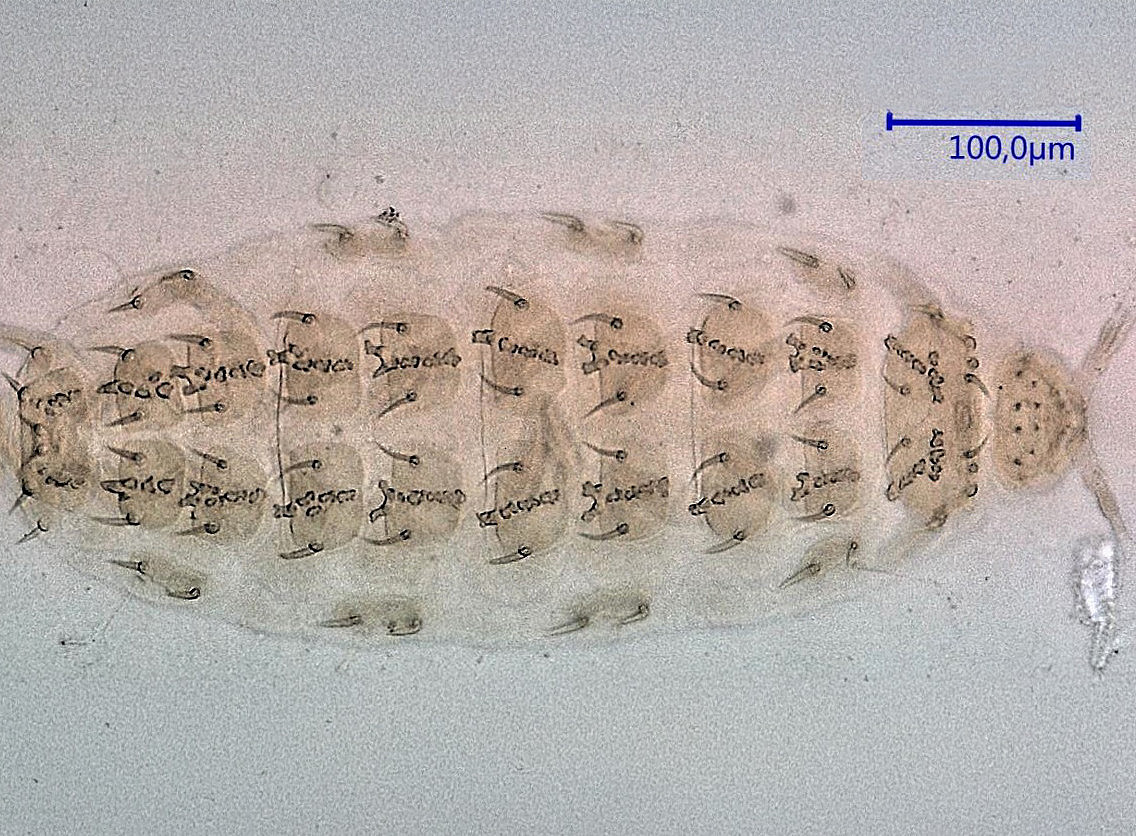
microscope image of the pauropod Brachypauropus hamige
Now identified: the pauropod Brachypauropus hamige; Photo: Uni Graz/Klaus Hasenhütl
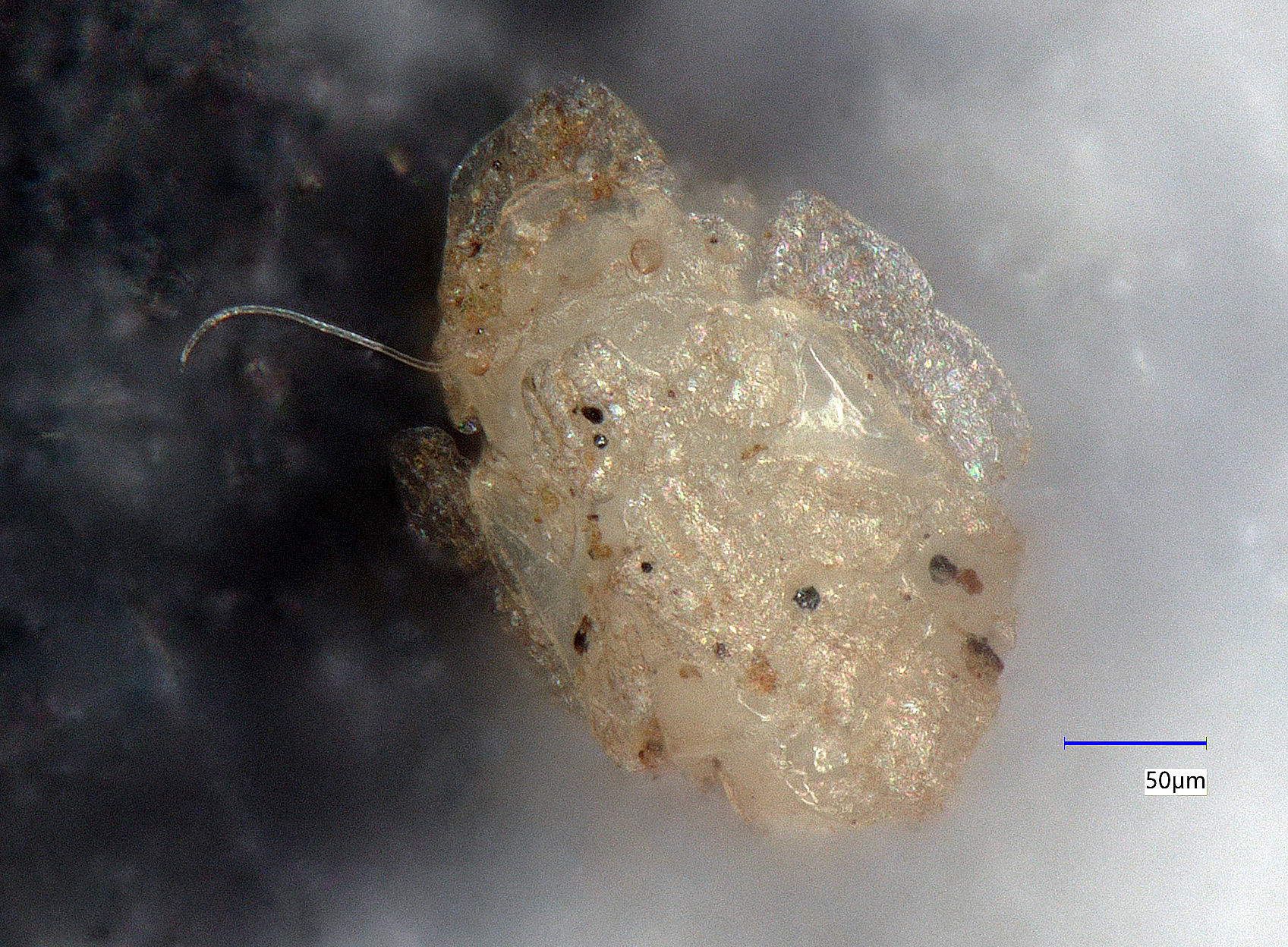
Microscope image of a horn mite
Also newly described: the horn mite Pterochthonius angelus; photo: University of Graz/Sylvia Schäffer
created by Dagmar Eklaude

Related news

Electricity consumption reduced: University of Graz well on track

This year, the University of Graz has once again received EMAS certification. Since the introduction of this environmental management system in 2016, the seal of approval has been renewed every three years after successful audits. As an EMAS-certified organisation, the university is committed to systematically improving its environmental performance and contributing to sustainable development at all levels. Progress is documented in the annual environmental statement. The statement for 2024 was recently published. Particularly pleasing: electricity consumption was the lowest since EMAS records began.

Four universities, one degree: first certificates awarded in pioneering Arqus consortium

The European University Alliance Arqus has been in existence since 2018, with the University of Graz collaborating with eight partner institutions at various levels. The first joint master's programme began in 2023. Twenty-one graduates recently celebrated their graduation in Graz.

University of Graz study shows: public money for climate adaptation pays off

In order to plug the budget gap, the state is currently pinching pennies. However, when it comes to adapting to climate change, investing helps to save money. This is shown by a recently published study by the Wegener Centre at the University of Graz. "Our analyses show that protective measures more than pay off in the medium term," summarises lead author Eva Preinfalk.

Studying at the University of Graz: Registration for admission procedures in March

Ready for a new chapter in your life with the start of your studies at the University of Graz in the winter semester 2026/27? Here you will find information on deadlines, admission procedures, registration, and everything else you need to successfully start your studies in the fall.

Begin of page section:
Additional information:

University of Graz
Universitaetsplatz 3
8010 Graz
Austria
  • Contact
  • Web Editors
  • Moodle
  • UNIGRAZonline
  • Imprint
  • Data Protection Declaration
  • Accessibility Declaration
Weatherstation
Uni Graz

End of this page section. Go to overview of page sections

End of this page section. Go to overview of page sections

Begin of page section:

End of this page section. Go to overview of page sections